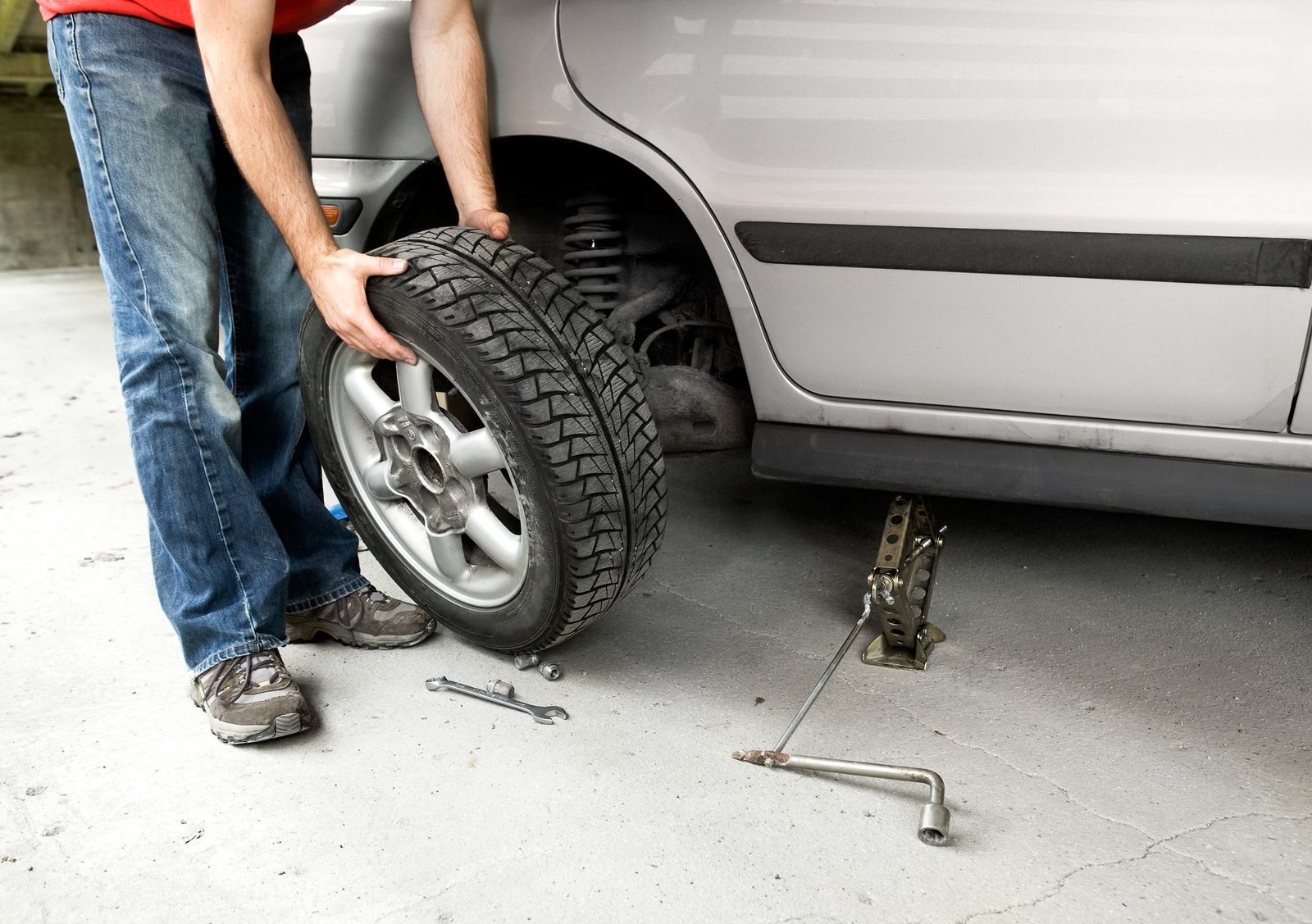
Few roadside emergencies trigger instant anxiety like a flat tire. You are parked on a busy shoulder, traffic whizzing past, and one question dominates your thoughts: How long does it take to change a tire?
The answer is not a single number. It depends on your experience level, the tools at hand, the weather, and even the type of vehicle you drive. For a professional at a pit stop, the clock stops at under two minutes. For a first-time driver fumbling with a scissor jack, it can stretch to an hour or more.
This complete time guide breaks down every variable, provides realistic timelines, and offers a step-by-step efficiency analysis. By the end, you will know exactly how to answer the question, “How long does it take to change a tire?”—whether you are doing it yourself or waiting for a tow truck.
The Short Answer: How Long Does It Take to Change a Tire?
Let us start with the headline numbers. When someone searches how long does it take to change a tire, they usually want a quick range. Here it is:
-
Professional mechanic (with a lift and air tools): 5 to 10 minutes (including removing the wheel from the car).
-
Experienced DIY driver (on the roadside with a spare): 15 to 25 minutes.
-
Novice driver (first time, following instructions): 30 to 60 minutes.
-
Roadside assistance service (arrival + work): 30 to 60 minutes (plus wait time for the truck).
-
Changing a run-flat tire (no spare – tow required): N/A – you do not change it; you drive to a shop (adds 1–2 hours of driving).
However, these numbers assume ideal conditions. Real-world factors can double or triple these durations.
Breaking Down the Process: A Minute-by-Minute Analysis
To truly understand how long does it take to change a tire, we must dissect the task into its component steps. A typical roadside tire change involves seven distinct phases.
Step 1: Recognizing the Problem and Finding a Safe Spot (2–5 minutes)
The clock starts the moment you feel the thump of a flat. Instead of slamming brakes, you need to:
-
Maintain control and slow down gradually (30 seconds).
-
Locate a flat, straight, hard surface away from traffic (1–3 minutes). Avoid soft shoulders or curves.
-
Turn on hazard lights and engage the parking brake (30 seconds).
Time impact: Choosing a bad spot (e.g., a hill or loose gravel) can add 10+ minutes of struggle or force you to call for help, resetting the clock.
Step 2: Retrieving Tools and the Spare Tire (3–8 minutes)
This step alone varies wildly. In many modern cars, the spare tire, jack, and lug wrench are buried under cargo floors, behind panels, or even mounted under the vehicle’s rear.
-
Well-organized driver, standard sedan: 3 minutes.
-
SUV or truck with underbody spare: 5–8 minutes (requires lowering a winch).
-
Vehicle with no spare (only a sealant kit): 0 minutes – you cannot change the tire. You must use sealant (15 minutes) or call a tow.
Key tip: Practice locating your spare at home. Knowing how long does it take to change a tire in an emergency is directly proportional to whether you have rehearsed finding the jack.
Step 3: Loosening Lug Nuts Before Jacking (2–4 minutes)
This is where novices make a critical mistake. They jack up the car first, then try to loosen lug nuts, causing the wheel to spin.
-
Correct method (on ground): Use the lug wrench to break torque on each nut. Expect 2 minutes for five nuts.
-
Rusted or over-torqued nuts (common at chain shops): Add 2–3 minutes of straining, jumping on the wrench, or using a penetrating spray.
Time variable: If a lug nut is stripped or seized, add 15 minutes – at which point you might abandon the DIY change.
Step 4: Jacking Up the Vehicle (3–6 minutes)
The jacking method changes everything.
-
Scissor jack (standard equipment): Slow, requires cranking. 3–4 minutes for a compact car; 5–6 minutes for a heavy SUV.
-
Floor jack (if you carry one): 1 minute.
-
Air jack (professional): 15 seconds.
Critical safety note: Never rush jacking. Improper placement causes the car to fall. Adding 2 minutes to verify the jack point is always worth it.
Step 5: Removing the Flat Tire (1–3 minutes)
Once the car is stable in the air, finish unscrewing the lug nuts by hand (30 seconds), then pull the flat tire off the hub.
-
Wheel stuck due to rust (common in salt-belt states): Add 3–5 minutes. Kick the tire’s bottom edge or use a rubber mallet.
-
Captive wheel (some older designs): May require a special key or bolt – add 10 minutes if you cannot find it.
Step 6: Mounting the Spare Tire (2–4 minutes)
Lift the spare onto the lug bolts. This sounds simple, but a donut spare (compact temporary tire) is light; a full-size spare can be heavy (40–60 lbs).
-
Aligning bolts on a hub: 1 minute if you are lucky; 3 minutes if you struggle.
-
Hand-threading lug nuts: 1–2 minutes. Always thread them in a star pattern.
Step 7: Lowering and Tightening (4–6 minutes)
Lower the car completely with the jack (2 minutes), then use the lug wrench to tighten nuts as much as possible by hand.
-
Final torque check (with a torque wrench): 2 minutes. Without one, do a second round of muscle tightening.
-
Stowing the flat tire and tools: 2–4 minutes. Do not drive away leaving the jack on the shoulder.
Total average for an experienced driver: 17–24 minutes from pull-over to pull-away.
Factors That Extend the Time Dramatically
The above timeline assumes a perfect scenario. In reality, how long does it take to change a tire explodes when the following variables appear.
1. Weather Conditions
-
Rain or snow: Add 5–10 minutes due to slippery tools, wet clothing, and reduced visibility.
-
Extreme heat (asphalt >100°F): Add risk of burns and fatigue; often adds 5 minutes as you rest.
-
Freezing cold: Add 10–15 minutes. Your hands lose dexterity, plastic jack components may crack, and lug nuts can freeze-bond.
2. Physical Strength and Fitness
A 150-lb driver trying to break lug nuts torqued to 150 lb-ft on a large truck may spend 15 minutes just on loosening. A stronger driver does it in 2 minutes.
3. Vehicle Type
-
Compact sedan (4 lugs): 15–20 minutes total.
-
Full-size truck or van (8 lugs, heavy spare): 30–45 minutes.
-
Luxury car with locking lug nuts: Add 5–10 minutes to find the key and use it.
-
Trailer or RV: 45 minutes to 1 hour (multiple wheels, higher torque).
4. Time of Day (Night vs. Day)
Changing a tire in the dark with a tiny phone flashlight can take twice as long. You cannot see jack points, lug nut orientation, or hazards. Budget an extra 10–15 minutes if you lack a strong work light.
Professional vs. DIY vs. Roadside Assistance: Which Is Fastest?
When someone asks how long does it take to change a tire, they often want to compare their options.
| Method | Total Time | Pros | Cons |
|---|---|---|---|
| DIY (experienced) | 15–25 min | Free, immediate | Physically demanding, dangerous if done wrong |
| DIY (novice) | 30–60 min | Free, learning experience | High risk of error or injury |
| Roadside assistance (AAA, insurance) | 30–60 min work time (plus 20–90 min wait) | Safe, no effort | Unpredictable total time (can exceed 2 hours) |
| Mobile tire service (e.g., Tires on the Go) | 20–40 min (plus 30–60 min wait for arrival) | Professional tools, often repairs flat rather than changing | Higher cost (50–150) |
| Professional shop (drive-in) | 5–10 min (plus drive time) | Fastest actual change | Need to limp or tow the car there |
Conclusion: If you are in a safe parking lot and have basic skills, DIY is fastest. On a dangerous interstate shoulder, roadside assistance (or even a tow) is smarter, even if it takes longer.
The Hidden Time Costs: What Comes After the Change?
Most guides stop at “how long does it take to change a tire” without discussing the aftermath. But the total time investment includes:
-
Driving on a donut spare: Maximum 50 miles at 50 mph. That adds 1 hour to your trip if you are 50 miles from home.
-
Finding a repair shop: 10–15 minutes on your phone.
-
Getting the flat repaired or replaced: A patch takes 20–30 minutes at a shop, but a new tire appointment can take 1–2 hours.
-
Swapping the spare back to the repaired tire: Another 15–20 minutes.
True total time for a tire change event: Often 2–4 hours from flat to fully back on the road with four matching tires.
Real-World Scenarios: How Long Does It Take to Change a Tire in Each Case?
Scenario A: The Commuter on a Highway Shoulder (Ideal)
-
Driver: 40-year-old, changed tires before.
-
Conditions: Daytime, dry, light traffic.
-
Car: 2018 Honda Civic with full-size spare in trunk.
-
Time: 14 minutes from pulling over to driving away.
Scenario B: The New Driver in a Parking Lot (Learning)
-
Driver: 18-year-old, first flat.
-
Conditions: Night, light rain.
-
Car: 2015 Ford SUV, spare under rear cargo floor.
-
Time: 52 minutes (including 10 minutes finding the jack and 12 minutes loosening rusted nuts).
Scenario C: The Truck Owner with No Spare (Tow Required)
-
Driver: Experienced, but truck has run-flat tires and no spare.
-
Conditions: Rural road, no cell signal for 10 minutes.
-
Time: 10 minutes to realize no spare exists + 20 minutes to get signal + 70 minutes for tow truck arrival + 20 minutes to tow to shop + 30 minutes for new tire = 150 minutes (2.5 hours).
How to Cut Your Tire Change Time in Half
If you want to lower your personal answer to how long does it take to change a tire, follow these proven steps:
-
Practice at home. Once a year, change a tire in your driveway. Time yourself. Find the hidden tools before an emergency.
-
Buy a breaker bar (18-inch minimum) and a proper jack. Keep them in your trunk. This alone cuts lug nut loosening from 5 minutes to 30 seconds.
-
Mark your jack points with brightly colored tape. No more searching.
-
Use a cordless impact wrench (e.g., DeWalt or Milwaukee). Total change time drops to 8–12 minutes for a novice.
-
Check the tire pressure of your spare tire every oil change. A flat spare adds 20 minutes of frustration.
Safety vs. Speed: Never Rush These Steps
Speed is worthless if you are injured or killed. Two factors routinely kill people when changing tires:
-
Car falling off a jack (adds 0 minutes – it happens instantly). Always use jack stands if you have them. On the roadside, chock wheels with rocks or wood.
-
Getting hit by passing traffic—never change a tire on the interstate side of the vehicle. If you cannot reach the shoulder safely, just drive on the rim slowly to an exit (adds 5 minutes of risk vs. 30 seconds of foolishness).
If you ever feel rushed by traffic or weather, call for help. The extra 45-minute wait for a tow is better than a hospital visit.
FAQs: How Long Does It Take to Change a Tire?
Q1: How long does it take to change a tire by a professional at a shop?
A: 5 to 10 minutes from the time the car enters the bay. This includes lifting the car, removing the wheel, mounting a new tire (if already balanced), and torquing lug nuts. If they need to dismount the old tire from the rim and mount a new one, add 10–15 minutes.
Q2: How long does it take to change a tire for the first time?
A: Plan on 45–60 minutes. Most first-timers struggle with loosening nuts (10–15 minutes), finding the jack point (5–10 minutes), and re-stowing the flat (5 minutes). Watch a video on your phone beforehand to save 20 minutes.
Q3: Does it take longer to change a tire on an SUV or truck?
A: Yes. A truck can take 30–45 minutes for a DIY driver, versus 15–25 minutes for a sedan. Reasons: heavier spare tires (harder to lift), higher torque on lug nuts (150 lb-ft vs. 80 lb-ft), and larger jacks with longer cranking distances.
Q4: How long does a run-flat tire allow you to drive instead of changing?
A: Most run-flats allow 50 miles at 50 mph. You do not change them roadside. The “how long does it take to change a tire” answer here is zero—you drive to a shop, which takes 1 hour of driving time. Then the shop takes 20–30 minutes to replace it.
Q5: How long does roadside assistance take to change a tire?
A: The actual work takes 15–30 minutes (they carry air tools). But the wait for the truck averages 30–90 minutes, depending on your location, time of day, and provider. In rural areas, expect 60–120 minutes of waiting, plus the 20-minute change.
Q6: Can changing a tire take less than 5 minutes?
A: Only for a NASCAR pit crew (12–15 seconds) or a mechanic with a lift, impact gun, and a pre-mounted spare. For a normal driver on the side of the road, no—5 minutes is impossible once you include jacking, safety checks, and stowing.
Q7: How long does it take to change a tire with a sealant/inflator kit (no spare)?
A: You are not changing the tire. Inflating with sealant takes 10–15 minutes, but the tire is often still damaged. You then drive slowly to a shop (adds 30 minutes). Total “event time” is 45–60 minutes, but you never actually remove the wheel.
Q8: Why did my tire change take two hours?
A: Common reasons: (1) Stripped or cross-threaded lug nuts (adds 30 minutes to extract). (2) Seized spare tire winch (adds 20 minutes). (3) No cell signal to watch a tutorial (adds 30 minutes of guesswork). (4) Attempting the change on a steep hill (adds 40 minutes of failed jacking).
Final Verdict: A Realistic Answer to “How Long Does It Take to Change a Tire?”
For 90% of drivers in normal conditions, the honest answer is 20 to 30 minutes from the moment you stop the car to the moment you drive away on the spare. However, you should budget 45 minutes for your first attempt and 60 minutes if weather, darkness, or heavy traffic is involved.
The best time-saving investment is not a faster jack or stronger wrench—though both help. It is a single hour of practice in your own driveway. That one hour will permanently transform your answer from “I don’t know, maybe an hour?” to “About 20 minutes.” I’ve done it before.”
Now you have the complete time guide. Next time you face a flat, you will not panic. You will simply start your stopwatch, confident in exactly how long does it take to change a tire for your specific situation.