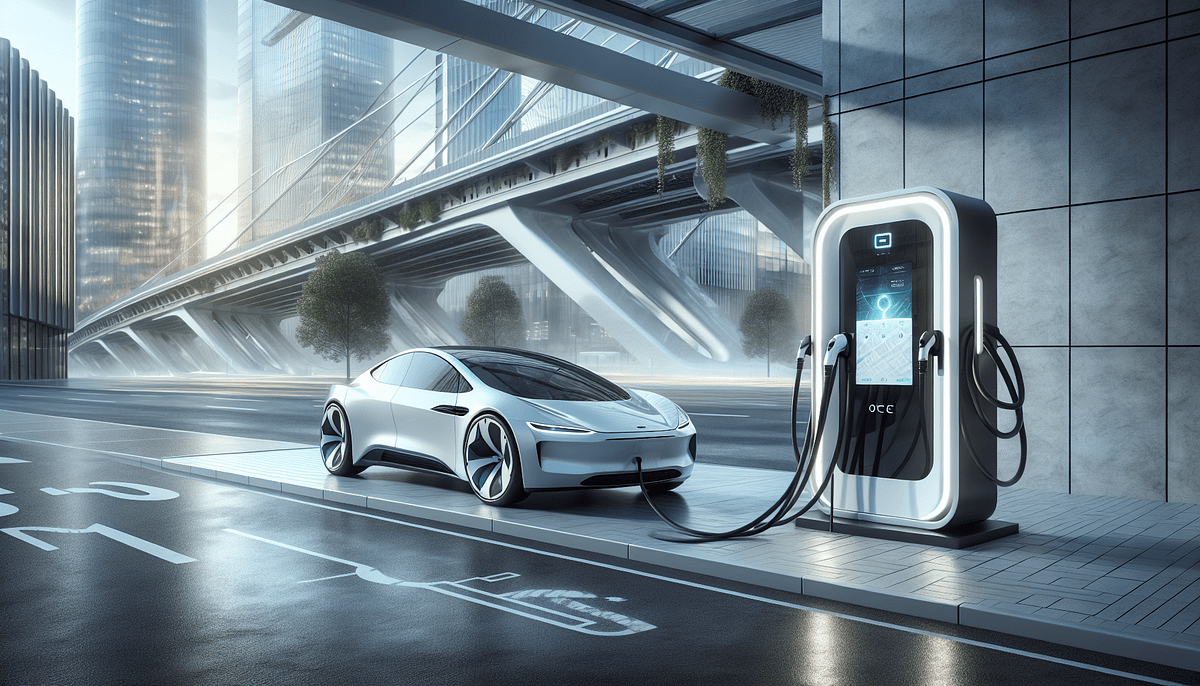
The electric vehicle (EV) revolution has passed its tipping point. With millions of EVs now on roads globally, the spotlight has shifted from the vehicles themselves to the infrastructure that powers them. As we navigate deeper into 2025, ev charging news is dominated by breakthroughs in speed, intelligence, and accessibility. No longer is the goal simply to install more chargers; the goal is to make charging invisible, instantaneous, and seamlessly integrated into daily life.
From ultra-fast batteries that charge in under ten minutes to wireless roads that power vehicles as they drive, the latest innovations are dismantling the two biggest barriers to EV adoption: range anxiety and charging downtime. This article explores the cutting-edge technologies and strategic shifts currently transforming electric mobility.
The Speed Revolution: Megawatt and Extreme Fast Charging
The most headline-grabbing ev charging news revolves around extreme fast charging (XFC). For years, a 20-minute charge from 10% to 80% was considered premium. Today, the benchmark is moving toward five minutes.
Megawatt Charging System (MCS)
While passenger EVs have dominated consumer news, the commercial transport sector has been quietly undergoing its own revolution. The Megawatt Charging System (MCS) is a new standard designed for heavy-duty trucks, buses, and even electric ships. Capable of delivering up to 3.75 megawatts (3,750 kW), MCS can charge a massive electric semi-truck to 80% in about 30 minutes—roughly the same time it takes for a mandatory driver break.
Recent pilot programs in Europe and the US have demonstrated MCS connectors that are liquid-cooled and weigh a fraction of earlier prototypes. For fleets, this is a game-changer. It means electric long-haul trucking is not just environmentally necessary but operationally superior to diesel.
Battery Breakthroughs: 5-Minute Charging
On the passenger side, companies like StoreDot and CATL have unveiled “extreme fast charging” cells using silicon-dominant anodes. In live demonstrations, these batteries achieved a 10% to 80% charge in just under five minutes—comparable to filling a gas tank. The key innovation is the battery management system, which uses artificial intelligence (AI) to precisely control temperature and voltage, preventing the lithium plating that traditionally occurs during rapid charging.
Wireless and Autonomous Charging: The End of the Plug?
Perhaps the most futuristic ev charging news is the steady march toward true wireless charging. While inductive charging pads (like those for smartphones) have existed for EVs, their efficiency and cost have been prohibitive. That is changing.
Static Wireless Pads
Companies like WiTricity and Plugless now offer aftermarket wireless pads with over 93% efficiency—nearly indistinguishable from wired Level 2 charging. Municipalities are beginning to install these pads in taxi stands, delivery zones, and apartment parking spots. The innovation is not just convenience; it’s reliability. Wireless systems have no moving parts, no exposed pins, and no risk of vandalism. For robotaxis (autonomous EVs without human drivers), wireless charging is non-negotiable.
Dynamic Wireless Charging (Roads That Charge)
The holy grail is dynamic wireless charging—embedded coils in the road surface that charge EVs while they drive. Recent breakthroughs in Sweden and Indiana, USA, have demonstrated “electric roads” that can deliver up to 200 kW to a moving vehicle using resonant magnetic induction.
The innovation lies in the pad design. New ferrite materials and coil geometries allow power transfer across an air gap of up to 10 inches with minimal energy loss. While the cost of retrofitting highways remains high, the technology is perfect for bus rapid transit lanes and last-mile delivery routes. Early adopters predict that dynamic charging could reduce required battery sizes by 70%, dramatically lowering EV costs and weight.
Smart and Bi-Directional Charging: EVs as Grid Assets
The ev charging news narrative has shifted from unidirectional power flow (grid to car) to bidirectional (car to grid, home, or load). This is known as V2X (vehicle-to-everything).
Vehicle-to-Home (V2H)
Following natural disasters, EVs equipped with V2H have become mobile backup generators. The latest Ford F-150 Lightning and Hyundai Ioniq 5, paired with the right home inverter, can power an average American home for three to five days. Recent software updates have automated this process: when the grid fails, the home seamlessly disconnects and draws power from the car’s battery.
Vehicle-to-Grid (V2G) Aggregation
At scale, thousands of plugged-in EVs represent a massive distributed battery. New V2G platforms from companies like Nuvve and Fermata Energy now use AI to predict energy prices and grid stability. If a storm is coming or a power plant goes offline, the aggregator pays EV owners to export power back to the grid for 15-30 minutes. Participants earn up to $1,500 annually, and the grid gains instant, clean resilience. The innovation is the low-latency communication protocol (ISO 15118-20) that makes these transactions secure and automated.
AI-Driven Charging Networks: The End of “Broken Charger”
One of the most persistent complaints from EV drivers is finding a charger that actually works. The latest ev charging news focuses on predictive maintenance and AI-powered routing.
Digital Twins and Predictive Analytics
Major networks like Electrify America and IONITY now deploy “digital twins”—virtual replicas of every charger that simulate wear and tear. Using real-time data on cable temperature, connector cycles, and local weather, the AI predicts when a cable will fail or a screen will malfunction. Technicians receive alerts before the driver ever sees an error. Early results show a 60% reduction in station downtime.
Route Planning with Real-Time Variables
Next-generation in-car navigation (think Tesla’s Trip Planner but open-source) now integrates not just charger locations but live charger availability, real-time charging speeds (which vary with temperature and load), and even the driver’s preferred coffee brand. Startups like Chargeway have simplified this into a color-coded, power-level map that removes the technical jargon. The innovation is the fusion of real-time telematics with user psychology, making route planning as simple as a gas station stop.
Sustainability Innovations: Solar, Storage, and Second-Life Batteries
The irony of an EV charged by a coal-fired power plant is not lost on the industry. Consequently, much ev charging news centers on making the charging process itself green and grid-friendly.
Solar Canopies with Integrated Storage
Gone are the days of a few solar panels on a parking meter. New charging hubs, like those being deployed by Sono Motors and Envision Solar, feature massive bifacial solar canopies (which capture sunlight from both sides) paired with second-life EV batteries for storage. These hubs can operate completely off-grid for days. During peak sunlight, they offer “super-green” charging—literally carbon-negative if the canopy also shades adjacent buildings, reducing AC loads.
Battery-Buffered DC Fast Chargers
A major grid constraint is that installing a 350 kW fast charger often requires an expensive grid upgrade. The innovation is the battery-buffered charger: a large, on-site battery (often repurposed from old EV packs) that trickle-charges from the grid at 50 kW but can discharge to a vehicle at 350 kW. This allows ultra-fast charging anywhere, even on weak rural grids. The newest models use AI to optimize grid draw, avoiding peak demand charges that traditionally made fast charging unprofitable.
Policy and Interoperability: The Software Layer
Hardware innovations mean little if a driver needs 14 different apps to charge. The latest breakthrough in ev charging news is finally achieving seamless roaming.
Plug and Charge (ISO 15118)
“Plug and Charge” is the EV equivalent of a hotel key card. You plug in, the car and charger authenticate cryptographically, and billing happens automatically—no app, no RFID card, no screen tapping. The innovation is the global push for mandating this standard. The European Union’s Alternative Fuels Infrastructure Regulation (AFIR) and recent US NEVI funding require all new publicly funded chargers to support Plug and Charge by late 2025.
Open Charge Point Protocol (OCPP) 2.1
The latest version of OCPP adds smart charging profiles, security certificates, and firmware-over-the-air updates. This means a charger from one manufacturer, managed by a second software company, on a third network can all talk to each other. For drivers, this means a single payment method (linked to your license plate or EV) that works across all networks. Several states in the US are now requiring OCPP 2.1 compliance for any charger receiving public funds.
The Road Ahead: What to Expect by 2026
Based on current ev charging news, here are three concrete predictions for the near future:
-
500 kW as the new standard: Just as 50 kW chargers became obsolete, today’s 350 kW chargers will be replaced by 500 kW units that can add 100 miles of range in three minutes for compatible vehicles.
-
Residential dynamic load balancing: Utilities will offer deep discounts on chargers that automatically throttle down when a home’s AC or dryer turns on, preventing panel upgrades and saving homeowners thousands.
-
Charging lanes on highways: At least three major corridors (in Germany, California, and China) will deploy dynamic wireless charging for trucks, enabling smaller batteries and continuous operation.
The common thread across all these innovations is a shift from viewing charging as a refueling event to viewing it as an integrated, intelligent, and often invisible service. The plug is not dead, but it is becoming just one option among many.
Frequently Asked Questions (FAQ)
Q1: What is the most important EV charging news right now?
The most critical development is the combination of megawatt-level charging for trucks and extreme fast charging (under 10 minutes) for passenger EVs. Additionally, the rise of ISO 15118 “Plug and Charge” interoperability is solving the fragmented user experience that has plagued public charging.
Q2: How close are we to wireless charging roads?
Dynamic wireless charging (charging while driving) is in live pilot stages, primarily for buses and fixed-route delivery vehicles. Wide-scale highway deployment is likely 7-10 years away due to infrastructure costs. However, static wireless pads (parking pads) are available today for home and select public parking spots.
Q3: Can any EV use a 350 kW fast charger?
No. A vehicle’s maximum charging rate is determined by its battery chemistry and thermal management system. Plugging a 50 kW-maximum EV into a 350 kW charger will simply charge at 50 kW—the charger adapts. Conversely, a 350 kW-capable EV will charge slower on a 50 kW charger. Always check your vehicle’s peak charge rate.
Q4: Does frequent fast charging damage my EV battery?
Modern EVs with active liquid cooling and battery management systems (BMS) can handle frequent DC fast charging with minimal degradation, typically less than 10% capacity loss over 200,000 miles. However, for daily needs, Level 2 (AC) charging is still gentler and more efficient. The key is avoiding leaving the battery at 100% state of charge in high heat for extended periods.
Q5: What is the difference between V2H, V2G, and V2L?
-
V2H (Vehicle-to-Home): Uses the EV battery to power your house, typically during outages or peak pricing.
-
V2G (Vehicle-to-Grid): Exports power from the EV to the utility grid, earning you credits.
-
V2L (Vehicle-to-Load): A simple 120V or 240V outlet in the car to power tools, tailgating gear, or another EV (emergency charging). All three require specific hardware and vehicle support.
Q6: How do I find reliable EV chargers on a road trip?
Use apps that combine real-time status, user reviews, and AI predictions. Recommended platforms include PlugShare (crowdsourced), A Better Routeplanner (ABRP) for navigation, and the native apps for major networks (Electrify America, EVgo, and IONITY). Look for chargers with recent check-ins and high “reliability scores.” Newer stations with liquid-cooled cables and OCPP 2.1 tend to be more reliable.
Q7: What is the cost difference between home and public charging?
Home charging (Level 2) is almost always the cheapest, averaging the equivalent of 1.00–1.50 per gallon of gasoline. Public DC fast charging is 3-5x more expensive, often comparable to gasoline (e.g., 0.35–0.65 per kWh). However, many automakers bundle free fast charging periods. The latest ev charging news includes subscription plans from networks that lower per-session fees.
Q8: Will there be a single standard for EV plugs globally?
Not entirely, but consolidation is happening. In North America, the industry is rapidly transitioning to the NACS (North American Charging Standard), originally developed by Tesla. In Europe and most of Asia, CCS2 is mandatory. China uses GB/T. The innovation is adapters—new universal adapters can convert between standards with minimal power loss, and most new public chargers are dual-cable or have built-in adapters.
Q9: How do battery-buffered chargers work without a grid upgrade?
A battery-buffered charger contains a large on-site battery (e.g., 200 kWh). The unit slowly charges that battery from the existing grid connection (say, 50 kW continuous). When an EV arrives, the charger pulls from the buffer battery at high speed (e.g., 300 kW for 10 minutes), then slowly recharges the buffer from the grid afterward. This avoids expensive demand spikes and new transformer installations.
Q10: What should I look for in a future-proof home EV charger?
Look for a charger that:
-
Supports OCPP (Open Charge Point Protocol) for future smart grid features.
-
Has a NACS or universal connector (or easily swappable cables).
-
Includes Wi-Fi and Bluetooth for over-the-air updates.
-
Is rated for up to 80 amps (48 amps is typical, but 80 amps future-proofs for larger vehicles).
-
Is UL or equivalent certified for safety and bidirectional capability (V2H-ready).
The world of EV charging is evolving faster than any other segment of the automotive industry. Keeping up with ev charging news is no longer optional for EV owners—it is the key to unlocking convenience, savings, and truly sustainable mobility. The innovations above prove that the future is not just electric; it is fast, wireless, intelligent, and shared.