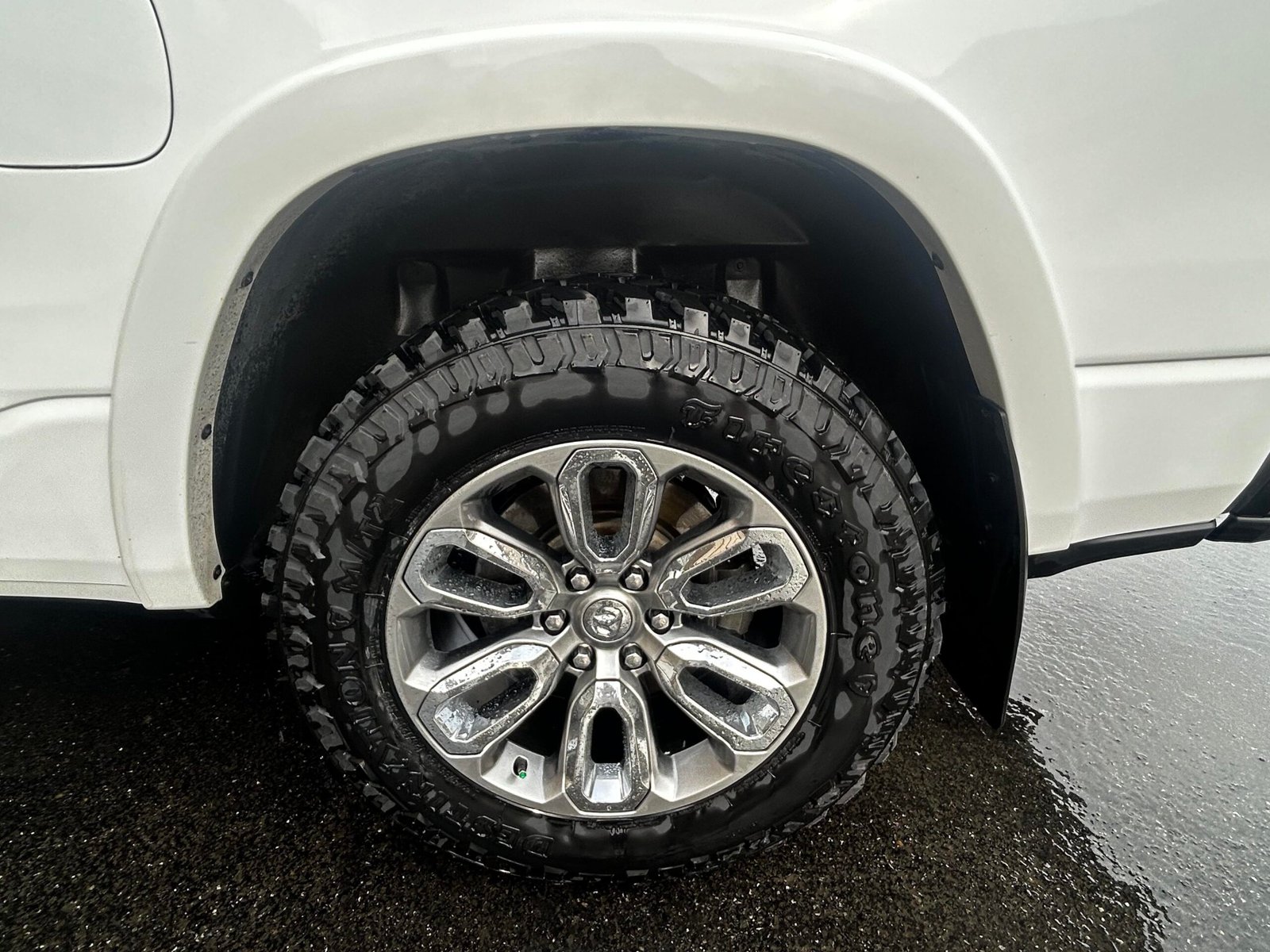
When you lift your truck, level your SUV, or simply look for a blend of highway comfort and off-road capability, tire size becomes the single most important decision. Among the most popular “plus-size” options for modern half-ton trucks and large SUVs is the 275/65R20. This metric sizing appears on vehicles ranging from the Ford F-150 and RAM 1500 to the Toyota Tundra and Chevrolet Tahoe.
But what do those numbers actually mean? How does this specific size affect your fuel economy, ride quality, and snow traction? And most importantly, is it the right tire for your daily driving?
This article provides a complete breakdown of the 275/65R20 tire—from its physical dimensions to its on-road manners, off-road capability, and factory fitments. By the end, you will know exactly whether this popular size belongs on your vehicle.
Part 1: Decoding the 275/65R20 Tire Size
Before discussing performance, we must understand the language stamped on the sidewall. The code 275/65R20 contains four critical pieces of information. Let us dissect each one.
1.1 Section Width: 275 mm
The first number, 275, represents the tire’s section width—the distance from the widest point of the sidewall to the opposite sidewall, measured in millimeters. For context, 275 mm converts to approximately 10.8 inches.
This width strikes a balance. It is wider than a standard 265 mm tire (10.4 inches) found on many stock trucks, offering more rubber on the road for stability. However, it is narrower than aggressive 285 mm or 295 mm tires, which reduces the risk of rubbing on suspension components or wheel well liners.
1.2 Aspect Ratio: 65
The second number, 65, is the aspect ratio. This is a percentage: the sidewall height equals 65% of the section width.
-
Calculation: 275 mm × 0.65 = 178.75 mm (approximately 7.04 inches) of sidewall height.
A 65-series sidewall is considered a “medium” profile. It provides more cushion and impact absorption than a low-profile 55 or 45 series, but it offers sharper handling and less sidewall flex than a 70 or 75 series. For truck owners, this means a comfortable daily driver that still resists excessive lean during cornering.
1.3 Construction: R (Radial)
The R stands for radial construction. Over 99% of modern passenger and light truck tires use radial technology, where cord plies run radially (perpendicular to the direction of travel). This provides lower rolling resistance, longer tread life, and better heat dissipation compared to old bias-ply tires.
1.4 Wheel Diameter: 20 inches
The final number, 20, indicates the tire fits a 20-inch diameter wheel. This is crucial. A 275/65R20 tire is specifically designed for 20-inch rims. You cannot mount it on a 18-inch or 22-inch wheel.
1.5 Overall Diameter and Revs Per Mile
Using the numbers above, we can calculate the total height:
-
Rim diameter: 20 inches
-
Sidewall height (two sidewalls, top and bottom): 7.04 inches × 2 = 14.08 inches
-
Total diameter: 20 + 14.08 = 34.08 inches (commonly rounded to 34.1 inches)
This 34-inch overall diameter is a key reason for the size’s popularity. It fills wheel wells nicely, provides ground clearance, and maintains reasonable gearing. At 60 mph, a 275/65R20 tire typically rotates about 610 to 615 revolutions per mile, depending on tread depth.
Part 2: Performance Characteristics of 275/65R20 Tires
Now that we understand the dimensions, let us examine how this size behaves across different driving conditions. Performance is not uniform—it heavily depends on the tire’s tread pattern, compound, and load rating. However, the size itself imposes certain inherent traits.
2.1 On-Road Handling and Stability
A 34-inch tall, 10.8-inch wide tire mounted on a 20-inch wheel offers a unique on-road feel. The shorter sidewall (7 inches) relative to a 33×10.5R17 tire means less lateral flex during cornering. You will notice more responsive steering input and reduced “squirm” during lane changes.
However, this is not a sports car tire. The 275/65R20 still weighs significantly more than a passenger-car tire—often 50 to 60 pounds per corner. Consequently, unsprung mass increases, which can make the suspension work harder over sharp impacts. High-quality shock absorbers become more important.
2.2 Ride Comfort and Noise
Aspect ratio dictates comfort. A 65-series sidewall provides a noticeable buffer against potholes, expansion joints, and gravel roads. Compared to a 275/55R20 (approximately 31.9 inches tall with a 5.9-inch sidewall), the 275/65R20 feels plusher. Compared to a 275/70R18 (33.2 inches tall with a 7.6-inch sidewall on an 18-inch rim), the 20-inch version rides slightly firmer due to less total rubber.
Noise is tread-dependent. All-terrain (A/T) tires in this size, such as the BFGoodrich KO2 or Falken Wildpeak A/T3W, produce a moderate hum above 45 mph. Highway-terrain (H/T) tires in the same size, like the Michelin Defender LTX M/S, are remarkably quiet. If you prioritize silence, choose a touring or highway tire.
2.3 Wet and Snow Traction
Wider tires like the 275 mm width generally float over standing water more than narrower tires. This means a higher risk of hydroplaning compared to a 245 mm or 255 mm tire. However, modern tread design compensates significantly. Look for deep circumferential grooves and abundant siping (tiny slits in tread blocks) for wet performance.
For snow, the 275/65R20’s width can be a double-edged sword. Wide tires exert lower ground pressure per square inch, which can cause them to “ride on top” of packed snow rather than biting through to pavement. The Three-Peak Mountain Snowflake (3PMSF) rating is more important than width. Many A/T tires in this size carry the 3PMSF rating, but dedicated winter tires (e.g., Bridgestone Blizzak LT) remain superior for severe icy conditions.
2.4 Load Capacity and Towing
This is where the 275/65R20 shines. Most tires in this size are Light Truck (LT) rated, often in Load Range E (10-ply equivalent) or XL (Extra Load). A typical LT275/65R20 tire has a load index of 126/123 or higher, translating to a single tire capacity of 3,750 pounds or more.
For a heavy-duty half-ton truck towing a 9,000-pound trailer, or a Suburban fully loaded with passengers and cargo, this load margin provides safety and stability. Always check your vehicle’s door jamb placard for the recommended load index. Never install a tire with a lower load index than the original equipment.
2.5 Fuel Economy Impact
Upsizing from a stock tire (e.g., 265/70R17 or 275/55R20) to a 275/65R20 will reduce fuel economy. There are three reasons:
-
Increased weight – Rotational mass requires more energy to accelerate.
-
Higher rolling resistance – A wider contact patch creates more friction.
-
Aerodynamic drag – A 34-inch tall tire pushes more air.
Expect a drop of 1 to 2 miles per gallon on average, depending on the tread aggressiveness. All-terrain tires hurt economy more than highway tires. Hybrid or diesel trucks (e.g., F-150 PowerBoost or EcoDiesel) will see a smaller percentage drop than gas V8s.
Part 3: Best Uses for 275/65R20 Tires
The 275/65R20 is not a one-trick pony. Its dimensions suit multiple driving profiles, from ranch work to family road trips. Below are the optimal use cases.
3.1 Daily Driven Half-Ton Trucks
Ford F-150, RAM 1500, Chevrolet Silverado 1500, GMC Sierra 1500, Toyota Tundra, and Nissan Titan owners frequently choose this size as a factory upgrade or aftermarket replacement. It maintains a reasonable speedometer error (typically +1 to 2% over stock 275/60R20 or 265/70R18) without requiring re-gearing.
For drivers who split time between highway commuting, towing a boat on weekends, and light off-roading on forest service roads, a 275/65R20 all-terrain tire is the goldilocks choice. It offers more capability than stock highway tires without the harshness of a mud-terrain.
3.2 Large SUVs and Crossovers
The Chevrolet Tahoe, Suburban, GMC Yukon, Ford Expedition, and Nissan Armada come from the factory with 20-inch wheels on higher trims. The 275/65R20 is a popular upsized replacement for the stock 275/55R20 (32-inch diameter) or 265/65R18 (31.5 inches).
Why upgrade a family SUV? Ground clearance. Adding 1 to 1.5 inches of lift via taller tires improves approach and departure angles for snowy driveways, unplowed roads, and light trailering. Plus, the taller sidewall absorbs bumps better than the low-profile 55-series, improving passenger comfort on rough pavement.
3.3 Overlanding and Light Off-Roading
True rock crawling demands smaller wheels (17 or 18 inches) for maximum sidewall flex and bead retention. However, for overlanding—mixing miles of highway with dirt tracks, mud, and sand—the 275/65R20 works admirably.
Pair this size with an all-terrain tire featuring reinforced sidewalls (e.g., Toyo Open Country A/T III or Nitto Ridge Grappler). The 34-inch diameter helps roll over ruts and small boulders, while the 10.8-inch width provides flotation in sand. Air down to 18-20 psi for soft terrain, and you will be surprised by the capability.
3.4 Winter Driving in Snow Belt States
If you live in Minnesota, Michigan, upstate New York, or Canada, consider a dedicated winter tire in 275/65R20. Options include the Bridgestone Blizzak LT, Nokian Hakkapeliitta LT3, and Michelin X-Ice Snow SUV.
The taller sidewall (65 aspect ratio) is beneficial for snow driving because it allows the tire to conform to uneven, frozen surfaces better than a low-profile tire. The width, however, is not ideal for deep, unpacked snow—a narrower 245/75R17 would cut through better. But for plowed highways and icy suburban streets, the 275/65R20 winter tire provides excellent braking and cornering grip.
3.5 Commercial and Fleet Use
Work trucks, service vans (e.g., Ford Transit 350 HD), and tow trucks often run 275/65R20 tires. The LT load range E offers high puncture resistance and the ability to carry heavy payloads. Commercial users prioritize tread life—look for tires with a high UTQG treadwear rating (600 or above) or a manufacturer warranty of 50,000+ miles.
Part 4: Vehicle Compatibility and Fitment Considerations
Not every truck or SUV can accept a 275/65R20 without modification. While many half-ton trucks have sufficient clearance, you must check the following:
4.1 Factory Fitment Examples
These vehicles come from the factory with 275/65R20 tires on specific trims:
-
RAM 1500 Rebel – Often equipped with 275/65R20 all-terrain tires.
-
Ford F-150 Tremor – Factory 275/65R20 general grabber A/T.
-
Toyota Tundra TRD Pro (2022+ on 18-inch wheels, but aftermarket 20s can fit).
-
Chevrolet Silverado 1500 LTZ/Z71 with optional 20-inch wheel package.
4.2 Common Fitment Issues
-
Rubbing at full lock – The 34-inch diameter may contact the front bumper valence, mud flaps, or sway bar. A leveling kit (2 to 2.5 inches) usually resolves this.
-
Spare tire clearance – A 34-inch spare may not fit in the factory under-bed hoist. Measure before purchasing a fifth tire.
-
Speedometer recalibration – Your speedometer will read slower than actual speed. Use a programmer (e.g., Hypertech, Superchips) or have the dealer recalibrate the PCM.
Part 5: Popular 275/65R20 Tire Models by Category
To help you choose, here are top-rated tires in this size broken down by use case.
Best Highway Terrain (Quiet, Long Lasting)
-
Michelin Defender LTX M/S – 70,000-mile warranty, excellent wet grip, very low noise.
-
Cooper Discoverer HT3 – Balanced treadwear, good for towing.
-
Bridgestone Dueler H/L Alenza Plus – Comfort-focused, OE on many SUVs.
Best All-Terrain (Off-Road Capable, Civilized On-Road)
-
BFGoodrich All-Terrain T/A KO2 – Legendary durability, 3PMSF rated, aggressive sidewall.
-
Falken Wildpeak A/T3W – Excellent snow traction, quiet for an A/T.
-
Toyo Open Country A/T III – Balanced performance, long tread life.
Best Mud-Terrain (Aggressive Off-Road, High Noise)
-
Nitto Ridge Grappler – Hybrid between mud and all-terrain, with good road manners.
-
Mickey Thompson Baja Boss A/T – Very aggressive, but surprisingly quiet.
-
Cooper Discoverer STT Pro—Maximum off-road traction, minimal for daily driving.
Best Winter / Snow
-
Bridgestone Blizzak LT – Studless winter compound, superb ice braking.
-
Nokian Hakkapeliitta LT3 – Designed for light trucks, low rolling resistance.
-
Michelin X-Ice Snow SUV – Longer tread life than most winter tires.
Part 6: Frequently Asked Questions (FAQ)
Q1: What vehicles come stock with 275/65R20 tires?
A: Several half-ton trucks and large SUVs offer this size as a factory option, including the RAM 1500 Rebel, Ford F-150 Tremor, Chevrolet Silverado 1500 (with certain 20-inch wheel packages), GMC Sierra 1500 AT4, and the Toyota Tundra (on some TRD trims with aftermarket wheels). Always check your vehicle’s tire placard or owner’s manual.
Q2: Can I put 275/65R20 tires on my stock truck without a lift?
A: It depends on your truck. Many modern half-ton trucks (2015+ F-150, 2019+ RAM 1500, 2014+ Silverado 1500) can fit this size without a lift if they originally came with a 32-inch or 33-inch tire. However, you may experience minor rubbing at full lock or during suspension compression. A 2-inch leveling kit is a common and inexpensive solution.
Q3: How much does a 275/65R20 tire weigh?
A: Weight varies by construction. A standard highway (H/T) tire typically weighs 46 to 52 pounds. A robust All-Terrain (A/T) tire weighs 54 to 62 pounds. A Mud-Terrain (M/T) or LT Load Range E tire can reach 65 to 72 pounds. Always check the specific tire’s specifications because weight directly affects fuel economy.
Q4: Will 275/65R20 tires fit on a 20×9-inch wheel?
A: Yes. The recommended wheel width range for a 275/65R20 is typically 7.5 to 9.5 inches. A 20×8-inch or 20×9-inch wheel is ideal. Mounting on a 20×10-inch wheel is possible but will stretch the sidewall, reducing bead retention and off-road durability. Always stay within the tire manufacturer’s approved rim width range.
Q5: How does 275/65R20 compare to 295/60R20?
A: The 295/60R20 is shorter and wider: approximately 33.9 inches tall and 11.6 inches wide. The 275/65R20 is taller (34.1 inches) and narrower (10.8 inches). The 295/60R20 provides better flotation in sand and mud but is more prone to rubbing on suspension components due to its extra width. For most daily drivers, the 275/65R20 is easier to fit.
Q6: Are 275/65R20 tires good for towing?
A: Yes, provided you choose an LT (Light Truck) version with an appropriate load index. A standard P-metric 275/65R20 may have a lower load capacity. Look for “LT275/65R20” on the sidewall. Ensure the load index (e.g., 126/123) meets or exceeds your vehicle’s Gross Axle Weight Rating (GAWR). LT tires also have stiffer sidewalls, which reduce trailer sway.
Q7: How much does tire pressure affect 275/65R20 performance?
A: Dramatically. For daily driving, follow the vehicle manufacturer’s recommended pressure (usually 35–45 psi for half-ton trucks). For LT tires, you may need higher pressures (50–60 psi) when towing heavy loads. Off-road, lowering pressure to 18–25 psi improves traction and ride comfort. Never drop below 15 psi without beadlock wheels.
Q8: What is the best 275/65R20 tire for snow?
A: For severe snow and ice, the Bridgestone Blizzak LT is the top performer. If you want a single tire for year-round use with good snow capability, choose the Falken Wildpeak A/T3W or BFGoodrich KO2, both of which carry the Three-Peak Mountain Snowflake (3PMSF) certification. However, no all-terrain tire matches a dedicated winter tire on ice.
Q9: Will 275/65R20 tires fit a Toyota Tundra?
A: On a 2007–2021 Tundra, a leveling kit (2 inches) is strongly recommended for 275/65R20 tires to prevent rubbing on the body mount and front bumper. On a 2022+ Tundra, this size fits with minor trimming or a small level. Always test fit before purchasing four or five tires. The spare tire hoist will not accommodate a 34-inch tire without modification.
Q10: How do I convert 275/65R20 to inches?
A: Simple conversion:
-
Width: 275 mm ÷ 25.4 = 10.8 inches
-
Sidewall height: 10.8 × 0.65 = 7.02 inches
-
Diameter: (7.02 × 2) + 20 = 34.04 inches
Thus, the tire is approximately 34 inches tall and 10.8 inches wide.
Q11: Do I need to recalibrate my speedometer after installing 275/65R20 tires?
A: Yes, if your stock tire was smaller (e.g., 275/55R20 or 265/70R18). The 34-inch diameter will cause your speedometer to read 2–3 mph slower at highway speeds (e.g., speedo shows 60 mph, actual is 62–63 mph). Recalibration using a device like Hypertech, Superchips, or a dealer flash is recommended to maintain accurate odometer and transmission shift points.
Q12: What is the difference between 275/65R20 and 275/60R20?
A: The 275/60R20 has a 60 aspect ratio, making it shorter. Its diameter is approximately 33.0 inches (compared to 34.1 inches for the 65 series). The 65 series provides 1.1 inches of additional ground clearance and a larger sidewall for comfort, but it may require a leveling kit where the 60 series often fits stock. The 275/60R20 is more common on factory luxury trucks (e.g., RAM Limited, Ford Platinum).
Conclusion: Is the 275/65R20 Right for You?
The 275/65R20 tire occupies a sweet spot in the truck and SUV market. It offers a 34-inch diameter for improved ground clearance and aggressive stance without crossing into the impractical realm of 35-inch tires that demand cutting, re-gearing, and major fuel economy penalties. Its 10.8-inch width provides stable on-road handling and ample load capacity for towing, while the 65-series sidewall absorbs daily driving imperfections.
If you drive a half-ton truck or large SUV primarily on pavement but venture onto gravel, fire roads, or snowy highways several times each month, this size—paired with a quality all-terrain tire—will serve you well. If you tow heavy trailers frequently, prioritize an LT version with Load Range E. And if you live in a harsh winter climate, consider a dedicated winter tire in the same size.
Always verify fitment on your specific vehicle, budget for a possible leveling kit or speedometer recalibration, and choose a tire model that matches your real-world needs, not just the aggressive look. When selected wisely, the 275/65R20 transforms a capable truck into a versatile, confident machine for work and play.