When you think of Mercedes-Benz, images of stately S-Class sedans or brutish G-Wagons might spring to mind. However, for over two decades, the German automaker has been courting a younger, more urban demographic with its entry-level series. The Mercedes Benz A Class has evolved dramatically from a quirky, tall MPV-like hatchback into a sleek, aggressive, and undeniably premium compact car. In this Mercedes Benz A Class review, we will dissect every element that makes this vehicle a standout in the competitive premium hatchback and sedan segment. We will explore its luxurious interior, spirited performance, cutting-edge technology, and practical features to help you decide if this baby Benz deserves a spot in your driveway.
A Legacy Reimagined: The Evolution of the A-Class
To appreciate the current model, one must understand its history. The original A-Class (W168) launched in 1997 was revolutionary for its sandwich floor concept, prioritizing safety and space. It was practical but not particularly beautiful. The second generation (W169) refined the shape, but it wasn’t until the third generation (W176) in 2012 that Mercedes truly disrupted the market. That model abandoned the tall-boy design for a conventional, sporty hot-hatch silhouette.
The current generation (W177 for the hatchback and V177 for the sedan), launched in 2018 and refreshed subsequently, is where the Mercedes Benz A Class finally feels like a true Mercedes. It borrows design cues from the CLS, featuring aggressive lines, a “Porsche Panamera-like” sloping roofline (on the sedan), and the signature diamond grille. This evolution proves that Mercedes listened to critics and enthusiasts, delivering a compact car that doesn’t compromise on brand identity.
Exterior Design: Compact Proportions, Big Ambitions
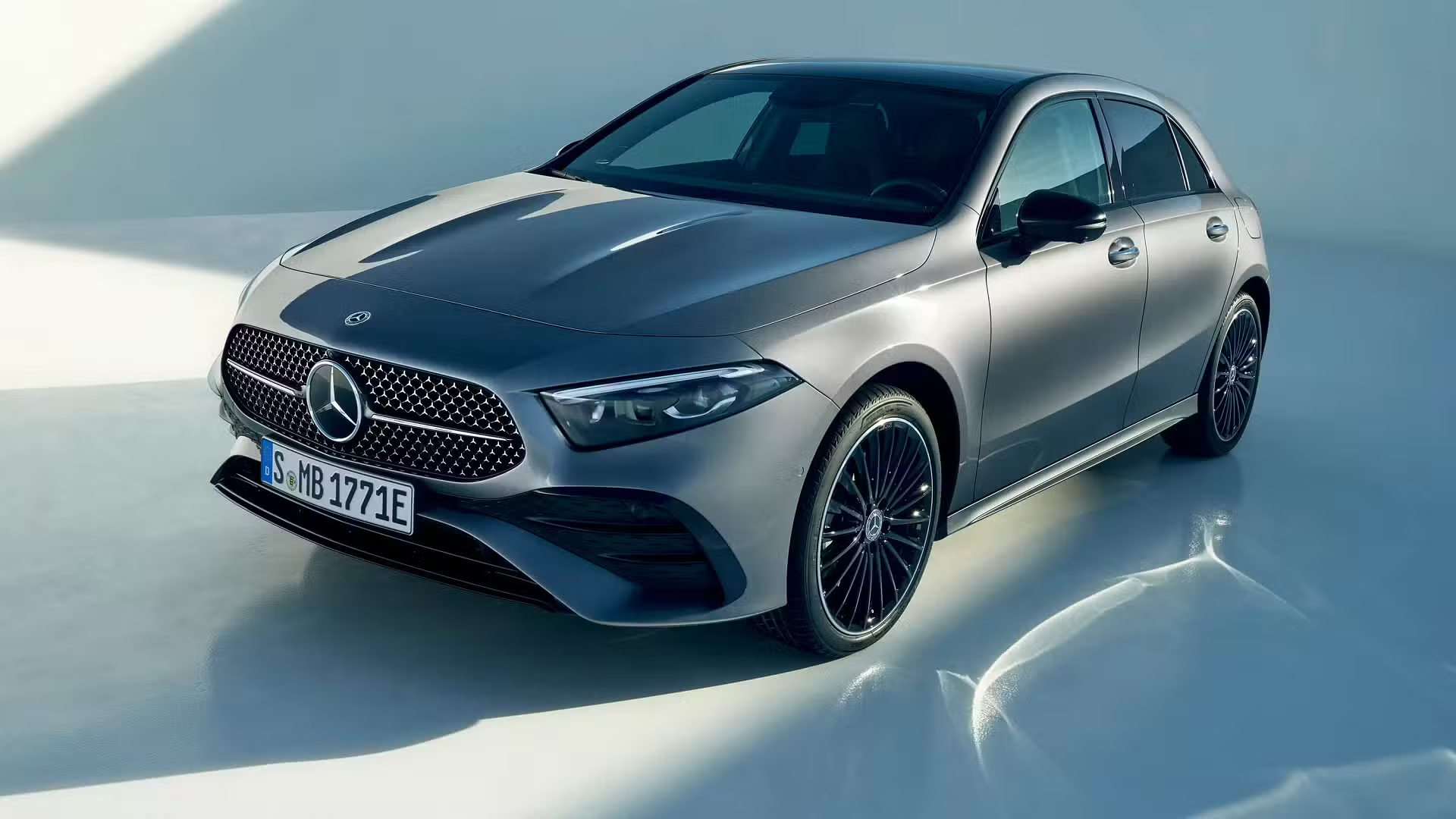
From the front, the Mercedes Benz A Class commands attention. The standard LED High-Performance headlamps feature a distinctive torch design, while the AMG Line trim adds larger air intakes and a more aggressive front splitter. The bonnet features powerdomes that hint at the performance lurking beneath.
In profile, the A-Class is taut and muscular. Short overhangs give it an agile stance, while the rising beltline creates a wedge shape that looks like it’s moving even when parked. Mercedes offers a range of alloy wheels from 16 to 19 inches, with the multi-spoke AMG designs being particularly fetching. The rear is clean and modern, with two-piece LED tail lamps connected by a chrome strip. Whether you opt for the five-door hatchback (popular in Europe and global markets) or the four-door sedan (very popular in North America and China), the car maintains a cohesive, expensive look that punches above its weight class.
Interior Luxury: A Segment Above
Step inside, and the argument that this is just an “entry-level” car evaporates immediately. The cabin of the Mercedes Benz A Class is a masterclass in democratizing luxury. The first thing you notice is the widescreen cockpit—either two 7.0-inch screens or, preferably, two 10.25-inch displays merged under a single glass cover. This setup, borrowed from the S-Class, immediately makes rivals feel dated.
Material quality is excellent where it matters. The dashboard is swathed in soft-touch materials, the metal-look switches have a satisfying heft, and the turbine-style air vents (which glow with 64-color ambient lighting) are simply delightful. The ambient lighting isn’t just a gimmick; at night, it transforms the cabin into a lounge-like space. The steering wheel features capacitive touch buttons that are intuitive once learned. However, piano black plastic around the center console is a fingerprint magnet, and rear legroom is merely adequate for adults on long journeys. But for front-seat occupants, the feeling is undeniably premium.
Performance and Engine Lineup: From Efficient to Explosive
When conducting a Mercedes Benz A Class review, the driving experience is paramount. The engine range is diverse, catering to efficiency seekers and performance junkies alike.
The Entry Point: A 180 and A 200
These models utilize a 1.33-liter, four-cylinder turbocharged engine co-developed with Renault. Don’t let the collaboration fool you; it’s a gem. Producing 134 bhp (A 180) or 161 bhp (A 200), this engine is smooth, refined, and willing to rev. It gets the hatch from 0-100 km/h in about 8.0 seconds. It’s not a rocket, but it never feels lethargic in city traffic.
The Diesel: A 200 d
For high-mileage drivers, the 2.0-liter diesel (148 bhp) is a torque-rich alternative. It offers effortless cruising on the motorway and returns impressive fuel economy (easily 60+ mpg). Refinement is excellent for a diesel, though a slight clatter is audible at idle.
The Hot Hatch: AMG A 35 4MATIC
This is where the fun begins. The A 35 uses a 2.0-liter turbo producing 302 bhp and 295 lb-ft of torque. Paired with standard 4MATIC all-wheel drive and a 7-speed dual-clutch transmission, it rockets to 60 mph in 4.6 seconds. The exhaust crackles on downshifts, and the handling is tenacious. It’s the perfect daily driver for enthusiasts.
The Monster: AMG A 45 S
At the top sits the most powerful four-cylinder engine in production: the M139. In the A 45 S, it produces a staggering 416 bhp. With drift mode and a ridiculously stiff chassis, this is a compact supercar killer. It is violent, loud, and utterly addictive.
Transmission and Driving Dynamics
All models, barring some base manual variants (now rare), use a 7G-DCT or 8G-DCT dual-clutch automatic transmission. The shifts are lightning-fast in Sport mode and silky smooth in Comfort mode. The suspension is a MacPherson strut front and multilink rear setup. On standard suspension, the ride is firm but compliant. On the AMG models or with optional “lowered comfort suspension,” it gets noticeably stiffer.
The steering is light and artificially weighted but accurate. It lacks the raw feedback of a BMW 1 Series, but it gains points for making city driving effortless. Over pockmarked urban roads, the A-Class feels solid, with no squeaks or rattles—a testament to its build quality.
Technology: The “Hey Mercedes” Experience
The headline feature of the Mercedes Benz A Class is its MBUX (Mercedes-Benz User Experience) infotainment system. The “Hey Mercedes” voice assistant is genuinely useful. It can adjust the temperature, change radio stations, find restaurants, and even explain car functions. It learns your habits over time.
The navigation system with Augmented Reality is a game-changer. When approaching a complex junction, the central screen displays a live video feed from the front camera, overlaid with directional arrows. You literally see where to turn. Wireless Apple CarPlay and Android Auto are standard on newer models, along with a superb Burmester surround sound system (optional) that turns the cabin into a concert hall.
Safety and Driver Assistance
Mercedes did not skimp on safety for their entry-level model. The Mercedes Benz A Class scored a maximum 5-star Euro NCAP rating. Standard equipment includes:
-
Active Brake Assist (autonomous emergency braking)
-
Attention Assist (detects drowsiness)
-
Lane Keeping Assist
-
Speed Limit Assist
Optional upgrades include Driving Assistance Package Plus, which adds adaptive cruise control with stop-and-go, active steering assist (semi-autonomous driving on highways), and evasive steering support. For a compact car, the level of safety tech is reassuringly high.
Practicality and Everyday Usability
Is the A-Class practical? It depends on your needs. The hatchback offers 350 liters of boot space, which is slightly less than a Volkswagen Golf (380L). The sedan offers 420 liters with a narrower opening. Folding the rear seats (40:20:40 split) expands storage for longer items.
Cabin storage is decent: there’s a cubby under the front armrest, two cupholders, and decent door bins. However, the sloping roofline eats into rear headroom. If you frequently carry tall adults in the back, a C-Class or a rival like the Audi A3 Sportback offers more headroom. The A-Class is best for couples, singletons, or families with small children.
Fuel Economy and Running Costs
The running costs are surprisingly manageable for a premium brand. The petrol A 200 averages around 45-50 mpg in mixed driving. The diesel A 200 d can exceed 65 mpg on a run. Insurance groups are higher than mainstream compacts (like a Honda Civic), but lower than most dedicated sports cars. Maintenance is expensive if you go to a main dealer, but Mercedes offers service packages that can spread the cost. Depreciation is moderate; the AMG variants hold value better than the base models.
How It Compares to Rivals
The premium compact segment is fierce. Here is how the Mercedes stacks up:
-
Audi A3: More conservative interior, but better build quality and rear space. The Audi feels clinical; the Mercedes feels emotional.
-
BMW 1 Series: The only rear-wheel-drive (actually now FWD in base models, but RWD bias in higher trims?) Corrected: New 1 Series is FWD. BMW offers sharper handling and a better manual transmission, but the interior is less glitzy than the Mercedes.
-
Audi A3: The A3’s virtual cockpit is excellent, but the Mercedes’ MBUX is more advanced. The Mercedes wins on interior design flair.
-
Tesla Model 3: Electric rival. The Model 3 is faster and cheaper to run, but the Mercedes has vastly superior interior quality and fewer quality control issues.
Ultimately, the Mercedes Benz A Class wins on emotional appeal. It feels more special to sit in than any of its rivals.
Pros and Cons: A Balanced Mercedes Benz A Class Review
Pros:
-
Interior design: The ambient lighting and screen layout are best-in-class.
-
Technology: MBUX and Augmented Reality nav are cutting-edge.
-
Engine range: From frugal to fire-breathing, there’s an option for everyone.
-
Brand cachet: You are driving a Mercedes, and it looks the part.
-
AMG variants: The A 35 and A 45 S are class-leading hot hatches.
Cons:
-
Rear space: Cramped for tall adults.
-
Ride quality: Can be firm on rough roads (especially with larger wheels).
-
Price: Once you add options, it encroaches on C-Class territory.
-
Piano black trim: Looks great new; scratches easily.
-
Touch-sensitive steering wheel buttons: Can be accidentally pressed.
Verdict: Is the Mercedes-Benz A-Class Worth It?
After driving the range from the humble A 180 to the riotous A 45 S, the conclusion of this Mercedes Benz A Class review is overwhelmingly positive. Yes, it has flaws—tight rear seats and a firm ride chief among them. However, what it does well, it does brilliantly. The cabin is a genuinely luxurious place to spend time, the tech is industry-leading, and the performance options are thrilling.
This is not merely a “baby Benz” for badge chasers. It is a sophisticated, well-engineered compact car that happens to wear a three-pointed star. If you prioritize a beautiful interior and cutting-edge infotainment over maximum rear legroom, the A-Class is arguably the best compact premium car on sale today. For young professionals, empty-nesters, or small families, the Mercedes Benz A Class delivers a slice of S-Class magic in a city-friendly package.
Frequently Asked Questions (FAQ)
1. Is the Mercedes-Benz A-Class a reliable car?
Generally, yes. The current generation (W177/V177) has proven reliable. The 1.33-litre petrol engine (co-developed with Renault) has been solid. However, as with any modern German car, the complex electronics (MBUX, lighting systems) can occasionally have glitches. Following the scheduled maintenance is critical. Avoid early models (2018-2019) with known software bugs.
2. Is the A-Class expensive to maintain?
More expensive than a Toyota or Honda, but average for a premium German compact. An annual service can range from $300 to $600 depending on your location and dealer. Mercedes offers pre-paid service plans that reduce the shock. Parts (brakes, tires) are pricier due to the run-flat tires on some models and performance-oriented components.
3. Which A-Class engine is the best for daily driving?
The A 200 (1.33 liter, 161 bhp) is the sweet spot. It offers enough punch for highway merging, returns excellent fuel economy (45+ mpg), and is cheaper to insure than the AMG variants. If you drive mostly in cities, the A180 is adequate. If you do many motorway miles, consider the A200d diesel for its torque and range.
4. Does the Mercedes-Benz A-Class have all-wheel drive?
Yes, but only on the performance models. The A 220 4MATIC and all AMG A 35 and A 45 variants come with Mercedes’ 4MATIC all-wheel drive. Front-wheel drive is standard on the A 180, A 200, and A 200 d. The 4MATIC system improves traction in rain and snow but slightly reduces fuel economy.
5. What is the difference between the A-Class hatchback and the A-Class sedan?
-
Hatchback: More popular in Europe. Shorter overall length (easier parking), slightly less trunk space (350L), sportier appearance.
-
Sedan: More popular in North America and China. Longer wheelbase (more rear legroom), larger trunk (420L), more traditional three-box design. Mechanically, they are identical.
6. How does the MBUX system work?
MBUX (Mercedes-Benz User Experience) is controlled via voice (“Hey Mercedes”), a touchpad on the center console, the touchscreen, or steering wheel buttons. The system learns your routines. The latest generation includes an “Augmented Reality” nav that overlays arrows onto a live camera feed. It is intuitive but has a learning curve for older users.
7. Can I fit a child seat in the back of an A-Class?
Yes, but it is tight. The A-Class has two ISOFIX points on the outer rear seats. A rear-facing child seat will force the front passenger to move their seat forward significantly. If you frequently carry two children in rear-facing seats, the C-Class or GLB is a better choice. For forward-facing booster seats, it is fine.
8. Does the A-Class hold its value?
Moderately well, but not as well as a BMW 1 Series or a Mini. The AMG models (especially the A 45 S) hold value best. Base models depreciate faster, particularly if specced with unusual colors or missing popular options (like the large screens). A well-optioned A 200 with LED lights and the widescreen cockpit will have better resale value than a base stripper model.
9. Is the Mercedes-Benz A-Class a good first car?
For a young driver, the A180 is a fantastic first premium car. It offers excellent safety (auto braking and lane assist), a high driving position, and manageable dimensions. However, insurance costs will be high for teenagers due to the Mercedes badge. Also, the cost of repairs (e.g., a cracked windshield) is significantly more than on a mainstream hatchback.
10. What are the common faults in the A-Class?
-
Creaky sunroof: Some models develop a creaking sound in the panoramic roof.
-
Steering wheel touch controls: Can be oversensitive or fail to register swipes.
-
Early MBUX lag: Pre-2020 cars had slower system response (updates fixed this).
-
Rear door seals: Occasional reports of water ingress.
-
Brake squeal: Particularly on the A 35/A 45 during low-speed maneuvers. This is normal for high-performance brakes.
Final Tip: When test driving a Mercedes Benz A Class, ensure you test the base audio system versus the Burmester upgrade. Also, try the “Hey Mercedes” assistant in a noisy environment to see if it works for you. The A-Class is a car you buy with your heart as much as your head, and for most people, that is perfectly okay.