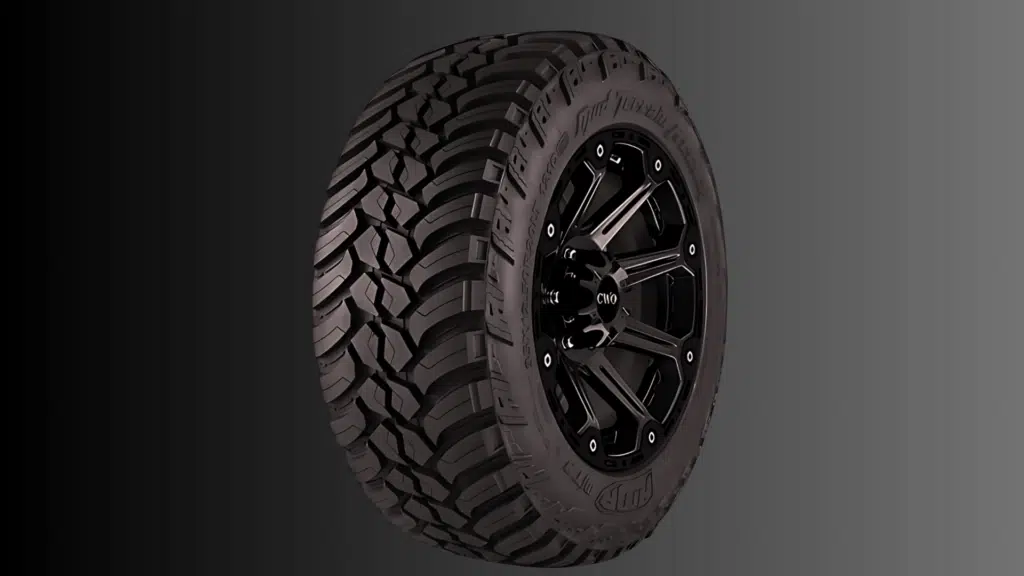
When you look at the sidewall of a truck or SUV tire and see the alphanumeric code “285/55R20,” it can look like a secret code. To the untrained eye, it’s a jumble of numbers and letters. However, to automotive enthusiasts, mechanics, and off-road adventurers, this code is a detailed blueprint of the tire’s physical dimensions.
Converting metric tire sizes to inches is a practical skill. While the metric system provides precision (millimeters for width and aspect ratio for sidewall height), the imperial system (inches) is the standard for wheel diameters, overall tire height, and suspension lift calculations in the United States.
In this article, we will break down exactly what 285/55R20 means, convert every component into inches, calculate the total diameter and circumference, and explain why these conversions matter for your vehicle’s performance, speedometer accuracy, and fitment.
Understanding the Tire Code: 285/55R20
Before we convert anything, we must understand what each segment of the code represents.
-
285 – This is the tire’s section width measured in millimeters from the widest point of the sidewall to the other.
-
55 – This is the aspect ratio. It means the sidewall height is 55% of the tire’s width.
-
R – This stands for Radial construction, which is the standard for modern passenger tires.
-
20 – This is the rim diameter measured in inches.
To convert this tire to inches, we need to translate the metric width and sidewall height into imperial units while keeping the rim diameter in inches.
Step-by-Step Conversion: 285/55R20 to Inches
Let’s break this down methodically.
Step 1: Convert the Section Width from Millimeters to Inches
The width is 285 mm. Since one inch equals exactly 25.4 millimeters, we divide:
285 mm ÷ 25.4 = 11.22 inches
Thus, the tread width is approximately 11.22 inches wide.
In practical terms, this is a fairly wide tire, typical for full-size trucks, large SUVs (like a Chevrolet Tahoe or Ford Expedition), and performance-oriented crossovers.
Step 2: Calculate the Sidewall Height
The aspect ratio (55) means the sidewall height is 55% of the section width.
First, calculate the sidewall height in millimeters:
285 mm × 0.55 = 156.75 mm
Now convert that to inches:
156.75 mm ÷ 25.4 = 6.17 inches
Each sidewall (from rim edge to tread) is 6.17 inches tall.
Step 3: Calculate the Total Tire Diameter
The tire’s overall diameter consists of three parts: the bottom sidewall, the rim diameter, and the top sidewall.
Total Diameter = (Sidewall Height × 2) + Rim Diameter
Using our numbers:
(6.17 inches × 2) + 20 inches = 12.34 inches + 20 inches = 32.34 inches
Therefore, a 285/55R20 tire has an overall diameter of approximately 32.34 inches.
This is a crucial figure. A 32.34-inch tire is considered a “32-inch tire” in common off-road terminology, though it’s slightly taller than a true 32.
Step 4: Calculate the Circumference
Circumference is the distance around the tire. It determines how far the vehicle travels with each revolution.
Circumference = π × Diameter
Circumference = 3.1416 × 32.34 inches = 101.6 inches
To convert to feet:
101.6 inches ÷ 12 = 8.47 feet per revolution
This means every time the tire spins once, your vehicle moves forward roughly 8.5 feet.
Step 5: Calculate Revolutions Per Mile
Knowing how many times the tire rotates per mile helps calibrate speedometers and odometers.
There are 63,360 inches in a mile (5,280 feet × 12 inches).
Revolutions per mile = 63,360 ÷ Circumference (in inches)
63,360 ÷ 101.6 = 623.6 revolutions per mile
Thus, a 285/55R20 tire rotates about 624 times per mile.
Summary: 285/55R20 Tire Dimensions in Inches
| Measurement | Metric Value | Imperial Value (Inches) |
|---|---|---|
| Section Width | 285 mm | 11.22 inches |
| Sidewall Height | 156.75 mm | 6.17 inches |
| Rim Diameter | 20 inches | 20 inches |
| Overall Diameter | 821.4 mm | 32.34 inches |
| Circumference | 2580 mm | 101.6 inches |
| Revolutions/Mile | N/A | 624 |
Visualizing 285/55R20: How Big Is This Tire?
To give you a real-world sense of scale:
-
Compared to a standard passenger car tire (e.g., 225/65R17 ≈ 28.5 inches tall), the 285/55R20 is nearly 4 inches taller and much wider.
-
Compared to a common truck tire (e.g., 265/70R17 ≈ 31.6 inches tall), it’s about 0.74 inches taller and 0.7 inches wider.
-
Compared to a 33-inch tire (e.g., 285/70R17 = 32.7 inches), the 285/55R20 is slightly shorter (32.34 vs. 32.7 inches) but rides on a larger 20-inch rim.
Visually, a 285/55R20 tire has a relatively low-profile sidewall for a truck tire (6.17 inches). It’s not a “rubber band” low-profile like a sports car, but it’s also not a tall, squishy off-road sidewall.
Why Convert 285/55R20 to Inches?
You might wonder why anyone would bother with this conversion. Here are the primary reasons:
1. Lift Kit and Clearance Calculations
When you lift a truck or SUV, manufacturers recommend tire sizes in inches. A common question is, “Will 33-inch tires fit my lifted F-150?” Knowing that 285/55R20 equals 32.34 inches tells you that these tires are slightly under 33 inches. They will likely fit a leveling kit or small lift, whereas a true 33-inch tire might rub.
2. Speedometer Calibration
Your vehicle’s speedometer is calibrated for a specific tire diameter. If you switch from a stock tire size to 285/55R20, and the stock tire was a different height, your speedometer will be inaccurate.
For example, if your stock tire was 31.5 inches tall and you move to 32.34 inches, your actual speed will be faster than your speedometer indicates. The formula:
(New Diameter / Old Diameter) × Speedometer Reading = Actual Speed
At an indicated 60 mph, your actual speed would be:
(32.34 / 31.5) × 60 = 61.6 mph
That’s a 1.6 mph error—minor but worth noting.
3. Gear Ratio Optimization
Changing tire diameter affects your effective gear ratio. Taller tires (like 32.34 inches) reduce engine RPM at highway speeds, which can hurt acceleration and towing capacity. To compensate, you might need to re-gear your differentials. Knowing the exact inch measurement helps you calculate the required gear change.
4. Clearance for Wheel Wells and Suspension
When upgrading tires, you need to ensure they don’t rub against the fender liner, upper control arm, or sway bar. The 11.22-inch width is just as important as the height. Many stock wheels have offsets that accommodate up to 11 inches wide, so 285 mm is near the limit without spacers or aftermarket wheels.
Pros and Cons of 285/55R20 Tires
Advantages
-
Excellent highway stability – The wide footprint (11.22 inches) and 20-inch rim reduce sidewall flex, improving cornering and steering response.
-
Modern aesthetics – 20-inch rims are standard on many new trucks (Ram 1500, Toyota Tundra, Ford F-150). This size fills the wheel well nicely without looking overly bulky.
-
Good load capacity – Most 285/55R20 tires are XL (extra load) or E-rated (10-ply), making them suitable for towing and heavy SUVs.
-
Reasonable off-road capability – While not a mud-terrain specialist, the 6.17-inch sidewall offers enough compliance for gravel roads and light trails.
Disadvantages
-
Harsher ride than smaller rims – Compared to an 18-inch or 17-inch rim with a taller sidewall, the 285/55R20 transmits more road imperfections into the cabin.
-
Heavier – A 20-inch tire and wheel combo weighs significantly more than a smaller setup, reducing fuel economy and braking performance.
-
More expensive – 20-inch tires cost more than 17- or 18-inch equivalents. Expect to pay $250–$400 per tire for reputable brands.
-
Less off-road traction in deep terrain – The lower sidewall (6.17 inches) doesn’t conform to rocks and ruts as well as a 70-series or 75-series tire.
Common Vehicles That Use 285/55R20
This tire size is not random; it is an OEM (Original Equipment Manufacturer) size or popular upgrade for several vehicles:
-
Ford F-150 (2015+ with 20-inch wheels)
-
Ram 1500 (Rebel, Laramie, Limited trims)
-
Chevrolet Silverado 1500 (LTZ, High Country)
-
GMC Sierra 1500 (Denali, AT4)
-
Toyota Tundra (Limited, 1794 Edition with 20” wheels)
-
Nissan Titan (Platinum Reserve)
-
Ford Expedition (Platinum, King Ranch)
-
Chevrolet Tahoe / Suburban (Premier, High Country)
-
Lincoln Navigator
If you own one of these vehicles and want a slightly aggressive look without compromising ride quality or needing a lift, 285/55R20 is an excellent choice.
Comparison: 285/55R20 vs. Other Popular Sizes
To help you decide if this size is right for you, let’s compare it to common alternatives.
| Tire Size | Diameter (in) | Width (in) | Sidewall (in) | Rim (in) |
|---|---|---|---|---|
| 265/60R20 | 32.5 | 10.43 | 6.26 | 20 |
| 285/55R20 | 32.34 | 11.22 | 6.17 | 20 |
| 275/60R20 | 33.0 | 10.83 | 6.50 | 20 |
| 295/55R20 | 32.8 | 11.61 | 6.39 | 20 |
| 305/55R20 | 33.2 | 12.01 | 6.60 | 20 |
| 33×12.50R20 | 33.0 | 12.50 | 6.50 | 20 |
Key takeaways:
-
Compared to 265/60R20 (a common stock size), the 285/55R20 is slightly shorter (32.34 vs. 32.5) but significantly wider (11.22 vs. 10.43). It will have a slightly firmer ride due to the shorter sidewall.
-
Compared to 275/60R20, the 285/55R20 is 0.66 inches shorter and 0.39 inches wider. It will look more aggressive but may lower your vehicle’s ground clearance slightly.
-
Compared to 33×12.50R20 (a true off-road size), the 285/55R20 is 0.66 inches shorter and 1.28 inches narrower. The 33-inch tire is better for serious off-roading but worse for highway fuel economy.
How 285/55R20 Affects Your Driving Experience
On-Road Handling
The 11.22-inch width puts a lot of rubber on the road. This improves dry traction, braking stability, and cornering grip. However, on wet roads, wider tires are more prone to hydroplaning if the tread pattern isn’t designed for water evacuation. Look for tires with wide circumferential grooves.
Fuel Economy
A 285/55R20 tire is heavier and has greater rolling resistance than a narrower tire. Expect a drop of 1–2 mpg compared to stock 265-width tires. Aggressive all-terrain treads will reduce mpg further.
Ride Comfort
With a 6.17-inch sidewall, you will feel expansion joints and potholes more than you would with a 70-series tire. If ride comfort is your top priority, consider a 275/60R20 (6.5-inch sidewall) or downsizing to 18-inch rims.
Snow and Ice Performance
For winter driving, narrower tires are generally better because they concentrate vehicle weight onto a smaller footprint, increasing pressure on snow. The 285/55R20’s wide footprint can float over snow. If you live in a snowy climate, consider a dedicated winter tire or a narrower all-terrain like a 275/55R20.
Choosing the Right Tire Brand in 285/55R20
Many reputable brands offer this size. Here are a few top picks by category:
-
Highway All-Season (Quiet, long tread life): Michelin Defender LTX M/S, Continental TerrainContact H/T, Pirelli Scorpion AS Plus 3.
-
All-Terrain (Moderate off-road, good on-road): BFGoodrich Trail-Terrain T/A, Cooper Discoverer AT3 4S, Falken Wildpeak A/T3W, Toyo Open Country A/T III.
-
Mud-Terrain (Aggressive off-road): Nitto Ridge Grappler, Mickey Thompson Baja Boss A/T, Goodyear Wrangler Duratrac.
-
Premium Performance (For SUVs): Bridgestone Dueler H/L Alenza Plus, Yokohama Geolandar X-CV.
Always check the load index and speed rating. For heavy trucks, look for an XL or E (10-ply) rating.
Installation and Fitment Tips
Before buying 285/55R20 tires, verify the following:
-
Wheel width compatibility: 285 mm (11.22 inches) fits best on 8.5–10-inch-wide wheels. Stock 20×8.5 wheels will work. Narrower than 8 inches may cause pinching.
-
Offset: Stock offset (+30 to +55 mm) usually works. Aggressive negative offset (e.g., -12 mm) may cause rubbing on the fender.
-
Lift requirement: Most stock full-size trucks clear 32.34-inch tires without a lift. However, some vehicles (especially older models or lower trims) may require a leveling kit (1–2 inches) to prevent rubbing at full lock.
-
Spare tire clearance: Ensure your spare tire carrier can accommodate a 32.34-inch diameter tire.
Frequently Asked Questions (FAQ)
Q1: How many inches tall is a 285/55R20 tire?
A: A 285/55R20 tire is approximately 32.34 inches in overall diameter.
Q2: How wide is a 285/55R20 tire in inches?
A: The section width is approximately 11.22 inches.
Q3: What is the sidewall height of a 285/55R20 in inches?
A: Each sidewall is 6.17 inches tall, measured from the rim edge to the tread surface.
Q4: Will 285/55R20 fit on a stock truck without a lift?
A: In most cases, yes. Full-size trucks like the Ford F-150, Ram 1500, and Chevrolet Silverado typically fit 32- to 34-inch tires without modification. However, some trucks may require a leveling kit if the front suspension sits low or if you have aftermarket wheels with an aggressive offset.
Q5: Can I put 285/55R20 tires on 20×9-inch wheels?
A: Absolutely. A 20×9-inch wheel is within the ideal rim width range for 285 mm tires (8.5–10 inches). Ensure the bolt pattern and offset match your vehicle.
Q6: How does 285/55R20 compare to 33-inch tires?
A: A true 33-inch tire (e.g., 285/70R17 or 33×12.50R20) is about 0.66 inches taller than 285/55R20. The 33-inch tire will provide slightly more ground clearance but may require a lift and will hurt fuel economy more.
Q7: Will 285/55R20 fit a Toyota Tundra?
A: Yes, on Tundras with factory 20-inch wheels (2014+). No lift is required for stock suspension. However, some aftermarket upper control arms may need adjustment for clearance at a full turn.
Q8: What is the difference between 285/55R20 and 275/60R20?
A: 275/60R20 is taller (33.0 inches) but narrower (10.83 inches). 285/55R20 is shorter (32.34 inches) and wider (11.22 inches). The 275/60R20 offers a smoother ride; the 285/55R20 offers more aggressive looks and stability.
Q9: Does 285/55R20 require a speedometer recalibration?
A: If your stock tire diameter was different from 32.34 inches, yes. For example, if your stock tires were 31.6 inches, your speedometer would read about 2% low. Recalibration via a tuner (e.g., Hypertech, Superchips) is recommended.
Q10: What is the best tire pressure for 285/55R20?
A: For most full-size trucks, 35–40 PSI cold is typical for highway driving. Check your vehicle’s door placard, but note that the placard is for stock tires. For heavy loads or towing, increase to 45–50 PSI in the rear. Never exceed the tire’s sidewall maximum (usually 50–80 PSI for LT-metric tires).
Q11: Are 285/55R20 tires good for towing?
A: Yes, if they are LT (Light Truck) rated with an E load range (10-ply). They provide stable sidewalls and high load capacity. Avoid standard passenger (P-metric) tires for heavy towing.
Q12: How much do 285/55R20 tires weigh?
A: Depending on the brand and construction (P-metric vs. LT), they weigh between 45 and 58 pounds each. LT all-terrain tires are on the heavier end.
Q13: What is the circumference of a 285/55R20 tire?
A: Approximately 101.6 inches or 8.47 feet.
Q14: Can I use 285/55R20 as a winter tire?
A: You can, but a narrower tire (e.g., 255/70R18 or 275/55R20) would perform better in deep snow. If you choose 285/55R20 for winter, buy a dedicated winter tire like the Bridgestone Blizzak or Michelin X-Ice, not an all-terrain.
Q15: Is 285/55R20 the same as 32×11.20R20?
A: Approximately, yes. In off-road sizing, 285/55R20 rounds to a 32×11.20R20. However, most “32-inch” tires are slightly smaller (31.7–32.0 inches). This tire is actually 32.34 inches, so it’s closer to a 32.5-inch tire.
Conclusion
The 285/55R20 tire size strikes an excellent balance between modern aesthetics, on-road handling, and light off-road utility. After converting to inches, we see it is 32.34 inches tall and 11.22 inches wide, with a 6.17-inch sidewall, riding on a 20-inch rim.
For owners of full-size trucks and SUVs, this size offers a more aggressive stance than stock 265/60R20 tires without sacrificing daily drivability or requiring major suspension modifications. However, it’s not the best choice for serious rock crawling or maximum ride comfort.
Before purchasing, always verify your vehicle’s specific clearance, wheel width, and load requirements. And remember: when you change tire diameter, even by 0.8 inches, your speedometer, odometer, and effective gearing all change slightly. Use an online speedometer calculator or a tuner to correct for these differences.
Whether you’re replacing worn-out tires or upgrading for a new look, understanding the inch conversion of 285/55R20 ensures you make an informed, confident decision.