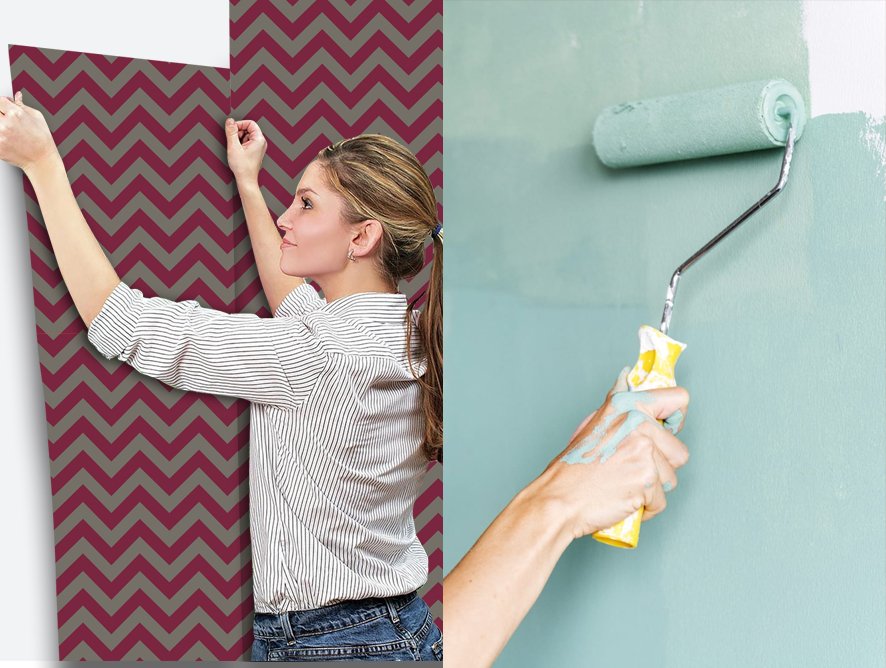
The “great wall debate” is one of the oldest questions in interior design. On one side, you have paint: the classic, reliable, and endlessly customizable option that has been used for millennia. On the other hand, you have wallpaper: the dramatic, textured, and pattern-filled choice that has been adding personality to rooms since the 1600s.
Choosing between them can feel overwhelming. Do you prioritize longevity or upfront cost? A bold, statement-making design or a flexible, minimalist backdrop? The truth is, there is no single “right” answer. The best choice depends on your budget, the room you are decorating, your lifestyle, and how long you plan to stay in the home. To help you make the right decision, this article will delve deep into the “wallpaper vs paint” debate, looking at the facts around cost, durability, style, and maintenance.
The Style Showdown: Aesthetics and Design Potential
When it comes to pure aesthetic versatility, paint and wallpaper offer two very different types of appeal. Your choice here will define the entire mood of a room.
The Power of Paint: Colour and Finish
Paint is the undisputed champion of colour. With an almost infinite range of hues, you can create any atmosphere imaginable, from a calming, neutral sanctuary to a vibrant, energizing space. The choice of finish, from flat matte to high-gloss, can also significantly impact the room’s character. A matte finish absorbs light and feels soft and elegant, while a glossy finish reflects light, making a room feel brighter and more dynamic.
Paint offers a clean, minimalist canvas or a bold pop of color to complement your furniture and decor. It is particularly effective at creating a sense of space; lighter shades can make small rooms feel larger, while darker tones can add intimacy to large spaces. While you can create patterns with paint using techniques like colour blocking, stenciling, or faux finishes, this requires a skilled hand and is far more time-consuming than applying pre-designed wallpaper.
The Drama of Wallpaper: Patterns and Texture
Where paint offers a solid canvas, wallpaper delivers instant drama. It is the go-to choice for anyone wanting to make a statement. The variety of patterns and textures is staggering—from classic florals and damasks to modern geometrics and 3D designs, you can find a wallpaper to match any style, be it traditional, bohemian, or ultra-modern.
Wallpaper adds depth and visual interest that is difficult to replicate with paint. It can also include luxurious materials like silk, suede, or grasscloth, adding a tactile quality to your walls. One of the most popular uses of wallpaper is to create a “feature wall,” which acts as a room’s focal point and provides a “wow factor” that paint alone often cannot achieve.
The Verdict on Style: If you want a clean, customisable, and classic look, paint is the winner. If you are seeking a dramatic, textured, and pattern-rich space, wallpaper is the superior choice.
The Longevity League: Durability, Lifespan, and Maintenance
The question of “what lasts longer?” is one of the most critical factors in this decision. While style is important, no one wants to redo their walls every few years. This is where the battle becomes particularly interesting.
How Long Does Paint Last?
Paint’s durability has improved significantly with modern technology, but it still requires more frequent maintenance than wallpaper. On average, a high-quality paint job on a well-prepared surface will last five to seven years before needing a fresh coat. Some premium exterior paints may offer warranties, but for interior walls, this is a reliable benchmark.
The lifespan of paint depends heavily on the room. In high-traffic areas like hallways or children’s playrooms, paint is more prone to scuffs, stains, and chipping. In humid environments like bathrooms and kitchens, paint is the preferred choice, as it is formulated to withstand moisture better than wallpaper. If it’s exposed to direct sunlight, paint can also fade over time, especially deeper, richer colors.
How Long Does Wallpaper Last?
In the battle of lifespan, wallpaper emerges as the clear winner. High-quality wallpaper, particularly vinyl options, can last anywhere from 10 to 15 years before needing replacement. This longevity makes it a worthwhile investment for those seeking a long-term design solution.
However, wallpaper’s lifespan is contingent on its environment. It is generally not recommended for areas with high humidity, such as bathrooms and kitchens, as moisture can cause the adhesive to fail, leading to peeling at the seams or even mold growth behind the paper. Furthermore, wallpaper can be damaged by excessive sunlight. While the paper itself might hold up, the colours are prone to fading, and matching a replacement or repair roll years later can be nearly impossible.
The Maintenance Factor
The difference in maintenance between the two is stark.
Maintaining Paint: This is where paint shines. If your wall gets a scuff, a scratch, or a stain, a simple touch-up is often all that is required. Assuming you have some of the original paint stored away, you can fix minor blemishes without having to repaint the entire wall. Repainting a whole room for a fresh look is also a relatively straightforward and affordable project, especially for the DIY enthusiast.
Maintaining Wallpaper: Wallpaper is a different beast. Small tears or damage are notoriously difficult to repair. In most cases, a damaged section requires a full replacement, a time-consuming process that involves stripping the affected area and carefully matching the pattern. Even if you kept spare rolls from the original installation, the new paper may not match the faded color of the paper already on the wall. While vinyl wallpapers are generally durable and can be wiped clean, the overall maintenance is far more labor-intensive.
The Verdict on Longevity: Wallpaper lasts longer in terms of years (10-15 years vs 5-7 years for paint), but paint is far easier and cheaper to maintain and repair.
The Financial Factor: Upfront Costs vs. Long-Term Value
Budget is a huge consideration for any home improvement project. When comparing costs, it’s essential to look beyond the initial price tag and consider the total cost of ownership over the expected lifespan of the finish.
Upfront Costs: The Initial Investment
Paint is the clear winner when it comes to upfront cost. A gallon of quality interior paint costs around $20 to $60 and covers about 350-400 square feet. For a DIY job, your only other expenses are rollers, brushes, tape, and drop cloths, which might add another $30-$80 to the total. If you hire a professional, you can expect to pay an average of $2 to $6 per square foot for labor and materials, with the total cost for an average room being around $200 to $700.
Wallpaper, on the other hand, has a much higher upfront investment. A single roll of wallpaper can cost anywhere from $30 to over $200, with high-end or custom designs costing significantly more. The real cost, however, often lies in the installation. Professional wallpaper hanging is a skilled trade, costing roughly $3 to $8 per square foot for labor. Overall, installing wallpaper in a single room can cost between $250 and $1,000 or more. When compared side-by-side, wallpapering a room can be two to three times more expensive than painting it.
Long-Term Value: Which is More Cost-Effective?
This is where the longer lifespan of wallpaper begins to even the playing field. Let’s consider a typical scenario over a 15-year period:
-
Paint Option: Painting a room costs, say, $500. Because it needs refreshing every 5-7 years, you might need to paint it three times over 15 years. This brings the total cost to **$1,500** (not accounting for inflation or price increases).
-
Wallpaper Option: Wallpapering that same room costs $1,000 upfront. Because it can last 15 years, you don’t need to do anything else. The total cost is **$1,000**.
This simple illustration shows that while wallpaper is more expensive upfront, its longevity can make it the more cost-effective choice in the long run, a point made by many industry experts.
The Hidden Costs of Wallpaper
However, it’s crucial to factor in the hidden and replacement costs of wallpaper. If you decide to redecorate before the wallpaper’s lifespan is over, the removal process can be a significant expense. Removing old wallpaper is a labor-intensive and messy job that can cost $1,200 or more, and it can sometimes damage the drywall underneath. This is a cost you simply don’t have with paint, which can be painted over relatively easily.
The Verdict on Cost: Paint is cheaper upfront and easier to change, making it a low-risk, budget-friendly choice. Wallpaper is more expensive initially, but its durability can make it more cost-effective over time for those who plan to stay in their home for the long haul.
The Practicalities: Application, DIY Potential, and Home Resale
Beyond style and cost, practical considerations like installation ease and impact on home value can tip the scales for many homeowners.
Ease of Application and Installation
Paint is famously DIY-friendly. While prep work (cleaning, patching holes, sanding, and priming) can be tedious, the actual application is straightforward. With a bit of patience, most homeowners can achieve a professional-looking finish. The learning curve is relatively shallow, and mistakes are easily fixed.
Wallpaper installation is notoriously difficult. It requires precision to align patterns correctly, smooth out bubbles, and get clean cuts around corners and fixtures. The process is slow and requires skill to avoid visible seams or peeling edges. While peel-and-stick wallpapers are more DIY-friendly, traditional wallpaper is almost always best left to professionals, adding to the project’s overall cost.
The Removability and Resale Value Question
Paint generally has a positive impact on a home’s resale value. It offers a neutral, fresh, and modern look that is widely appealing to the broadest range of potential buyers. A fresh coat of paint is often cited as one of the best and most affordable ways to increase a home’s appeal before selling.
Wallpaper is a divisive choice. Bold, highly personal, or outdated patterns can be a major turn-off for buyers, who may view it as a chore to remove them. This can negatively impact the home’s perceived value and even reduce the pool of interested buyers. Even neutral wallpaper can be less popular than paint. In general, if you are planning to sell your home soon, it is usually recommended to stick with paint.
However, this is changing. Removable, peel-and-stick wallpapers are gaining popularity. Because they are easy to remove without damaging the wall, they offer a great way to add personality to a rented space without the commitment. They are a temporary design choice that doesn’t come with the long-term removal headache.
The Verdict on Practicality: For ease and a broad appeal, paint is the clear winner for DIYers and homeowners planning to sell. Wallpaper is best for long-term homeowners who are committed to a bold design and are willing to hire a professional for the installation.
The Room-by-Room Guide: Where to Use Paint or Wallpaper
The “best” choice often depends on the specific function of the room.
-
For High-Traffic, Moisture-Prone, and Messy Areas (Kitchens, Bathrooms, Kids’ Rooms, Hallways): Choose Paint. Kitchens and bathrooms are prone to humidity, grease, and splashes. Paint formulated for these conditions offers superior resistance and is easy to wipe clean. High-traffic hallways and children’s rooms are susceptible to scuffs and scratches. A durable, washable paint is far easier to maintain and touch up than wallpaper, which can be irreparably damaged.
-
For Low-Traffic, Dry Areas (Bedrooms, Living Rooms, Dining Rooms): Choose Either. These are the ideal spaces for wallpaper. Without the threat of moisture or heavy wear, wallpaper can be a stunning focal point. A feature wall behind a bed in a bedroom or a bold pattern in a dining room can add incredible personality and warmth. For a more flexible and calming backdrop, paint is also an excellent choice.
-
For Rental Properties: Choose Paint or Removable Wallpaper. Landlords typically prefer neutral paint. If you want a pattern in a rental, removable peel-and-stick wallpaper is a fantastic choice. It offers the style of wallpaper without the risk of damaging the walls or losing your security deposit.
-
For Small Spaces or Accent Walls: Choose Wallpaper. In a small powder room or an alcove, a bold wallpaper can make a huge impact without overwhelming the space. Using wallpaper on a single feature wall is a popular way to add dramatic design without the cost or commitment of papering an entire room.
Conclusion: How to Make the Final Decision
So, what lasts longer and looks better? The answer, as with so many things in life, is “it depends.” But we can help you clarify your decision.
-
If you are planning to stay in your home for the long term (10+ years) and want to make a significant style statement, wallpaper is a fantastic investment. It lasts longer, offers unparalleled design options, and its higher upfront cost is offset by its longevity. Just be sure to choose a high-quality option and hire a professional for installation.
-
If you are on a budget, love to change your decor frequently, are a DIY enthusiast, or are preparing to sell your home, paint is almost certainly the better choice. It is more affordable, easier to apply, and offers a classic, neutral appeal that is loved by the majority of homeowners and buyers.
-
For a “best of both worlds” approach, consider using paint for large, practical areas like hallways and kids’ rooms and using wallpaper for a striking feature wall in a living room, dining room, or bedroom. This allows you to incorporate the drama and personality of wallpaper while keeping the project within budget and manageable.
Ultimately, the right choice is the one that best reflects your style, suits your lifestyle, and fits your budget. Whether you choose the timeless versatility of paint or the stunning artistry of wallpaper, you are making a decision that will define your home’s character for years to come.
FAQ: Wallpaper vs Paint
Q1: Which lasts longer, paint or wallpaper?
High-quality wallpaper typically lasts 10 to 15 years, making it significantly more durable than paint, which usually lasts 5 to 7 years before needing a refresh. However, paint is easier to touch up in the meantime, while wallpaper damage often requires a full replacement.
Q2: Is it cheaper to paint or wallpaper a room?
Paint is much cheaper upfront. You can paint a room yourself for a few hundred dollars, while professional wallpaper installation for a room can be two to three times more expensive. However, when you factor in how long wallpaper lasts, it can be more cost-effective in the long run.
Q3: When should I choose wallpaper over paint?
Wallpaper is the better choice when you want to add bold patterns, texture, or a dramatic feature wall to a room. It is ideal for low-traffic, dry rooms like bedrooms and living rooms. It is also a great way to hide minor wall imperfections like hairline cracks.
Q4: When should I choose paint over wallpaper?
Paint is the best choice for rooms with high moisture, like kitchens and bathrooms. It is also perfect for high-traffic areas like hallways and kids’ rooms, as it is easier to clean and touch up. Paint is also the go-to if you have a limited budget or plan to sell your home soon.
Q5: Can I put wallpaper in a kitchen or bathroom?
It is generally not recommended to use traditional wallpaper in kitchens or bathrooms due to the high moisture and humidity. The steam can weaken the adhesive, causing the wallpaper to peel or even harbor mold. If you love the look, consider using it on a well-ventilated, dry wall away from water sources, or opt for a moisture-resistant paint instead.
Q6: Is wallpaper difficult to remove?
Yes, removing wallpaper can be a difficult, time-consuming, and messy process. It often requires water or special solvents and can damage the drywall underneath. This is one of the main reasons it can negatively impact a home’s resale value.
Q7: Does wallpaper or paint have better resale value?
Paint generally has better resale value. It is a more popular choice, offers a neutral and modern look, and is seen as a blank canvas by potential buyers. Bold or outdated wallpaper is often considered a negative, as it is expensive to remove.
Q8: What is peel-and-stick wallpaper?
Peel-and-stick wallpaper is a modern, DIY-friendly type of wallpaper with a pre-applied adhesive. It can be applied directly to a smooth wall without paste. Its major advantage is that it is removable without damaging the walls, making it an excellent choice for renters or those who like to change their decor often.