Introduction
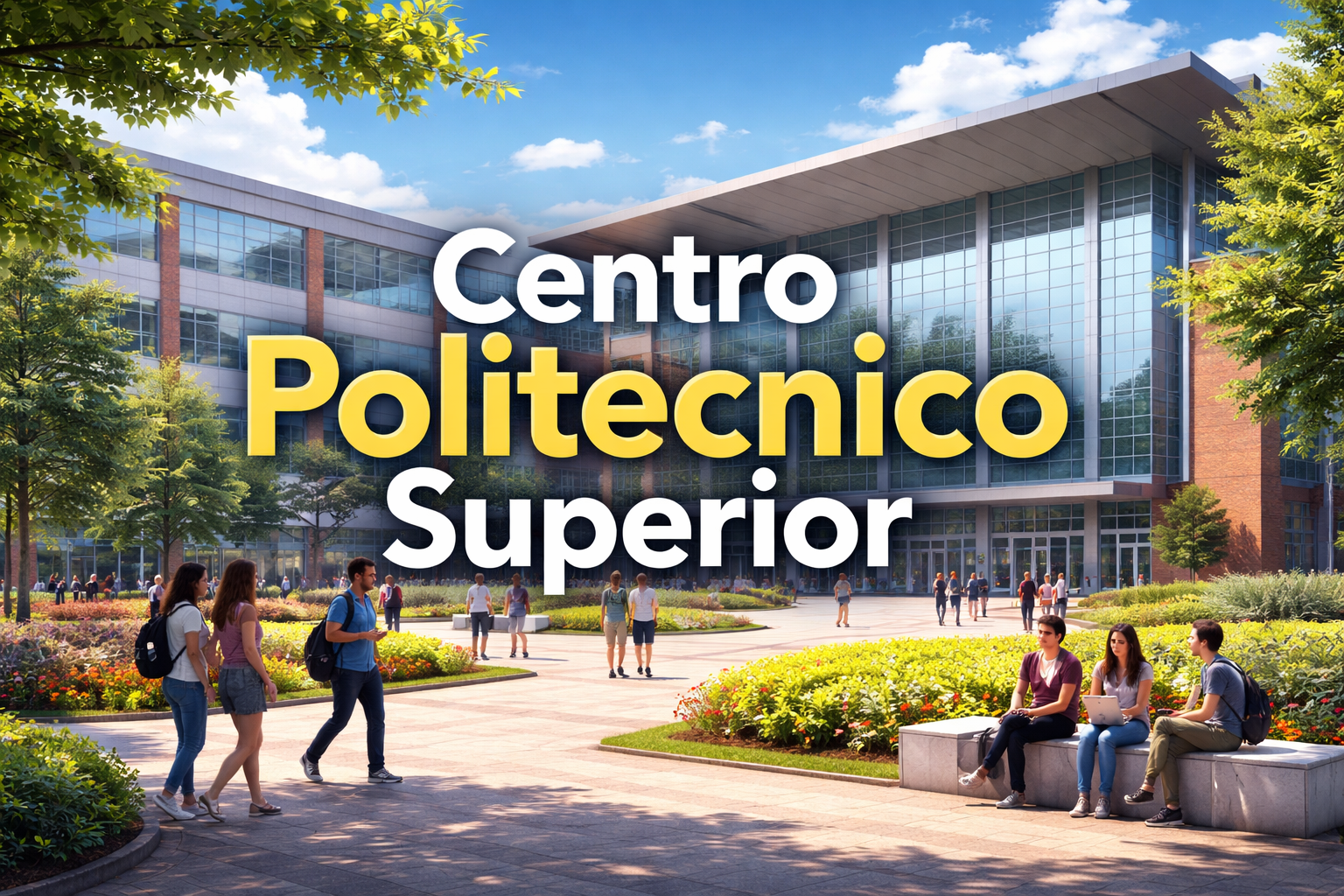
The Centro Politécnico Superior, once a cornerstone of technical education within the University of Zaragoza, represents a legacy of innovation and academic rigor in Spain’s engineering and architecture fields. Established as part of one of the nation’s oldest universities, this institution has evolved over decades to meet the demands of modern industry and research. Founded in the heart of Aragon, the University of Zaragoza dates back to 1542, with roots tracing even further to ecclesiastical schools in the seventh century. The Centro Politécnico Superior emerged as a specialized polytechnic center, focusing on higher technical studies that blended theoretical knowledge with practical applications. Today, its spirit lives on through the Escuela de Ingeniería y Arquitectura (EINA), which continues to uphold standards of excellence in education, research, and societal impact.
This comprehensive guide explores the academic excellence of the Centro Politécnico Superior, delving into its history, programs, faculty, research contributions, and more. With a commitment to fostering skilled professionals, the institution has played a pivotal role in Spain’s technological advancement. Whether you’re a prospective student, researcher, or industry professional, understanding its offerings provides insight into why it remains a benchmark for polytechnic education. Over the years, it has produced graduates who lead in fields like engineering, architecture, and logistics, contributing to global innovations.
Historical Foundations
The origins of the Centro Politécnico Superior are intertwined with the broader history of the University of Zaragoza, one of Spain’s most prestigious public universities. The university’s beginnings can be traced to the School of Zaragoza in the seventh century, evolving into a full-fledged institution by 1542 under the name School of Arts. Early faculties emphasized logic, philosophy, and grammar, laying the groundwork for a multidisciplinary approach. By the 19th century, the need for specialized technical education grew, leading to the creation of the School of Arts and Crafts in Zaragoza in 1894 by Royal Decree.
This school, housed in the ground floor of the Faculty of Medicine and Sciences building, marked the start of organized technical training in the region. Under its first director, it focused on practical skills in arts and crafts, reflecting the industrial revolution’s influence on education. As Spain modernized, the institution adapted, transforming into a higher technical center. In the summer of 1989, it officially became the Centro Politécnico Superior, with Manuel Silva Suárez as its inaugural director. This shift emphasized advanced engineering and polytechnic studies, aligning with global trends in STEM education.
The Centro Politécnico Superior quickly gained recognition for its rigorous curriculum and state-of-the-art facilities. Located on the Zaragoza campus, it benefited from the university’s expansive resources, including collaborations with local industries in the Ebro Valley, a hub for technological innovation. Throughout the 1990s and 2000s, it expanded its offerings, incorporating emerging fields like telecommunications and industrial engineering. This period solidified its reputation as a leader in technical education, attracting students from across Spain and internationally.
Transition to Escuela de Ingeniería y Arquitectura
By the early 21st century, educational reforms in Spain prompted structural changes at the University of Zaragoza. On April 14, 2011, the Government of Aragon authorized the integration of the Centro Politécnico Superior with the University School of Industrial Technical Engineering (EUITI), forming the Escuela de Ingeniería y Arquitectura (EINA). Under the direction of Enrique Masgrau Gómez, this new entity preserved the core values of its predecessors while enhancing interdisciplinary collaboration.
The merger was a strategic move to streamline resources and adapt to the Bologna Process, which standardized European higher education. EINA inherited the Centro Politécnico Superior’s legacy, including its focus on innovation and practical training. Today, EINA operates as the primary center for engineering and architecture at the university, offering a seamless continuation of programs once housed under the CPS name. This evolution ensured that the institution remained competitive, incorporating modern pedagogies like project-based learning and international partnerships.
Despite the name change, the Centro Politécnico Superior’s influence persists in EINA’s curriculum and culture. Alumni and faculty often reference the CPS era as a golden age of foundational growth, where the emphasis on excellence first took root. This transition highlights the adaptability that defines academic institutions in a rapidly changing world.
Academic Programs and Curriculum
At the heart of the Centro Politécnico Superior’s academic excellence lies its diverse and rigorous programs, now carried forward by EINA. The institution offers Bachelor’s, Master’s, and Doctoral degrees in a wide array of engineering and architecture disciplines. Undergraduate programs include degrees in Industrial Engineering, Mechanical Engineering, Civil Engineering, Telecommunications Engineering, and Architecture, each designed to provide a strong foundation in theory and practice.
For instance, the Bachelor’s in Industrial Engineering emphasizes systems optimization, manufacturing processes, and sustainability, preparing students for roles in automation and production. Similarly, the Architecture program integrates design principles with urban planning and environmental considerations, fostering creative problem-solvers. These programs typically span four years, with curricula that include core courses, electives, and hands-on projects.
At the graduate level, Master’s programs stand out for their specialization and international appeal. The Master’s in Logistics and Supply Chain Management, part of the MIT–Zaragoza International Logistics Program, is taught in English and attracts students from over 11 countries. Ranked #1 in Spain by El Mundo in 2014–2015, it uses the PLAZA logistics park as a real-world laboratory for testing concepts. Other notable Master’s include those in Environmental Energy (#2 ranking) and Automation and Robotics, which delve into cutting-edge technologies like AI and robotics.
Doctoral programs offer advanced research opportunities, often in collaboration with industry partners. Students pursue PhDs in areas such as Nanotechnology, Biocomputation, and Physics of Complex Systems, contributing to groundbreaking discoveries. The curriculum across all levels incorporates interdisciplinary elements, ensuring graduates are versatile and ready for global challenges.
Additionally, the institution provides continuing education and executive programs, such as those in logistics, to support lifelong learning. With 74 degrees university-wide, the engineering sector under EINA’s umbrella accounts for a significant portion, enrolling thousands of students annually.
Faculty and Research Excellence
The academic prowess of the Centro Politécnico Superior is bolstered by its distinguished faculty and robust research ecosystem. With over 3,900 academic staff university-wide, EINA boasts experts who are leaders in their fields. Faculty members include renowned researchers like those in the Biocomputation and Physics of Complex Systems (BIFI) group, who advance computational modeling for real-world applications.
Research at EINA spans engineering, technology, health sciences, and more, with an annual R&D budget of €60 million. Key institutes include six research centers, one affiliated, five joint, and three specialized units. Partnerships with 8,305 companies facilitate applied research, translating discoveries into innovations.
Standout areas include immunotherapy for cancer, where teams have developed patented treatments, positioning the university as a world leader. Nanotechnology and environmental energy research also excel, with projects addressing sustainability challenges. The MIT collaboration exemplifies international excellence, blending academic rigor with practical logistics expertise.
Faculty engagement extends to teaching, where small class sizes and mentorship programs ensure personalized education. Many professors hold industry experience, bridging academia and the professional world.
Campus Facilities and Student Life
The Zaragoza campus, home to EINA, offers state-of-the-art facilities that enhance learning and research. The Paraninfo building, inaugurated in 1893 and restored in 2006, serves as a cultural and academic hub with auditoriums and libraries. Engineering labs equipped with advanced tools for simulation, prototyping, and testing support hands-on education.
Student life is vibrant, with access to sports facilities, cultural events, and clubs. The university’s location near the Pyrenees allows for outdoor activities like skiing, while Zaragoza’s urban setting provides arts, history, and modern amenities. International programs, including Spanish as a foreign language courses since 1927, foster a diverse community.
Support services include career counseling, scholarships, and health resources, ensuring holistic development. With campuses in Huesca and Teruel offering complementary programs, students enjoy flexibility.
Rankings and Achievements
The University of Zaragoza, through entities like the former Centro Politécnico Superior and current EINA, consistently ranks among Spain’s top institutions. Globally, it places in the 501–700 range in ARWU (2023) and =523 in QS (2024). In Spain, it’s 9–10 in ARWU (2013), with strong showings in social sciences and medical collaboration per CWTS Leiden (2014).
Master’s programs excel, with Logistics #1 and Environmental Energy #2 in El Mundo rankings. Achievements include Nobel laureate alumni like Santiago Ramón y Cajal and patents in cancer research. The institution’s role in Aragon’s economic development underscores its impact.
Admissions and Scholarships
Admission to EINA programs requires meeting Spanish university entrance standards, including the Selectividad exam for undergraduates. International students benefit from streamlined processes and English-taught options. Scholarships, including merit-based and need-based awards, support accessibility, with partnerships like MIT offering funded opportunities.
Alumni Success
Alumni from the Centro Politécnico Superior era and EINA have excelled globally. Notable figures include engineers leading in tech firms, architects shaping urban landscapes, and researchers publishing in top journals. The network provides mentorship and job placements, with high employment rates in engineering sectors.
Conclusion
The Centro Politécnico Superior, through its transformation into EINA, exemplifies enduring academic excellence. Its contributions to education, research, and innovation continue to inspire. As part of the University of Zaragoza, it remains a vital force in shaping future leaders.
FAQ
What is the history of the Centro Politécnico Superior?
It originated from 19th-century technical schools and became CPS in 1989, later integrating into EINA in 2011.
What programs does EINA offer?
Bachelor’s, Master’s, and PhDs in engineering fields like industrial, mechanical, civil, telecommunications, and architecture.
How does the institution rank?
Top in Spain for logistics and energy Master’s; globally, around 500-700.
What research areas are prominent?
Cancer immunotherapy, nanotechnology, logistics, and complex systems.
Is it part of the University of Zaragoza?
Yes, it’s integrated as EINA within the university system.
How can international students apply?
Through university admissions, with options for English programs and language courses.