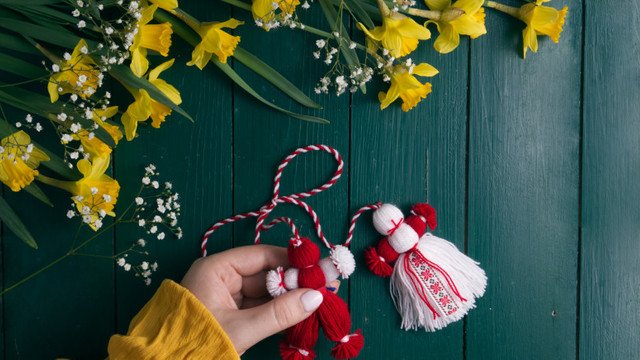
Every year on the first day of March, Romania and Moldova burst into a symphony of red and white. Streets fill with vendors selling tiny polished stones, delicate trinkets, and handmade brooches tied with twisted silk threads. This is the day of Mărțișor (pronounced mur-tzee-shor)—a celebration that blends pagan roots, Orthodox Christian faith, agrarian rituals, and deep cultural identity.
The keyword times is central to understanding this holiday. In ancient times, Mărțișor marked the start of the agricultural new year. Over time, it absorbed Christian symbolism, survived communist suppression, and today thrives as a global symbol of Romanian heritage. This article explores the meaning, traditions, and cultural significance of 1 Martie Mărțișor.
The Etymology and Historical Roots of Mărțișor
The word Mărțișor is a diminutive of martie (March), literally translating to “little March.” However, its origins predate the Roman conquest of Dacia (modern-day Romania) by centuries. Archaeologists have discovered stones painted in red and white, pebbles strung on wool threads, dating back over 8,000 years. These artifacts, found in agricultural settlements, suggest that even in Neolithic times, people honored the cyclical death and rebirth of nature.
The Daco-Thracian Connection
The Getae and Dacians (ancestors of modern Romanians) celebrated the god Dionysus or Zalmoxis around March. They believed that the new year began in spring, not winter. Red symbolized life, passion, and blood—the vital force of women and warriors. White symbolized purity, snow, and the light of longer days. Together, they represented the cosmic struggle between warmth and cold, life and death.
Roman Influence
When Rome conquered Dacia (106 AD), the local Martia festival merged with the Roman Matronalia (honoring Juno, goddess of childbirth) and Kalendae Martiae (the March Calends). Romans exchanged branches of flowering trees as good luck charms. Over time, the branch shrank into a small token tied with red-and-white string—the modern Mărțișor.
The Symbolism of Red and White
Few traditions have maintained such a consistent visual identity. The Mărțișor cord is always a twisted pair of red and white threads. Here is what each color represents:
| Color | Ancient Meaning | Modern Interpretation |
|---|---|---|
| Red | Blood, life force, fire, sun, fertility | Love, courage, vitality, passion |
| White | Purity, snow, clouds, light, wisdom | Health, clarity, new beginnings, peace |
Together, the two colors symbolize the union of opposites: winter and spring, female and male, death and resurrection. In some regions of Romania (Bukovina and Maramureș), a third thread—black—was added to represent the earth, but the red-and-white pair remains standard.
“The Mărțișor is not just a trinket. It is a cord that ties the living to the ancestors, the past to the future.” — Ethnographer Simona Ionescu, Journal of Romanian Folklore.
The Tradition: How Mărțișor Is Celebrated Today
1. Giving the Mărțișor
On March 1st, men give women a small gift tied with the red-and-white cord. The gift can be:
-
A plastic or metal flower (snowdrop or violet)
-
A four-leaf clover
-
A ladybug or heart
-
A chimney sweep (for good luck)
-
Regional symbols (the cucuteni spiral, a horă dancer)
In urban times, women also give Mărțișor to men, and children give them to teachers and parents. The gift is not romantic exclusively—it is a gesture of respect, friendship, and hope.
2. Wearing the Cord
The recipient pins or ties the Mărțișor to their clothing—over the left side of the chest (near the heart). They wear it for the entire month of March. Removing it earlier is considered bad luck.
3. The Hanging Ritual (Marcă)
In rural areas, especially in Oltenia and Muntenia, worn Mărțișor cords are not thrown away. On March 31st or early April, they are tied to the branch of a flowering fruit tree (apple, cherry, or pear). This ritual, called agățat mărțișorul (hanging the Mărțișor), aims to transfer the wearer’s health wishes to the tree, ensuring a rich harvest.
4. Predicting Your Fortune
Some villages also practice a divination game: At the end of March, the woman removes her Mărțișor and places it in a glass of water. The next morning, the position of the string predicts:
-
Floating on top: Good luck all year
-
Sunk to bottom: Minor obstacles
-
Wrapped around the glass: Marriage within the year
Mărțișor in Different Historical Times
During the Communist Era (1947–1989)
The communist regime under Nicolae Ceaușescu banned religious and “superstitious” practices. However, Mărțișor was too popular to erase. The state rebranded it as “International Women’s Day” (March 8) and encouraged giving Mărțișor only to “working heroines” of socialism. The red-white colors were reinterpreted as the colors of the national flag (red, yellow, blue) – but the public quietly maintained the original symbolism.
Post-Revolution Revival (1990–Present)
After the 1989 Romanian Revolution, Mărțișor returned with a vengeance. Today, it is a national holiday (though not a public day off). Schools hold craft workshops. Museums organize temporary exhibitions. UNICEF Romania uses Mărțișor sales to fund education for underprivileged children. In these times, the tradition has become eco-conscious: many artisans use wooden beads, organic cotton threads, and seeds instead of plastic.
Regional Variations of Mărțișor
While the core red-and-white cord is universal, local customs add unique layers.
| Region | Unique Practice |
|---|---|
| Bucovina | The cord is worn until the first blooming of almond trees, then thrown into a river to carry away illnesses. |
| Maramureș | Black thread replaces white; the trinket is a small wooden plough (fertility symbol). |
| Transylvania | Women tie Mărțișor to their livestock’s horns for healthy calves. |
| Moldova (Republic of) | The cord is worn for 9 days only, then burned to release wishes into the wind. |
| Banat | Men give Mărțișor to their mothers and sisters, but not to girlfriends (reserved for Christmas). |
Mărțișor and Baba Dochia: The Folk Legend
No discussion of 1 Martie is complete without the myth of Baba Dochia (Old Woman Dochia). According to legend:
Dochia was a stubborn old woman who took her sheep up the mountain in early March, ignoring the changeable weather. Each day, she put on one of her 12 coats (for the 12 months). The mountain god grew angry. He sent a blizzard. Dochia froze to death with her sheep. The snow melted on March 1, revealing her body turned into stone (the Babele rock formations in the Bucegi Mountains).
Mărțișor is said to honor Dochia’s fate as a warning: March weather is famously unpredictable. Romanians say, “Martie schimbă de trei ori pe zi” (March changes three times a day). Wearing the Mărțișor protects against Dochia’s wrath and the “old woman’s winter.”
Cultural Significance in Modern Times
1. A Symbol of National Identity
In an era of globalization, Mărțișor is a powerful cultural marker for Romanians worldwide. Diaspora communities in Italy, Spain, Canada, and the US organize March 1st gatherings. UNESCO added “Cultural practices associated with the 1st of March” to the Intangible Cultural Heritage of Humanity (2017), jointly with Bulgaria (Baba Marta), North Macedonia, and Moldova.
2. Economic Impact
Small artisans, beekeepers, and local jewelers generate significant revenue in February and early March. In Bucharest, the “Mărțișor Fair” at Obor Market sells over 500,000 pieces annually. Prices range from 1 leu (simple string) to 200 lei (silver trinkets).
3. Environmental Debate
Recent times have seen a backlash against plastic Mărțișor. Environmental NGOs launched campaigns like Mărțișor Verde (Green Mărțișor), encouraging people to give living snowdrop bulbs or handmade wool trinkets. Moldovan authorities banned non-biodegradable Mărțișor in schools from 2023.
4. Digital Mărțișor
During the COVID-19 pandemic, Romanians sent e-Mărțișor (digital cards with animated red-white cords). Though criticized by purists, the digital version kept the tradition alive. In 2024, a Romanian startup launched NFT Mărțișor collectibles—a controversial but innovative adaptation for modern times.
Mărțișor vs. Similar Spring Traditions
| Country | Tradition | Similarities | Differences |
|---|---|---|---|
| Bulgaria | Baba Marta (Марта) | Red-white cord (martenitsa) worn March 1 | Cord is always a bracelet; worn until seeing a stork or flowering tree |
| Greece | Martis (Μάρτης) | Red-white thread worn in March | No trinket; burned in Easter fire |
| Italy | Martisor? Not native | None directly | Romans had Martia festival but extinct |
| Japan | Hinamatsuri (March 3) | Spring festival for girls | No thread symbolism; display of dolls |
How to Make a Traditional Mărțișor (DIY Guide)
For an authentic handmade Mărțișor, you need:
-
20 cm red wool thread
-
20 cm white wool thread
-
A small charm (clay flower, dried white bean, or tiny shell)
-
Scissors
Steps:
-
Twist the red and white threads together tightly.
-
Fold the twisted cord into a loop or bow.
-
Thread the charm through the center.
-
Tie a knot at the charm’s base.
-
Pin to your left lapel on March 1st.
Warning: Do not use synthetic thread—it does not “breathe” and is considered inauspicious in rural times.
FAQ: Frequently Asked Questions About 1 Martie Mărțișor
Q1: Is Mărțișor only for women?
A: Traditionally, yes—men gave to women. In modern practice, anyone can give or receive Mărțișor. It is a symbol of respect and affection, not romantic interest alone.
Q2: What if I lose my Mărțișor before March 31?
A: Losing the Mărțișor is considered neutral—some say the lost charm “took bad luck with it.” Do not replace it; just wait until next year. Buying a second one in the same March is seen as greedy.
Q3: Can I give Mărțișor to foreigners?
A: Absolutely! Many Romanians gift Mărțișor to non-Romanian friends, explaining the meaning. It is a beautiful cultural exchange. Just avoid giving plastic charms if they are environmentally conscious.
Q4: Why are snowdrops the most common trinket?
A: Snowdrops (ghiocei) are among the first flowers to bloom through snow in late February/early March. They embody spring’s victory over winter—exactly what Mărțișor celebrates.
Q5: What should I do with my Mărțișor after March?
A: Follow the hanging tradition: tie it to a fruit tree branch (if you have access). Otherwise, place it in a potted plant or compost it. Never throw it in household trash—that disrespects the spirits of nature, according to folk belief.
Q6: Is March 1 a public holiday?
A: No, but many schools and offices allow a short morning celebration. Banks and shops operate normally. The main celebration is social, not governmental.
Q7: How many times has Mărțișor been banned in history?
A: Twice. First by the Christian Orthodox Church in the 18th century (calling it pagan), then by the communist regime (1948–1952 and again in 1977–1981). Both bans failed because people continued secretly.
Q8: What is the difference between Mărțișor and Baba Marta?
A: Mărțișor includes a small charm (a flower, insect, or tool) tied to the cord. Baba Marta’s martenitsa is usually just the twisted bracelet without a charm, and it is worn until seeing a blooming tree or a stork.
Q9: Can I make and sell Mărțișor?
A: Yes, many artisans do. However, using sacred symbols (crosses, church icons) as trinkets is considered disrespectful. Stick to nature-based or geometric designs.
Q10: Where can I buy authentic Mărțișor online?
A: Trusted sources include Mărțișorul Meșteșugăresc (craft guild), Made in Maramureș, and the official @MartisorTraditions Instagram shop. Avoid cheap bulk imports from non-Romanian sellers.
Conclusion: The Eternal Return of Spring
In a world of rapid change, Mărțișor remains stubbornly, beautifully simple: a red-and-white thread, worn for one month, tying people to ancient times. It is not a relic. It is a living tradition, adapting to ecological concerns, digital media, and globalized culture. When you see a Romanian pinning that little cord to their coat on March 1, you are witnessing 8,000 years of history—an unbroken belief that spring always returns, that good luck can be given as a small gift, and that red and white together can hold the weight of a people’s soul.
La mulți ani, Mărțișor! (Happy Mărțișor!)