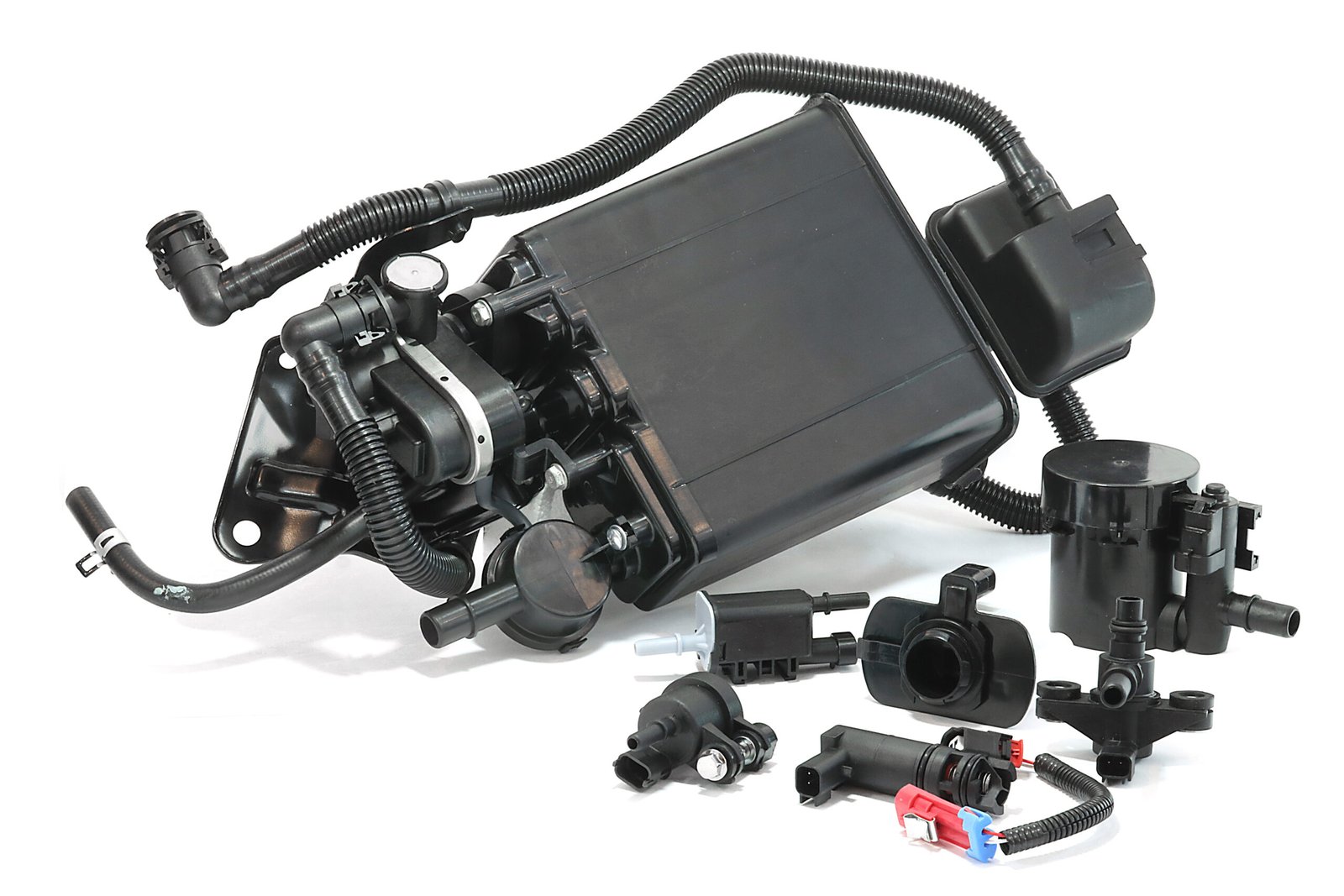
If you’ve ever owned a car built after 1996, chances are you’ve seen the “Check Engine” light illuminate for a mysterious reason: a small leak in a system you’ve probably never heard of. That system is the EVAP system.
The keyword “EVAP” appears multiple times throughout this article to help reinforce the term. EVAP stands for Evaporative Emission Control System. Despite its intimidating name, the concept is quite simple. This article provides a straightforward, 2,000-word breakdown of what EVAP is, why it exists, how it works, and what happens when it breaks.
1. The Simple Definition: What Does EVAP Stand For?
First, let’s define the keyword. EVAP is an acronym for Evaporative Emission Control.
-
Evaporative: Relating to the process of a liquid turning into a vapor (gas).
-
Emission: Something that is released into the air.
-
Control: A system designed to manage or restrict that release.
In plain English, the EVAP system is your car’s way of preventing fuel vapors from escaping into the atmosphere. Instead of letting gasoline fumes drift out of your gas tank and pollute the air, the EVAP system traps them, stores them, and then feeds them into the engine to be burned as fuel.
Think of it as a recycling program for gasoline vapor.
2. Why Was the EVAP System Invented? (A Brief History)
To understand the EVAP system, you need to understand a simple fact about gasoline: it’s volatile. Even when your car is parked and turned off, the liquid gasoline in your tank is constantly evaporating into vapor.
In the early days of automobiles (pre-1970s), these vapors simply vented out of the gas tank through a hole in the gas cap into the open air. Nobody thought twice about it. However, as the number of cars on the road exploded, so did the environmental impact.
The Problem: Smog and Hydrocarbons
Gasoline vapor contains hydrocarbons (HC) — a major ingredient in ground-level ozone, better known as smog. When sunlight hits these hydrocarbons, it creates a brown haze that harms human lungs, damages crops, and contributes to climate change.
According to the U.S. Environmental Protection Agency (EPA), about 20% of all hydrocarbon pollution from cars used to come from evaporative losses (fuel tank breathing, carburetor bowl evaporation, etc.), not from the tailpipe.
The Solution: Government Mandates
In 1971, California (notorious for its smog) introduced the first EVAP standards. By 1996, with the introduction of OBD-II (On-Board Diagnostics, version 2), the EVAP system became mandatory on every car sold in the United States. The EPA mandated that EVAP systems must keep hydrocarbon emissions below 0.2 grams per test — a virtually leak-proof standard.
The keyword times: Modern EVAP systems are so sensitive that they can detect a leak the size of a human hair (0.020 inches).
3. The Core Components of an EVAP System
An EVAP system is not a single part; it’s a network of components. Here are the major players:
3.1. The Gas Cap (Fuel Fill Cap)
This is the only part of the EVAP system you interact with regularly. It is designed to be a pressure-tight seal. If your gas cap is loose, cracked, or missing, the EVAP system detects a leak immediately, and your “Check Engine” light turns on.
3.2. The Charcoal Canister
This is the “brain” of the storage operation. Hidden somewhere near the fuel tank (often under the car or in the engine bay), the charcoal canister is a plastic box filled with activated charcoal (similar to what you find in a water filter). Charcoal is porous; one gram of activated charcoal has a surface area of over 500 square meters. This allows it to absorb and hold thousands of gallons of fuel vapor until the engine is ready to use them.
3.3. The Purge Valve (Canister Purge Solenoid)
This is a computer-controlled valve that sits between the charcoal canister and the engine’s intake manifold. When the engine is running, the car’s computer (PCM/ECU) opens this valve. The engine’s vacuum (suction) then pulls the stored fuel vapors from the charcoal canister into the engine to be burned.
3.4. The Vent Valve (Canister Close Valve / Vent Solenoid)
This valve controls the flow of fresh air into the charcoal canister. During normal driving, the vent valve is open to allow fresh air to pull vapors through the canister. During a leak test (see section 5), the computer closes this valve to seal the system.
3.5. The Fuel Tank Pressure Sensor (FTPS)
This small sensor monitors the pressure or vacuum inside the fuel tank. It tells the computer if the pressure is stable (no leak) or dropping (leak present). It is the “nose” of the EVAP system.
3.6. The Lines and Hoses
A series of plastic and rubber hoses connect all these parts. These are common failure points as cars age; rubber cracks and plastic snaps.
4. How the EVAP System Works: A Simple Step-by-Step Process
Let’s walk through a typical 24-hour cycle of your car to see the EVAP system in action. This is where the keyword evap becomes functional.
Step 1: Parking (Car Off)
You park your hot car after driving. The gasoline in the tank is warm and evaporates rapidly. The vapors rise to the top of the fuel tank. Instead of escaping through a vent, they travel through a hose to the charcoal canister. The charcoal absorbs the vapor like a sponge absorbs water. The clean air (vapor removed) is released out the vent valve to the atmosphere. No fuel escapes.
Step 2: Starting the Engine (Idle)
You start the car. The engine computer (PCM) looks at engine temperature and running time. It usually waits a few minutes for the engine to warm up before activating the EVAP system.
Step 3: Driving (Purge Cycle)
The engine is warm and needs fuel. The computer opens the purge valve. The engine’s intake manifold vacuum (suction) pulls fresh air into the vent valve, through the charcoal canister (where it picks up the stored vapor), and into the engine. This vapor is mixed with regular air and fuel. It burns in the combustion chamber, turning harmful hydrocarbons into harmless carbon dioxide and water. Your car runs more efficiently because you are using fuel that would have otherwise been wasted.
Step 4: Leak Testing (Nighttime)
When you turn the car off, the computer runs a “leak test” (usually about 5-6 hours after shutdown). It closes the vent valve, trapping pressure inside the sealed EVAP system. The Fuel Tank Pressure Sensor watches the pressure. If the pressure holds steady – no leak. If the pressure drops – click – Check Engine Light.
5. The Infamous “EVAP Leak” (P0440, P0455, P0456)
If you have ever taken your car to a mechanic for a Check Engine light, you have likely heard the phrase: “You have an EVAP leak.” Diagnostic Trouble Codes (DTCs) for EVAP usually start with P0440 (General EVAP fault), P0455 (Large leak), or P0456 (Small leak).
What causes an EVAP leak?
-
Loose or Damaged Gas Cap ( #1 cause): You forgot to tighten it, or the rubber seal is worn out.
-
Cracked Hoses: Rubber hoses under the car dry out and crack.
-
Failed Purge Valve: Stuck open (causes rough idle) or stuck closed (causes pressure buildup).
-
Cracked Charcoal Canister: Plastic can crack if you hit a rock or speed bump.
-
Rusted Fuel Tank: A pin-hole rust spot on the tank itself.
-
Overfilling the Gas Tank: This is a big one. Never “top off” after the pump clicks. Liquid gas floods the charcoal canister, destroying its ability to absorb vapor, and causes solid charcoal pellets to clog the vent valve.
Symptoms of an EVAP problem
-
Check Engine Light illuminated.
-
Smell of gasoline fumes around the car (especially near the rear).
-
Poor fuel economy (because the computer may run a rich fuel mixture).
-
Rough idle (if the purge valve is stuck open, creating a vacuum leak).
-
Difficulty refueling (gas pump keeps clicking off; this indicates a clogged vent valve).
6. Common Misconceptions About EVAP
Because the keyword evap is often misunderstood, let’s clear up three major myths:
Myth 1: An EVAP leak is an emergency.
Fact: An EVAP leak is rarely dangerous. It is primarily an environmental issue, not a safety issue. You won’t break down on the highway. However, you will fail an emissions inspection (smog check) in most states.
Myth 2: The charcoal canister never needs maintenance.
Fact: While designed for the car’s life, the canister fails if you overfill the gas tank. Once liquid gas soaks the charcoal, it hardens and crumbles. Replacement is the only fix.
Myth 3: You can ignore a “Small EVAP Leak” code (P0456).
Fact: You can drive for years with a small leak, but the Check Engine light will stay on, masking other potential engine problems. Also, a small leak eventually becomes a large leak.
7. How Is an EVAP Leak Diagnosed and Fixed?
Modern mechanics love and hate EVAP systems. They love them for the environment but hate diagnosing them because finding a pinhole leak is like finding a needle in a haystack.
The Professional Tool: Smoke Machine
A mechanic will connect a smoke machine to the EVAP system. The machine pumps thick, non-toxic smoke (usually mineral-oil based) into the sealed EVAP system. If there is a crack or hole, white smoke billows out of it. This is the fastest way to find a leak.
The DIY Approach (Limited)
-
Check the gas cap. Tighten it. If the light doesn’t go off after 3 drive cycles, replace the cap (10–20).
-
Visual inspection. Look under the car for cracked hoses near the gas tank.
-
Do not try to pressure test the system with an air compressor. You can blow out the fuel tank pressure sensor.
Repair Costs
-
Gas cap: 10–30 (DIY)
-
Purge valve solenoid: 50–200 (1 hour labor)
-
Vent valve solenoid: 100–300 (1–2 hours)
-
Charcoal canister: 200–600 (1–2 hours)
-
Smoke test diagnostic fee: 100–200
8. Why EVAP Matters to You (Beyond the Law)
The keyword evap appears in automotive shops daily, but why should the average driver care?
-
Save Money: An EVAP leak doesn’t waste much fuel, but a stuck-open purge valve will destroy your gas mileage. Fixing it pays for itself.
-
Pass Inspections: Most states (California, New York, Texas, etc.) require a working EVAP system to pass the annual safety/emissions test. A glowing Check Engine light for EVAP is an automatic fail.
-
Reduce Smog: One car’s EVAP leak is negligible, but millions of cars leaking a little bit create the brown smog that blankets cities. By maintaining your EVAP system, you are directly reducing hydrocarbon pollution.
-
Odor Control: If you smell gas in your garage, your EVAP system is failing. Gasoline vapor is heavier than air and can pool near the floor, creating a fire hazard if there’s an ignition source (water heater pilot light).
9. The Future of EVAP Technology
With the rise of electric vehicles (EVs), the traditional EVAP system is slowly becoming obsolete. However, hybrids and plug-in hybrids still use them. The future includes:
-
LEV III and SULEV standards: Even tighter leak detection (0.010-inch leaks).
-
Wireless fuel sensors: To detect cap-off conditions more accurately.
-
Alternative materials: Non-charcoal based vapor storage using synthetic zeolites.
-
Full electrification: Ultimately, EVs have no fuel tank, no gas cap, and therefore, no EVAP system. For now, though, over 250 million gasoline cars on American roads still rely on EVAP technology.
Conclusion
To answer the question, “What is EVAP in automotive technology?” in the simplest terms, It is your car’s vapor-trapping system. It captures gasoline fumes that would otherwise pollute the air, stores them in a charcoal canister, and then feeds them into the engine to be burned.
The keyword evap is often associated with frustration (Check Engine lights and smoke tests), but it represents one of the most successful environmental technologies of the last 30 years. Next time you tighten your gas cap until it clicks, remember: you are not just closing a lid; you are sealing a sophisticated vapor recycling loop.
If your Check Engine light comes on with an EVAP code, don’t panic. Check your gas cap first. If that doesn’t work, get a smoke test. It’s a repair that benefits your wallet, your car, and the air you breathe.
Frequently Asked Questions (FAQ)
Q1: Can I drive my car with an EVAP leak?
A: Yes, generally you can drive safely. An EVAP leak does not affect the engine’s ability to run (unless the purge valve is stuck fully open). However, you will fail an emissions test, and you are releasing harmful vapors. It is not an emergency, but you should fix it within a few months.
Q2: How many times does the EVAP system test itself?
A: The keyword “times” is relevant here. The EVAP system typically runs a leak test once per drive cycle (usually 5-6 hours after the engine is turned off). Your car will perform this test hundreds of times per year. If it fails the test two times in a row, the Check Engine light turns on.
Q3: Will a loose gas cap fix itself?
A: Yes, sometimes. If you tighten the gas cap, the computer may turn off the Check Engine light after you complete 3 “warm-up cycles” (starting the car, driving until hot, and turning it off). However, the permanent fault code will remain in the memory for a while.
Q4: Why does my gas pump keep clicking off when I fill my tank?
A: This is a classic sign of a clogged EVAP vent valve. When the vent valve is stuck closed, air cannot escape the fuel tank as you add liquid gas. The pressure builds up, forcing the gas pump nozzle to click off. You need to replace the vent valve solenoid.
Q5: How much does it cost to fix an EVAP leak?
A: It varies wildly:
-
Gas cap: $10 (DIY)
-
Rubber hose crack: $50 (DIY)
-
Purge valve: 150−300 (at a shop)
-
Charcoal canister: 400−1,000 (at a shop)
Diagnostic smoke tests cost 100–200. The total rarely exceeds $1,000 unless the fuel tank itself is rusted.
Q6: Can cold weather cause an EVAP code?
A: Yes. In freezing temperatures, moisture inside the EVAP lines can freeze, blocking the vent valve or causing false pressure readings. This often triggers a P0442 (small leak) code. The light may turn off when the weather warms up.
Q7: Is “topping off” my gas tank really bad for the EVAP system?
A: Absolutely. Never top off. When you squeeze extra gas after the pump clicks, you force liquid fuel directly into the charcoal canister. Charcoal is for vapor only. Liquid gas destroys the charcoal’s pores, turning it into a solid brick. This kills the canister, leading to a $600 repair.
Q8: What does the abbreviation EVAP stand for?
A: EVAP stands for Evaporative Emission Control (sometimes listed as Evaporative Emission System).
Q9: My Check Engine light is on, but my car runs fine. Is it the EVAP?
A: Possibly. EVAP codes (P0440-P0457) are among the most common non-performance-related codes. If the car runs fine, the smell is normal, and the gas cap is tight, it is very likely an EVAP issue.
Q10: Are electric cars the only vehicles without an EVAP system?
A: Pure Battery Electric Vehicles (BEVs) like a Tesla or Nissan Leaf have no fuel system, hence no EVAP. However, Plug-in Hybrids (PHEVs) like a Toyota Prius Prime do have an EVAP system because they still have a gasoline engine and fuel tank.