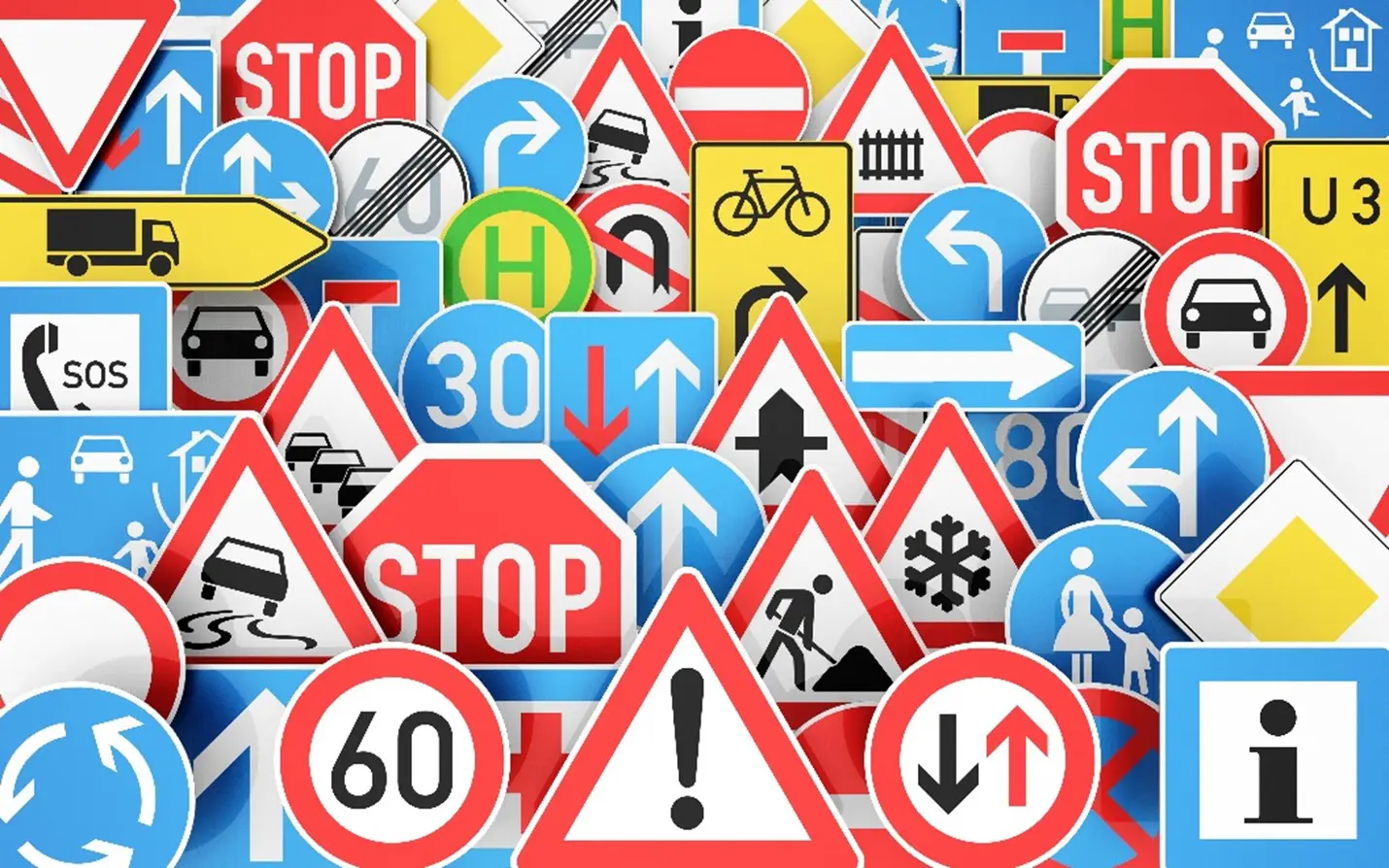
When you think of traffic signs, the stop sign’s octagon or the yield triangle’s downward point often comes to mind first. However, the most common shape on roads worldwide is neither of these. The humble rectangle dominates our highways, city streets, and parking lots. A rectangular-shaped sign is a: regulatory guide, an informational board, or a directional marker. Unlike circles (railroad warnings) or diamonds (hazard warnings), rectangles serve the broadest range of functions in traffic management.
Understanding what a rectangular sign communicates can mean the difference between a smooth journey and a costly ticket—or worse, a collision. This complete guide decodes every type of rectangular traffic sign, explains its colors, placement, and legal implications, and answers the most frequently asked questions about road signage.
Part 1: The Psychology and History of the Rectangle in Traffic
Why rectangles? The answer lies in human engineering and perception. Rectangular signs are easier and cheaper to manufacture than circles, easier to mount on poles or overhead gantries, and provide maximum surface area for text. Historically, as automobiles became popular in the early 20th century, the U.S. and Europe needed a standardized system. The 1935 Manual on Uniform Traffic Control Devices (MUTCD) cemented the rectangle as the primary shape for guide and regulatory signs.
A rectangular-shaped sign is a vessel for words. While shapes like the octagon instantly signal “stop” without reading, rectangles require literacy. This makes them perfect for specific information: speed limits, route numbers, distances, and parking rules. Their vertical or horizontal orientation also matters. Vertical rectangles (taller than wide) typically give regulatory commands (e.g., “ONE WAY”). Horizontal rectangles (wider than tall) are almost always guide signs (e.g., “NEXT EXIT 2 MILES”).
Part 2: Regulatory Rectangles – The Law in Black and White
The most authoritative rectangular signs are regulatory signs. They tell you what you must or must not do. Violating them is a moving violation.
Speed Limit Signs (White Rectangle, Black Letters)
The classic example. A white vertical rectangle with black lettering reading “SPEED LIMIT 65.” No other shape is used for speed limits. These signs are legally binding unless overridden by a posted lower limit during construction.
Parking and Standing Signs
Often overlooked, parking regulation signs are vertical white or green rectangles. They list complex rules: “2-HOUR PARKING 8 AM – 6 PM EXCEPT SUNDAYS.” a rectangular-shaped sign is a legal contract between the driver and the city. Ignorance of its text—even if obscured by tree branches—can still result in a ticket.
“Do Not” Signs
“DO NOT ENTER” appears on a vertical red-and-white rectangle. “NO U-TURN” uses a white rectangle with a red circle-and-slash over a U-turn symbol. Note: while the prohibition uses a circle symbol, the sign body remains rectangular. “KEEP RIGHT” signs—vertical rectangles with black arrows—direct traffic around medians.
One Way Signs
A black-on-white arrow on a vertical rectangle. Often paired with “DO NOT ENTER” on the opposite side. These are found on exit ramps and divided highway cross streets.
Lane Use Control Signs
Overhead horizontal rectangles showing which lanes turn left, go straight, or turn right. These are critical in complex intersections. A black arrow on a white background, mounted on a green or black rectangular panel.
Part 3: Guide Rectangles – Your Navigation Assistant
If regulatory signs are the laws, guide signs are the maps. Almost all guide signs are horizontal rectangles. Their colors vary by context.
Interstate and Highway Route Markers
While the famous “shield” shape is technically a modified rectangle (with a flat top and pointed bottom), the MUTCD classifies it as a rectangular variant. The standard route marker is a white rectangle with black borders and numerals. For interstates, the red-and-blue shield is still a rectangle at its core.
Destination Distance Signs
Large horizontal green rectangles on freeways: “SACRAMENTO 42 – RENO 146.” These signs use white lettering on green. They inform drivers of upcoming exits, cities, distances, and services. a rectangular-shaped sign is a lifesaver in unfamiliar territory. Without these, road trips would require constant map checking.
Exit Signs
Green rectangles with white lettering: “EXIT 14B.” Often accompanied by a smaller rectangle indicating the exit’s destination (e.g., “DOWNTOWN AIRPORT”). Some states use blue rectangles for tourist information exits.
Street Name Signs
Green or blue rectangles mounted on traffic light poles or standalone posts. They list cross streets (e.g., “MAIN ST”). In many cities, these are now retroreflective so headlights illuminate them at night.
Mile Markers
Small horizontal green or blue rectangles posted every tenth or full mile along highways. They appear as “MM 42.” While tiny, they are critical for reporting accidents or breakdowns.
Part 4: Service and Recreation Rectangles (Blue & Brown)
Not all rectangles enforce the law. Some help you live it.
Blue Service Signs
Highway travelers know blue rectangles well. They indicate food, gas, lodging, camping, hospitals, and rest areas. A horizontal blue sign with white icons: a fork and knife (food), a gas pump (fuel), a bed (lodging). a rectangular-shaped sign is a welcome sight on a long night drive.
Brown Recreation Signs
Brown horizontal rectangles point to points of interest: state parks, historic sites, scenic overlooks, museums, and ski areas. They have white lettering. These are not regulatory; they are purely informational. If a brown sign says “HISTORIC FORT 2 MI,” you are not required to visit, but you’ll miss out.
Weather and Condition Signs
Many highways now deploy variable-message signs (VMS) – large horizontal rectangular LED boards. They flash warnings: “FOG AHEAD” or “CHAIN CONTROL.” These are rectangles because they require extensive text.
Part 5: Work Zone Rectangles – Orange and Urgent
Construction and maintenance zones use a completely different color: orange. The shape remains rectangular.
Road Work Ahead Signs
An orange rectangle with black text or symbols. “ROAD WORK 1000 FT” or “LANE CLOSURE AHEAD.” These signs demand reduced speed and increased attention. Work zone fines are often double.
Flagger Signs
An orange rectangle with a black silhouette of a person holding a flag. This alerts drivers that a human flagger—not a traffic light—controls the intersection.
Detour and Diversion Signs
Orange rectangles with black arrows and route numbers. They guide traffic around closed roads. a rectangular-shaped sign is a temporary authority that overrides normal GPS directions.
Part 6: The Exceptions – When a Rectangle Isn’t What You Think
While most rectangles are regulatory or guide signs, there are two notable exceptions where a rectangle shape carries a warning function:
Railroad Advance Warning (Circle vs. Rectangle)
True railroad advance signs are yellow circles with a black “X” and “RR.” That is not a rectangle. However, at the actual crossing, you’ll see a white rectangular “EXEMPT” sign or a “NUMBER OF TRACKS” sign mounted below the crossbuck. Those are rectangles.
Pedestrian Crossing Signs
A standard pedestrian warning is a yellow diamond with a walking figure. But many cities install vertical rectangular “PEDESTRIAN CROSSING” signs with flashing yellow beacons. These supplement the diamond. They are considered guide/warning hybrids.
Part 7: Legal Consequences of Ignoring Rectangular Signs
Because rectangles contain specific text, failing to obey them is treated differently than failing to obey a shape-based sign (like stop or yield).
-
Speeding (White rectangle): Points on license, fines, insurance hikes.
-
One Way violation (Vertical white rectangle): High-risk moving violation, often resulting in a head-on collision. Penalties include license suspension.
-
No Turn on Red (Red-letter rectangle): Common violation. Fines 100–500 depending on state.
-
Parking regulation (Green/white rectangle): Non-moving violation, but repeated tickets can lead to booting or towing.
-
Failure to follow lane control (Overhead rectangle): Causes sideswipes. Costs typically $150 + points.
-
Ignoring construction rectangle (Orange): Often double fines. In some states, you can face jail time if workers are present.
A rectangular-shaped sign is a legal instrument. Courts presume you have read and understood it. There is no “I didn’t see the shape” defense—because the shape is too common.
Part 8: How to Read Rectangular Signs Quickly (Glance Driving)
Since rectangles carry the most information, you need to train your eye to parse them in under one second. Follow this priority system:
-
Check the background color – White = law. Green = direction. Blue = services. Brown = recreation. Orange = construction.
-
Identify orientation – Vertical = rule or restriction. Horizontal = distance or destination.
-
Look for red – Red on white (e.g., “STOP HERE ON RED”) is absolute prohibition.
-
Decode arrows – Up arrow = continue straight. Left or right arrow = mandatory turn. Diagonal arrow = exit only.
-
Ignore small print unless parking – On the highway, you don’t need the agency name (e.g., “City of Austin”). On parking signs, you do need the hours.
Part 9: State and International Variations
While this guide focuses on U.S. standards (MUTCD), rectangles are universal with minor changes:
-
Canada: Almost identical to U.S., but uses metric (km/h instead of mph) on white speed limit rectangles. Bilingual English/French on many guide signs (e.g., “ARRÊT” appears on red octagons, but rectangular guide signs say “SORTIE / EXIT”).
-
European Union: The Vienna Convention on Road Signs and Signals allows rectangles for direction and information signs. Speed limits are still white rectangles with black numbers, often with a red circle border around the number – but the sign body is rectangular. “STOP” is still an octagon, but “GIVE WAY” (yield) is an inverted triangle.
-
Australia/New Zealand: Green horizontal rectangles for route markers, brown for tourist, white for speed limits. Very similar to U.S., though they drive on the left, so exit signs point left.
-
Japan: Rectangular signs are blue (highways) or green (expressways) with white or yellow text. Speed limits are white rectangles with black numbers inside a red ring.
A rectangular-shaped sign is a global standard—not just an American one.
Part 10: Future of Rectangular Signs – Digital and Dynamic
As smart infrastructure develops, the humble rectangle is getting an upgrade.
-
LED and e-paper rectangles: Instead of static text, cities are deploying electronic rectangles that change speed limits based on weather or traffic density. Known as “variable speed limit signs.”
-
Connected vehicle communication: Rectangular road signs will soon broadcast their text to your car’s heads-up display. The physical rectangle remains, but your car reads it for you.
-
Augmented reality (AR) overlays: Future windshields will highlight rectangular signs and translate them into multiple languages.
-
Solar-powered flashing rectangles: Especially for pedestrian crossings and school zones. These retain the rectangular shape but add bright LEDs to attract attention.
Even in the autonomous vehicle era, rectangles won’t disappear. Cameras and lidar are trained to recognize them because they contain the most human-readable data.
Conclusion: Respect the Rectangle
From the speed limit on your daily commute to the brown sign pointing to a hidden waterfall, the rectangular sign is the workhorse of traffic control. It does not shout like an octagon or warn like a diamond. Instead, it informs, directs, and regulates with quiet authority.
A rectangular-shaped sign is a tool for safe and efficient travel. Next time you drive, consciously count the rectangles you pass. You’ll see dozens per mile. Obey them—not out of fear of a ticket, but because they represent an agreed-upon language that keeps millions of drivers moving in harmony.
Now, for the most common questions drivers have about rectangular signs, read the FAQ below.
FAQ: Rectangular Traffic Signs
Q1: Is a rectangular-shaped sign always a regulatory sign?
No. A rectangular-shaped sign is a regulatory sign only if it is white or red-on-white and contains commands like “SPEED LIMIT” or “NO PARKING.” Green, blue, brown, and orange rectangles are guide, service, recreation, or construction signs. They inform or warn but do not carry the same legal weight (except orange work zones, which do carry legal force).
Q2: What does a vertical rectangle sign mean compared to a horizontal one?
Vertical rectangle (taller than wide) = regulatory or parking restriction. Horizontal rectangle (wider than tall) = guide information, distances, or route numbers. There are rare exceptions, such as some “KEEP RIGHT” signs (vertical) and some “LANE ENDS” signs (horizontal but warning-type).
Q3: Can a rectangular sign be a warning?
Officially, warning signs are yellow diamonds. However, orange rectangular signs in construction zones serve a warning function. Also, some schools use vertical rectangular “SCHOOL ZONE” signs with flashing lights—these are warnings even though not diamond-shaped.
Q4: What if a rectangular sign is green with white letters?
That is a guide sign for highways and streets. It tells you directions, distances, exits, and route numbers. You cannot be ticketed for “disobeying” a green sign unless you ignore an exit lane arrow (which is regulatory) posted on the same sign.
Q5: Are blue rectangular signs optional to follow?
Yes and no. Blue service signs (food, gas, lodging) are informational—you don’t have to exit. However, blue hospital signs are urgent if you are having an emergency. And blue handicapped parking signs (white icon on blue) are regulatory; parking there without a permit is illegal.
Q6: What is the most ignored rectangular sign?
The “NO TURN ON RED” sign attached to traffic lights. It is a white vertical rectangle with red lettering. Drivers routinely ignore it when no cross traffic is present. Police frequently set up enforcement stings at these intersections.
Q7: Do I have to obey a rectangular sign that is partially blocked?
Legally, yes. Courts assume the sign was properly posted. However, if a tree or snow completely obscures the text, you may successfully fight a ticket. Take photographs immediately. For parking signs, municipalities often require that the entire sign be readable.
Q8: How are rectangular signs different in Europe?
European speed limit signs are white circles with red borders—but the sign panel is often rectangular, with the circle printed inside. European direction signs are green or blue rectangles, like the U.S. The main difference is that European rectangles often use pictograms more than English text.
Q9: What does a brown rectangular sign mean in national parks?
Brown rectangles with white text indicate scenic, historic, or recreational sites. They are not laws. However, ignoring a brown sign that says “ROAD CLOSED AHEAD” (sometimes brown or orange) would be dangerous.
Q10: Can a rectangular sign be a stop sign?
No. Stop signs are legally required to be octagons in all U.S. jurisdictions. However, a rectangular “STOP HERE” sign is mounted below a stop sign at some intersections to indicate where to make the stop.
Q11: What is the penalty for removing a rectangular traffic sign?
Felony in most states. A rectangular sign like “DO NOT ENTER” or a green exit guide sign—removing it can cause fatal accidents. Penalties include up to 5 years in prison and fines over $10,000.
Q12: Why are some rectangular signs black-on-white and others white-on-green?
Black-on-white = regulatory (law). White-on-green = guidance (information). The exception is white-on-blue (services) and white-on-brown (recreation). This color coding is universal in the Western Hemisphere.
Q13: What should I do if a rectangular sign has conflicting information?
This sometimes happens during construction. An orange rectangle (“ROAD WORK 500 FT”) may conflict with a permanent white speed limit sign. The orange sign takes precedence in the work zone. When in doubt, follow the most recent sign or the one that is fluorescent (orange or yellow-green).
Q14: Are rectangular signs reflective at night?
Yes. All standard rectangular signs manufactured after 1993 use retroreflective sheeting. Headlights bounce back to the driver. However, older signs in rural areas may be non-reflective. If you see a non-reflective rectangle at night, report it to local transportation authorities.
Q15: Can I get a ticket if a rectangular sign is too small to read?
Courts generally require that regulatory signs meet minimum size standards (e.g., 24 inches wide for speed limits on local roads). If you can prove the sign was undersized or non-compliant with the MUTCD, you may beat the ticket. But in practice, most tickets stand.