In the rapidly evolving world of automotive technology, advanced driver-assistance systems (ADAS) have become the battleground where automotive giants compete for supremacy. Among these innovations, Hyundai Highway Driving Assist 2 (HDA 2) stands out as one of the most sophisticated semi-autonomous driving aids available to the mass market. As we navigate through 2026, consumers are faced with a confusing reality: while Hyundai markets SmartSense across nearly its entire lineup, the coveted HDA 2 technology—specifically its automated lane-changing capability—remains reserved for the elite.
If you are shopping for a new Hyundai in 2026, understanding which trims offer HDA 2 versus the standard Highway Driving Assist (HDA) is crucial which hundai can get hda2. Currently, the availability of HDA 2 is surprisingly limited, primarily serving as a flagship feature for the brand’s largest family hauler. This article dissects which 2026 Hyundai models feature this cutting-edge tech, how it differs from the standard system, and whether it is worth upgrading for.
What is Highway Driving Assist 2 (HDA 2)?
Before identifying the specific models, it is essential to understand why HDA 2 generates so much interest among drivers. At its core, Highway Driving Assist is a Level 2 driver-assistance system designed to reduce fatigue on long highway journeys.
The standard HDA system functions as a combination of adaptive cruise control and lane-centering technology. It maintains a driver-set speed and distance from the vehicle ahead while gently steering to keep the vehicle centered in its lane. However, HDA 2 elevates this experience by introducing a critical feature: Lane Change Assist.
The Signature Feature: Lane Change Assist
The defining differentiator of HDA 2 is its ability to execute automatic lane changes. When the system is active on a controlled-access highway, the driver simply needs to tap the turn signal. The vehicle’s sensors then assess traffic conditions. If the adjacent lane is clear, the 2026 Hyundai will autonomously steer itself into the new lane, centering itself without further input from the driver.
While this might sound terrifying to first-time users, reviews indicate that the system operates smoothly and conservatively. As noted in a hands-on test of the 2026 Palisade, the car makes its own decision regarding safety and executes the maneuver remarkably well, provided the driver initiates the request. This feature essentially upgrades the car from a passive lane-keeper to an active co-pilot on the freeway.
The Sensor Suite Behind the Magic
HDA 2 relies on a more robust hardware suite than standard HDA. It utilizes a combination of front radar, multiple cameras, and corner radars to create a 360-degree awareness bubble around the vehicle. This increased processing power allows the system to not only see the car in front but also monitor blind spots and adjacent lanes continuously. Because of this hardware cost, HDA 2 is typically bundled with other high-end safety and convenience features, reserving it for top-tier trims.
The Current State: Primarily a Flagship SUV Feature (Palisade)
If you are searching for HDA 2 on the showroom floor in 2026, your primary destination is the 2026 Hyundai Palisade. Specifically, it is locked to the highest aesthetic and luxury grade of the brand’s largest SUV.
The Calligraphy Trim Exclusivity
Across the board, industry reporting and dealership specifications confirm that while the 2026 Palisade comes generously equipped with standard HDA on lower trims (like SEL and XRT), the advanced HDA 2 is exclusively reserved for the Calligraphy trim level.
This strategic move by Hyundai positions HDA 2 as a luxury differentiator rather than a mass-market safety feature. The 2026 Palisade Calligraphy, which aims to compete with luxury nameplates like the Range Rover, leverages HDA 2 as a key selling point to justify its premium price point, which hovers around $59,000.
Beyond the Palisade Calligraphy, there are also indications that the Palisade Hybrid variants fitted with the Calligraphy package also include HDA 2, making the hybrid powertrain an option for tech-savvy buyers.
The 2026 Palisade Facelift Changes
The second-generation 2026 Palisade introduced significant technological upgrades across the board, including a panoramic infotainment interface and key fob-operated self-parking which hundai can get hda2. However, the integration of HDA 2 is the crown jewel. For families driving the Palisade Calligraphy, the system handles the “boring” parts of highway driving—maintaining distance, centering, and even executing lane changes to pass slower traffic—creating a “bumper bowling” effect for the car, where the driver merely supervises.
What About the Rest of the 2026 Lineup? (Tucson, Santa Fe, Sonata)
Here is where potential buyers face disappointment. Despite significant redesigns and heavy investment in technology for 2026, Hyundai has not broadly rolled out HDA 2 to its other volume-selling models.
The 2026 Santa Fe
The 2026 Santa Fe receives the latest evolution of the SmartSense system, which includes advanced Forward Collision-Avoidance Assist 2.0 and improved navigation-based cruise control. However, current specifications and model reviews indicate that the Santa Fe caps out at HDA 1 or a similar iteration of smart cruise control with lane centering. The specific “Lane Change Assist” functionality of HDA 2 is not widely confirmed for the 2026 Santa Fe lineup in the North American market, remaining a feature distinct to the Palisade.
The 2026 Tucson
The Tucson remains Hyundai’s best-selling compact SUV, and for 2026, it continues to offer a robust suite of safety tech. Drivers will find standard Lane Keeping Assist, Lane Following Assist, and Smart Cruise Control with Stop & Go. Some higher trims offer Highway Driving Assist (standard) and Navigation-based Smart Cruise Control, which adjusts speed for curves. However, even on the top trims with the panoramic curved display, the Tucson does not offer the automated lane-change capability that defines HDA 2.
The 2026 Elantra and Sonata
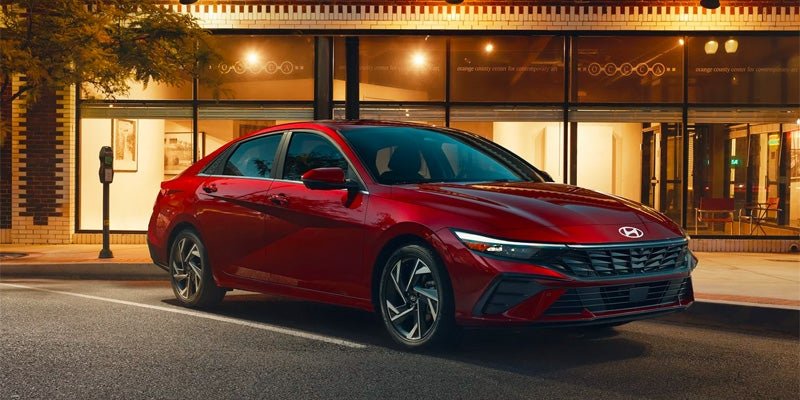
Regarding sedans, the landscape remains unchanged. While the Sonata received a mid-cycle refresh in recent years, adding HDA (standard) to higher trims like the Limited and N-Line, Hyundai has not announced HDA 2 availability for its 2026 sedan lineup. These vehicles remain excellent highway cruisers with class-leading safety scores, but they lack the autonomous lane-changing hardware found in the flagship Palisade.
Future Candidates: The Case for the 2026 Venue
The only “rumored” or upcoming potential candidate for Level-2 ADAS features is the 2026 Hyundai Venue. The Venue has historically been Hyundai’s entry-level SUV, but industry reports suggest a massive tech overhaul for 2026.
Unlike the current model, the new Venue is expected to receive dual 12.3-inch screens and a comprehensive Level-2 ADAS suite. While early reports specifically mention standard Highway Driving Assist (HDA), the inclusion of Blind-Spot Collision-Avoidance Assist and other advanced sensors opens the door for potential HDA 2 integration on top-tier trims.
If confirmed, the Venue would become the most affordable Hyundai offering semi-autonomous lane changes, democratizing technology typically reserved for luxury vehicles. However, as of mid-2026, buyers should verify window stickers, as this rollout may be delayed or limited to specific markets.
HDA vs. HDA 2: A Comparison Table
To make the decision easier, here is a direct comparison of how the two systems function on the 2026 Hyundai lineup, assuming you are driving on a mapped highway.
| Feature | Highway Driving Assist (HDA) | Highway Driving Assist 2 (HDA 2) |
|---|---|---|
| Adaptive Cruise Control | Yes (Stop & Go) | Yes (Stop & Go) |
| Lane Centering | Yes | Yes (with improved offset logic) |
| Lane Change Assist | No | Yes (Automatic) |
| Navigation-based Curve Slowdown | Limited | Yes (Broader map integration) |
| Availability (2026) | Palisade (SEL/XRT), Santa Fe, Tucson, Sonata | Palisade (Calligraphy) |
| Driver Monitoring | Steering wheel torque sensor | Steering wheel torque sensor |
Should You Upgrade for HDA 2?
If you are deciding between a standard Palisade trim and the Calligraphy primarily for the HDA 2 feature, the decision depends on your driving environment.
Buy HDA 2 if: You drive long, monotonous stretches of interstate highway daily. The lane-change feature reduces the physical effort of checking mirrors, signaling, and steering during a long commute. Once you experience the car moving over for you automatically, standard cruise control feels archaic.
Skip HDA 2 if you mostly drive in the city, rural winding roads, or heavy stop-and-go traffic. In these scenarios, the lane-change feature rarely activates (as it requires highways), and the standard HDA performs the same lane-centering and braking functions perfectly well.
In conclusion, the 2026 Hyundai Palisade Calligraphy remains the only definitive choice for HDA 2. While Hyundai offers class-leading safety across its range, the autonomous lane-change capability is currently a luxury reserved for the pinnacle of its SUV lineup.
Frequently Asked Questions (FAQ)
Q1: Can I get HDA 2 on the 2026 Hyundai Tucson?
A: No. As of 2026, the Tucson offers standard Highway Driving Assist and Smart Cruise Control on higher trims, but it does not offer HDA 2 with automated lane change capability. This feature remains exclusive to the Palisade Calligraphy.
Q2: Is Highway Driving Assist 2 self-driving?
A: No. HDA 2 is an SAE Level 2 driver-assistance system. You must keep your hands on the steering wheel and your eyes on the road at all times. The system requires driver supervision, meaning you are still responsible for the vehicle’s operation.
Q3: Does the 2026 Palisade Hybrid have HDA 2?
A: Yes, provided it is equipped with the calligraphy trim. Dealership listings for the 2026 Palisade Hybrid Calligraphy explicitly list Highway Driving Assist 2 as an included feature.
Q4: How do I know if my Hyundai has HDA 2?
A: The easiest way to check is to look for the Lane Change Assist function. On the highway with cruise control engaged, tap the turn signal. If the car changes lanes automatically, it has HDA 2. You can also check the vehicle’s window sticker or the infotainment settings under “Driver Assistance.”
Q5: What is the difference between Lane Following Assist (LFA) and HDA 2?
A: Lane Following Assist (LFA) keeps the car centered in its lane. HDA 2 includes LFA but adds adaptive cruise control and the ability to change lanes automatically. LFA alone will not control your speed or change lanes for you.
Q6: Will the 2026 Hyundai Elantra N get HDA 2?
A: As of the 2026 model year, there is no indication that the Elantra N or standard Elantra sedans will receive HDA 2. They typically top out at standard HDA or smart cruise control.