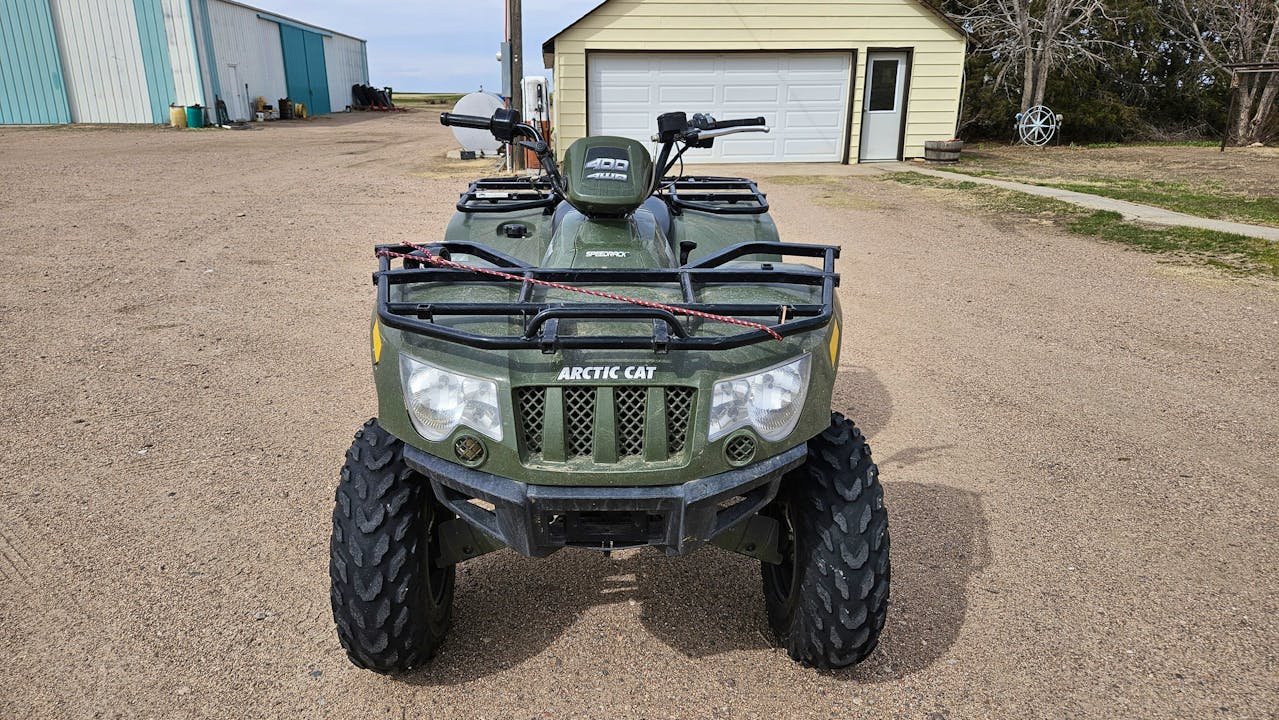
In the mid-2000s, the utility ATV market was fiercely competitive, with manufacturers battling to offer the best balance of power, durability, and price. The 2007 Arctic Cat 400 emerged from this era as a blue-collar hero. While it lacked the flashy high-performance branding of some competitors, it offered a robust, no-nonsense platform for work and trail riding.
For those looking at the used market today, the 2007 Arctic Cat 400 represents a specific value proposition: a simple, air/oil-cooled engine wrapped in a full-size chassis. This article provides a deep dive into the specifications, real-world performance, and common mechanical issues of the 2007 Arctic Cat 400, incorporating data from specifications sheets and direct feedback from long-term owners.
Model Overview and Variants
The 2007 Arctic Cat 400 came in several configurations, primarily the 400 4×4, 400 4×4 Automatic LE (Limited Edition), and a manual 5-speed transmission version. There was also the distinct DVX 400, which was a sport quad (based on the Suzuki LT-Z400) rather than a utility machine; this article primarily focuses on the utility 4×4 variants.
The base model of the utility version was work-focused, while the LE trim often included upgraded wheels, nicer finishes, and standard digital instrumentation. Regardless of the trim, the core chassis and powertrain remained largely the same, a fact that owners appreciated for parts compatibility.
Top Speed: Workhorse, Not a Racehorse
One of the most common questions regarding the 2007 Arctic Cat 400 is: How fast does it go?
Potential buyers expecting race-ready performance often need to adjust their expectations. The 2007 Arctic Cat 400 was engineered for torque and low-end grunt, not high-speed runs. According to owner discussions from the era, the real-world top speed of this model is approximately 50 mph (80 km/h) .
Several factors confirm this figure:
-
Gearing: The ATV is geared for pulling and climbing. In low range, it can crawl at 5 mph effortlessly, but the high-range gearing limits the absolute top end to preserve low-end thrust.
-
Engine Size: With a displacement of 376cc (or 398cc in some variants), it lacks the rpm overhead of the 650cc or 700cc siblings in the lineup.
-
Regulated Listings: Some listings, particularly those registered as agricultural tractors in regions like Europe, top out at 31 mph (50 km/h) due to specific gearing or restrictors, though the standard U.S. model generally hits the 50 mph mark.
One owner noted that while you won’t win a drag race against a 650, the 400 “will pull just as much wood out of the forest as my friends 500 Honda” because the chassis and suspension are the same heavy-duty units used on the larger bikes. The 2007 Arctic Cat 400 prioritizes pulling power over passing power.
Engine Analysis: Simple and Sturdy
The heart of this machine is its powerplant. Unlike the larger 650 H1 models that featured complex fuel injection or unique engine designs, the 2007 Arctic Cat 400 utility used a proven, simple engine architecture.
Detailed Specifications table
| Specification | Details (2007 Arctic Cat 400 4×4) |
|---|---|
| Engine Type | 4-Stroke, Single-Cylinder, SOHC |
| Displacement | 376cc (Utility) / 398cc (DVX Sport) |
| Cooling System | Air / Oil-cooled (Utility) |
| Bore x Stroke | 90.0 x 62.6 mm (Sport model spec – typical for class) |
| Fuel System | Carburetor |
| Starting System | Electric / Pull (backup) |
| Horsepower | Approx. 24 hp |
| Transmission | CVT Automatic or 5-Speed Manual |
The Air-Cooled Decision
While many competitors moved to liquid cooling for all their 400cc class engines by 2007, Arctic Cat stuck with an air/oil-cooled unit for their utility 400. This has both pros and cons:
-
Pros: Simplicity in repair, no radiators or water pumps to fail, and lighter weight.
-
Cons: Performance can degrade in very slow, high-load conditions (like deep mud on a hot summer day) due to heat soak.
The engine employs a Single Overhead Camshaft (SOHC) design, keeping the valvetrain simple and reliable. It is mated to either a continuous variable transmission (CVT) for automatic ease of use or a 5-speed manual foot shift for riders who prefer more control.
Reliability and Common Issues
The 2007 Arctic Cat 400 is generally regarded as a reliable machine, but it is now nearly two decades old. Age, rather than design flaws, is the primary source of issues. Based on owner forums and repair logs, here are the most common areas of concern.
1. Fuel System (The Carburetor Blues)
The single biggest headache for owners of the 2007 Arctic Cat 400 is the carburetor, specifically with the ethanol-blended fuels common today.
-
The Symptom: The ATV starts fine and idles perfectly but dies after 5-10 minutes of riding. It may refuse to restart immediately or die under load.
-
The Culprit: Often, this is due to a crushed or kinked fuel line (the rear fuel tank design makes the line susceptible to getting pinched by the plastics after maintenance) or a clogged pilot jet in the carburetor. Unlike EFI models (like the 700), the carburetor requires seasonal maintenance.
-
Electrical Confusion: One specific issue reported involves the bike dying like the key was turned off, only to restart instantly when the key is toggled. This often points to a failing ignition switch or a loose connection in the safety circuit rather than a fuel problem.
2. Electrical and Charging System
The 2007 model year falls into an era where some Arctic Cat units experienced “stator” issues (the part that charges the battery).
-
Issue: The battery drains while riding, leading to a weak spark and eventual stalling.
-
Simple Fix: Before replacing expensive parts, owners recommend checking the voltage at the battery while running. If the bike is not charging (below 13.5 volts), the stator or voltage regulator may need replacement.
3. Chassis and Steering Wear
As a utility machine, the 2007 Arctic Cat 400 often sees hard miles.
-
Pulling to One Side: A common complaint is the ATV pulling left or right. According to suspension specialists, this rarely requires a full alignment. The top causes are:
-
Tire Pressure: Uneven low pressure (these run very low PSI) is the #1 cause.
-
Brake Drag: A sticky caliper piston causes the quad to pull toward the side that is dragging.
-
Bent Components: Given the age, bent tie-rods or A-arms from previous collisions are common.
-
-
The “Squat”: Owners note that the rear suspension is designed to squat under load, which is excellent for traction. However, worn rear bushings can cause “squat steer” (the rear end shifting sideways under acceleration).
| Reliability Aspect | Rating | Notes |
|---|---|---|
| Engine Bottom End | Excellent | Very few reports of catastrophic internal failure. |
| Transmission (CVT) | Good | Belts wear out; keep a spare. Manual clutches require adjustment. |
| Carburetion | Fair | Requires cleaning if bike sits for >3 months. |
| Electrical | Fair | Ground connections corrode; ignition switches wear out. |
| Suspension | Good | Bushings wear, but parts are generally available and cheap. |
Conclusion
The 2007 Arctic Cat 400 is a testament to the “they don’t make ’em like they used to” philosophy—though that is not always a compliment. It is heavy (over 700 lbs dry), relatively slow (50 mph top speed), and relies on old-school carburetor technology.
However, for the hunter, the small property owner, or the trail rider on a budget, this machine remains viable. The heavy-duty chassis derived from the larger 650/700 models means the drivetrain is under-stressed. The air-cooled engine has no water pump to leak or radiator to puncture.
If you are looking at a 2007 Arctic Cat 400 today, pay acute attention to the fuel system and wiring. If the carburetor is clean and the battery charges, the underlying mechanics are likely very solid. It won’t win any races, but it will likely get the job done.
Frequently Asked Questions (FAQ)
Q1: What is the top speed of the 2007 Arctic Cat 400?
A: The top speed is approximately 50 miles per hour (80 km/h). It is geared for utility work and towing rather than high-speed riding.
Q2: Is the 2007 Arctic Cat 400 liquid-cooled?
A: No, the utility version of the 2007 Arctic Cat 400 is air/oil-cooled. It utilizes an oil cooler to help manage temperatures but does not have a liquid-cooled radiator system like the DVX 400 sport model.
Q3: How much does a 2007 Arctic Cat 400 weigh?
A: The dry weight varies slightly by transmission. The automatic 4×4 model has a dry weight of approximately 702 lbs (318 kg) , while the standard 4×4 base model is listed at around 648 lbs (293 kg) .
Q4: My 2007 Arctic Cat 400 starts, runs for 10 minutes, then dies. What’s wrong?
A: This is a common symptom. Likely causes include a clogged gas tank vent (creating a vacuum), a crushed fuel line (common after replacing plastics), or a dirty pilot jet in the carburetor. If it dies like the key was turned off and comes back on with a key cycle, check the ignition switch or safety kill switch.
Q5: Are parts still available for the 2007 Arctic Cat 400?
A: Yes, generally. While OEM (Original Equipment Manufacturer) cosmetic parts (plastic bodywork) are hard to find, mechanical parts (brakes, bearings, carb kits, belts, and gaskets) are still widely available through aftermarket suppliers and online retailers due to the popularity of the platform and cross-compatibility with other models.
Q6: What is the fuel capacity?
A: The 2007 Arctic Cat 400 Utility features a large fuel tank capacity of 6.5 gallons (24.6 liters), offering excellent range for long work days or trail rides.
Q7: Why does my Arctic Cat 400 pull to the right/left while driving?
A: Check the tire pressure first; uneven low pressure is the most common cause. Next, check for a dragging front brake caliper. Finally, inspect the tie rods and A-arms for bends.