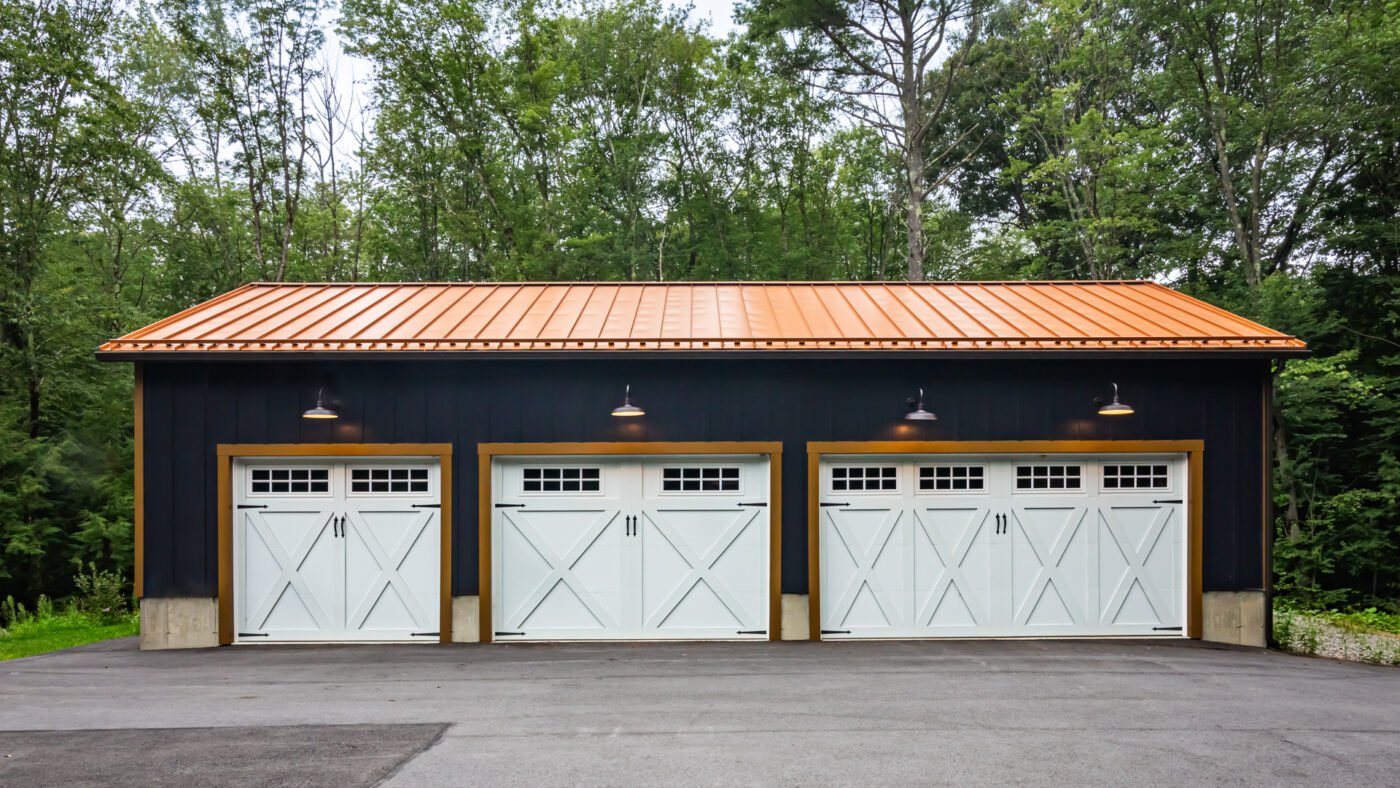
Planning a garage expansion or designing a new home involves countless decisions, but few are as impactful as the dimensions of your parking space. While a two-car garage has long been the standard for suburban homes, more families are opting for the flexibility of a three-car layout. Whether you need room for a growing fleet of vehicles, a dedicated workshop, or simply extra storage, understanding 3 car garage square footage is the critical first step.
In this guide, we will explore every aspect of building a three-car garage. From standard dimensions and door configurations to zoning laws and cost estimators, you will learn how to maximize your space without making expensive mistakes.
What is the Standard 3 Car Garage Square Footage?
When builders and architects discuss 3 car garage square footage, they generally refer to a range rather than a single number. The size varies significantly based on whether you are parking compact sedans, full-size trucks, or if you intend to use the third bay as a workshop.
The Minimum Viable Size
At the bare minimum, a three-car garage needs to be about 30 feet wide by 20 feet deep. This equates to approximately 600 square feet . However, this configuration is often cited as a “tight fit.” It leaves little room for opening doors, walking around the vehicles, or storing lawn equipment.
The “Goldilocks” Standard
Most real estate experts and construction professionals agree that the ideal and most common 3 car garage square footage is 864 square feet . This is achieved with a width of 36 feet and a depth of 24 feet. This size provides a comfortable buffer zone, allowing three modern SUVs to park without touching and offering a few feet of clearance at the back for storage or workbenches.
Quick Reference Sizing Table
To help you visualize the differences, here is a breakdown of the most common dimensions:
| Configuration | Width (Feet) | Depth (Feet) | Total Square Feet | Best For |
|---|---|---|---|---|
| Compact / Budget | 30 | 20 | 600 | Compact cars, limited budget, narrow lots. |
| Average Standard | 32 | 22 | 704 | Mid-size sedans, some storage . |
| Recommended / Ideal | 36 | 24 | 864 | SUVs, Pickups, ample storage . |
| Oversized / Luxury | 40 | 24 | 960 | Full-size trucks, workbenches, large SUVs. |
Understanding Width: The Key to Comfort
The width of your garage dictates how comfortably three vehicles can sit side-by-side. A standard vehicle is roughly 6 to 6.5 feet wide. However, you need room to open doors (generally 2 to 3 feet of clearance on each side of the car).
-
Narrow Width (30–32 feet): If you have a 3 car garage square footage of around 700 sq ft driven by a 32-foot width, you are giving each vehicle about 10.5 feet of space. This is tight for trucks.
-
Ideal Width (36 feet): At 36 feet wide, you give each of the three vehicles a 12-foot-wide “bay.” This allows for standard 9-foot-wide garage doors with 3 feet of wall space between them, making parking easy for drivers of all skill levels .
Depth Considerations for Modern Vehicles
It is not just about the 3 car garage square footage; the shape matters. Depth is often where homeowners make a critical mistake.
-
20 Feet Deep: This is dangerously shallow for modern vehicles. A Ford F-150 or Chevy Silverado is nearly 20 feet long. At this depth, you will hit the back wall before the garage door closes, and you certainly will not be able to walk behind the car.
-
22-24 Feet Deep: This is the safe zone. Twenty-four feet allows you to park a long truck, open the tailgate, and still have room to walk past the front bumper. It also provides space for shelving units along the back wall.
Expert Tip: If you plan on installing overhead storage racks or a ladder, stick to at least 24 feet in depth. The space above the garage door aprons is wasted if the garage isn’t deep enough to pull the car past it.
Popular Layouts: 3 Bay vs. Tandem
The square footage is only part of the equation. How you arrange the doors and bays defines the functionality of the space.
1. The Three-Bay (Side-by-Side)
This is the most common layout for a 36×24 slab. You will see either three single 8×7 doors or, more commonly, a 16-foot double door for the main two cars and a separate 9-foot single door for the third car.
-
Pros: Easy access to every car without moving others. The third bay can be closed off to hide a messy workshop.
-
Cons: Requires a wide lot with curb appeal.
2. The Tandem Layout
If you have a narrow lot but still want 3 car garage square footage, the tandem design is your friend. In this layout, two cars park side-by-side, and the third parks behind one of them.
-
Pros: Fits on standard 2-car garage footprints (roughly 20×36). Great for storing a project car, boat, or motorcycle.
-
Cons: You have to move the car in the back to get the front car out. It functions more like a 2-car garage with deep storage.
3. The Drive-Through
This variation is popular for RV owners or those with large backyards. The garage is extra deep (30+ feet) and includes a second overhead door at the rear, allowing you to drive straight through to the backyard.
3 Car Garage Square Footage Costs
The price of building a garage is almost always calculated by the square foot. Generally, construction costs for a three-car garage range from 40to70 per square foot.
-
A compact 600 sq ft garage would cost roughly 24,000to42,000.
-
A standard 864 sq ft garage would range between 34,000and60,000.
Factors that increase cost:
-
Attached vs. Detached: Detached structures require separate foundations and utilities.
-
Height: Standard walls are 8 or 9 feet. If you want a car lift, you need 12-foot walls, which drastically increases material costs.
-
HVAC & Insulation: Turning that 3 car garage square footage into a livable workspace or gym requires climate control, adding 10-20% to the budget.
How Vehicle Size Impacts Your Plans
The definition of a “standard car” has changed. Most families now drive crossovers, SUVs, or pickups.
-
Width: Modern SUVs average 78-81 inches wide (without mirrors). When you add in the need to swing doors open without denting the adjacent car, a 10-foot-wide bay feels claustrophobic.
-
Height: If you own a lifted truck, a van, or plan to buy an SUV with roof storage, you must check the garage door height. Standard doors are 7 feet tall. Upgrading to an 8-foot-tall door is a relatively cheap modification that saves headaches later.
Real-World Scenario
The Johnson Family: They have a Honda Odyssey (minivan), a Ford F-150 (truck), and a Honda Civic (sedan).
-
The 600 sq ft garage: Only the Civic and Odyssey fit; the truck hangs out the door. No storage.
-
The 864 sq ft garage (36×24): The truck fits with room to walk behind it. The minivan parks next to it with ample door clearance. The Civic fits in the third bay, which also houses the lawn mower and bikes. This is the recommended choice.
Navigating Zoning and Legal Restrictions
Before you pour the concrete, check your local zoning laws. Many municipalities strictly regulate the size of accessory buildings.
-
Lot Coverage: Some cities limit the total floor area of a garage. For example, a zoning code might restrict a three-car garage to 768 square feet in certain residential zones.
-
Setbacks: You may have the square footage allowance, but the law might restrict how long the exterior wall can be (e.g., no wall longer than 34 feet). Always pull a permit to avoid fines.
Actionable Takeaways for Your Build
-
Don’t Skimp on Depth: Prioritize 24 feet of depth over additional width if forced to choose. A shallow garage is a frustrating garage.
-
Measure Twice: Measure the actual vehicles you own now, not the cars you wish you had. Add 2 feet to the length and 2 feet to the width for comfortable maneuvering.
-
Plan for the “Stuff”: A third bay is only useful if it stores things. If the 3 car garage square footage is purely for cars, 650 sq ft works. If it is for “living” (workshop, gym, sports gear), 864+ sq ft is mandatory.
-
Think Vertically: If your floor space is limited to 600 feet, use 10-foot walls to install lofted storage racks to reclaim square footage in the air.
Conclusion
Deciding on the right 3-car garage square footage is a balancing act among your budget, your property lines, and your lifestyle. While the minimum requirement hovers around 600 square feet, the industry standard for happiness and functionality remains 864 square feet (36×24). This size accommodates the trend toward larger vehicles while preserving the ability to use the garage as a multi-functional storage and workspace.
Before breaking ground, consult a local builder to verify zoning restrictions and always overestimate your storage needs. A three-car garage is a long-term investment; permitting an extra 100 to 200 square feet during construction is significantly cheaper than adding five years down the road. Make your garage work for you, not the other way around.
Additional Resources
-
For a visual breakdown of different layouts, you can refer to common architectural standards found on Wikipedia: Garage (house).
-
To calculate the current costs of concrete and materials, check a home improvement calculator on Home Depot’s website.