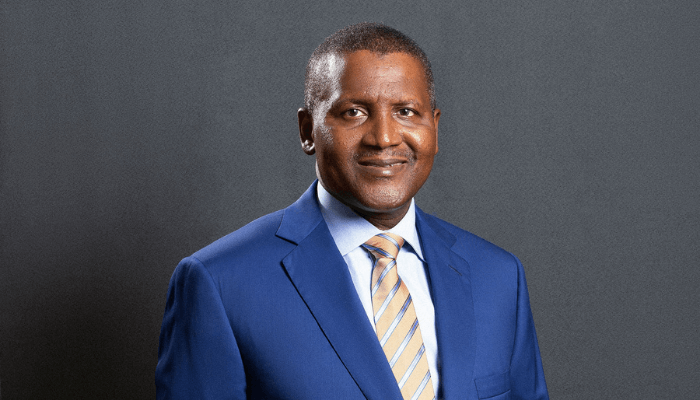
Introduction: The Sultan of African Industry
In the landscape of global business, few names resonate with the weight of ambition and industrial might quite like Aliko Dangote. Frequently dubbed the “Sultan of African Industry,” Dangote is not just a businessman; he is an economic force who has fundamentally reshaped manufacturing and infrastructure across the continent. From the bustling markets of Kano to the massive oil refinery in Lagos, his journey is a masterclass in vertical integration, risk-taking, and long-term vision.
For decades, when global media discusses African wealth, Aliko Dangote is the name at the top of the list. As of 2026, he continues to hold the title of Africa’s richest person, weathering currency fluctuations and global economic shifts with a conglomerate that touches the daily lives of millions. This biography explores the man behind the empire—his age, his family, the companies he built, and the staggering wealth he has generated.
Early Life and Education: The Entrepreneurial Seed
Born on April 10, 1957, in Kano, Nigeria, Aliko Dangote was born into a wealthy and prominent Muslim family. His mother, Mariya Sanusi Dantata, was the daughter of Alhaji Sanusi Dantata, a legendary commodity trader who dominated the Kano market in the early 20th century. This lineage provided Dangote with more than just a financial safety net; it provided a blueprint for trade.
Growing up in the ancient, commercial city of Kano, young Aliko was immersed in the world of commerce. He showed an early aptitude for business, allegedly using money borrowed from his aunt to buy sweets and resell them for a profit—a small hint of the industrial giant he would become.
He pursued higher education at Cairo, Egypt’s prestigious Al-Azhar University, where he studied Business Studies. This exposure to a different economic environment helped refine his perspective. Upon returning to Nigeria, he was eager to apply his education, but he did not immediately receive a fortune.
The Genesis of the Dangote Group
The official founding story of the Dangote Group is one of determination and a small loan. In 1977, at just 20 years old, Aliko Dangote took a loan of $500,000 from his influential uncle to start trading commodities. This was the seed capital for a venture that would eventually dominate the continent.
Initially, the company operated as a small trading firm. In 1981, he formally incorporated Dangote Group Ltd. At this stage, the company focused on importing and exporting agricultural products such as sugar, rice, cement, and textiles. Dangote’s genius lay in his ability to identify scarcity. If Nigeria needed cement, Dangote imported it. If sugar were expensive, he would source it more cheaply.
However, Dangote realized that to build lasting wealth and impact, he could not just be a trader. He needed to be a manufacturer.
The Shift from Trade to Manufacturing
In the late 1990s, the Nigerian government began encouraging local manufacturing. Aliko Dangote pivoted hard. He moved from importing cement to building plants to produce it. He moved from trading sugar to building one of the largest sugar refineries on the continent. This vertical integration is the core reason for his success—controlling the supply chain from production to distribution.
The Crown Jewel: Dangote Cement
If you want to understand Aliko Dangote’s wealth, you must understand cement. Dangote Cement is the engine of his fortune.
Aliko Dangote chairs Dangote Cement, the largest cement producer in Africa. The company has an installed capacity of 48.6 million metric tons annually, with operations spanning ten different African countries. He owns approximately 85-86% of this publicly traded behemoth.
The company’s growth exploded when it moved beyond Nigeria. Dangote Cement plants can now be found in Cameroon, Ethiopia, Senegal, South Africa, Tanzania, and Zambia, among others. By building in regions with vast infrastructure gaps, Dangote positioned itself as the indispensable supplier of Africa’s urbanization.
In 2025, the company saw its shares surge nearly 69%, leading to record profits exceeding N1 trillion. This performance solidified his return to the top of the wealth rankings after briefly being overtaken by South African luxury goods magnate Johann Rupert.
The Game Changer: Dangote Refinery & Fertilizer
While cement built the foundation, oil is building the future. In recent years, the narrative surrounding Aliko Dangote has shifted to arguably his most ambitious project yet: the Dangote Refinery.
Located in the Lekki Free Zone near Lagos, this is the world’s largest single-train oil refinery. The project, which began construction in 2016 and cost billions of dollars (estimates range from 12 billion to 19 billion), began refining operations in early 2024.
Why the Refinery Matters
Nigeria is one of the largest oil producers in Africa, yet paradoxically, it has historically imported most of its refined fuel due to decrepit local refineries. The Dangote Refinery aims to end that cycle.
-
Capacity: The refinery is designed to process 650,000 barrels per day.
-
Expansion: Dangote recently announced a $400 million deal to double the refinery’s capacity by 2029.
-
Fertilizer: Complementing the refinery is the Dangote Fertilizer plant, which began operations in March 2022, helping reduce Nigeria’s dependence on imported agricultural inputs.
The Dangote Empire: Other Key Companies
While cement and oil dominate the headlines, Aliko Dangote has his fingers in many pies. The Dangote Group is a diversified conglomerate with interests in nearly every sector of daily consumption.
| Sector | Key Companies |
|---|---|
| Agriculture & Food | Dangote Sugar Refinery, Dangote Flour Mills, Dangote Salt, Dangote Pasta & Noodles. |
| Consumer Goods | Danvita (rice), Mowa Water, Ziza Milk. |
| Logistics | Dangote Ports & Logistics has extensive truck fleets for cement distribution. |
| Real Estate | Dangote Properties, Silverland. |
| Finance | A major shareholder in the United Bank for Africa (UBA). |
This diversification is a deliberate strategy. By controlling everything from the sugar in your tea to the cement in your walls, Aliko Dangote ensures that the Dangote brand is omnipresent in African households.
Family and Succession Planning
Despite his public business persona, Aliko Dangote keeps his family life relatively private. He has been married and divorced (currently he is divorced and has not remarried).
Aliko Dangote has three biological daughters, Mariya, Halima, and Fatima, and he also has an adopted son, Abdulrahman Fasasi.
The Next Generation
In a significant move signaling the future of the empire, Dangote appointed his three daughters to senior leadership positions in early 2026.
-
Halima Aliko Dangote: Appointed Group Executive Director at the Dangote Family Office & International Offices (Dubai/London). She is often viewed as the central figure in managing the family’s wealth.
-
Fatima Aliko Dangote: Promoted to Group Executive Director of Commercial Operations, overseeing strategy across all business units .
-
Mariya Aliko Dangote: Moved to Group Executive Director of Commercial Operations, focusing on Cement & Foods, a critical role for the flagship products.
This move suggests that Aliko Dangote is actively grooming his children to take over the conglomerate, ensuring continuity. His adopted son, Abdulrahman, remains out of the public eye but is rumored to hold a significant place in the succession plan.
Wealth: Net Worth and Assets
As of the 2026 Forbes Africa Billionaires list, Aliko Dangote sits firmly at number one with an estimated net worth of 28.5 billion [citation:1][citation:7]. This marks a significant recovery and growth from the 8.1 billion recorded in 2020, showcasing the value of his refinery bet and the surge in cement prices.
Forbes reports that the billionaire is $4.6 billion richer than a year ago, largely thanks to the performance of Dangote Cement on the Nigerian Stock Exchange.
Key Wealth Statistics:
-
Global Ranking: #77 (as of March 2026)
-
Source: Self-Made (Cement, Sugar, Oil).
-
Residence: Lagos, Nigeria.
Wealth History Snapshot
-
2008: $3.3 Billion (First time on Forbes list) .
-
2014: $25 Billion (Peak pre-refinery spending).
-
2020: $8.1 Billion (Currency devaluation in Nigeria)
-
2026: $28.5 Billion (Post-refinery launch) .
Philanthropy: The Dangote Foundation
Aliko Dangote is not just an accumulator of wealth; he is one of Africa’s leading philanthropists. In 2014, he made a staggering endowment of $1.25 billion to the Aliko Dangote Foundation (ADF).
The ADF focuses on:
-
Health: Partnering with the Bill & Melinda Gates Foundation to eradicate polio in Nigeria (the country is now certified polio-free).
-
Education: Establishing business schools and providing grants.
-
Economic Empowerment: Supporting micro-enterprises and victims of disasters.
Unlike many billionaires who pledge wealth after retirement, Dangote has been actively giving during his peak earning years, stating that he wants to solve specific problems on the continent now.
Expert Tips: Lessons from Aliko Dangote’s Success
For aspiring entrepreneurs, studying Aliko Dangote offers invaluable lessons:
-
Solve Local Problems: Dangote saw that Nigeria imported everything. He built local capacity to stop that import dependency. Don’t just look for trends; look for local supply chain gaps.
-
Vertical Integration is Key: Dangote doesn’t just make cement; he owns the bags (Dangote Sacks), the trucks (logistics), and the ports. Control your inputs and your distribution.
-
Patience with Capital Expenditure: The Dangote Refinery took nearly a decade to come online. Major wealth is often built on 10-year plans, not 10-month sprints.
-
Political & Economic Navigation: Dangote has navigated changing governments, currency crises, and policy shifts by remaining essential to the Nigerian economy.
Benefits vs. Drawbacks of the Dangote Dominance
Aliko Dangote is a celebrated figure, but his dominance in the market does attract a mix of opinions.
| Benefits to the Economy | Criticisms & Drawbacks |
|---|---|
| Reduces Import Dependency: Local production of cement and fuel saves foreign currency. | Monopoly Concerns: Critics argue hthat is control over cement prices limits competition. |
| Infrastructure Development: Provides essential materials for roads, bridges, and housing. | Market Influence: His business decisions can single-handedly move the Nigerian Stock Exchange. |
| Massive Employment: The group employs thousands directly and indirectly. | Political Influence: His financial power gives him significant lobbying weight. |
| Energy Independence: The new refinery could save Nigeria billions in fuel imports. | Debt Risk: The massive loans for the refinery were seen as a risk to the banking sector. |
Real-World Scenario: The Impact of the New Refinery
Consider the practical example of the Dangote Refinery. Before 2024, a fuel tanker driver in Lagos would have to wait weeks to load imported fuel from a ship, costing the government billions in subsidies.
Now, in a real-world scenario, that driver can theoretically go to the Lekki refinery, load locally refined petroleum, and deliver it cheaper. This ripple effect lowers transportation costs for every other business, including Dangote’s own cement trucks. Aliko Dangote effectively creates an ecosystem where his oil fuels his trucks to move his cement.
Conclusion: The Legacy Continues
Aliko Dangote is more than a billionaire; he is an architect of modern Africa. From a small loan in 1977 to a $28.5 billion empire spanning cement, sugar, salt, and oil, his journey reflects the immense potential of the continent when ambition meets infrastructure.
He has successfully pivoted from a trader to a manufacturer and now to an industrial refiner. By placing his daughters in key executive roles, Aliko Dangote is ensuring that the conglomerate remains a family dynasty for decades to come.
Actionable Takeaways for Readers
-
Think Long-Term: Dangote’s wealth didn’t spike overnight; it was built over 40 years.
-
Focus on Necessities: He sells cement, sugar, and fuel—things people need, not just want.
-
Vertical Scale: If you are in business, look up and down your supply chain for opportunities to capture value.
As the Dangote Refinery ramps up to double its capacity by 2029, one thing is certain: the story of Aliko Dangote is far from over.