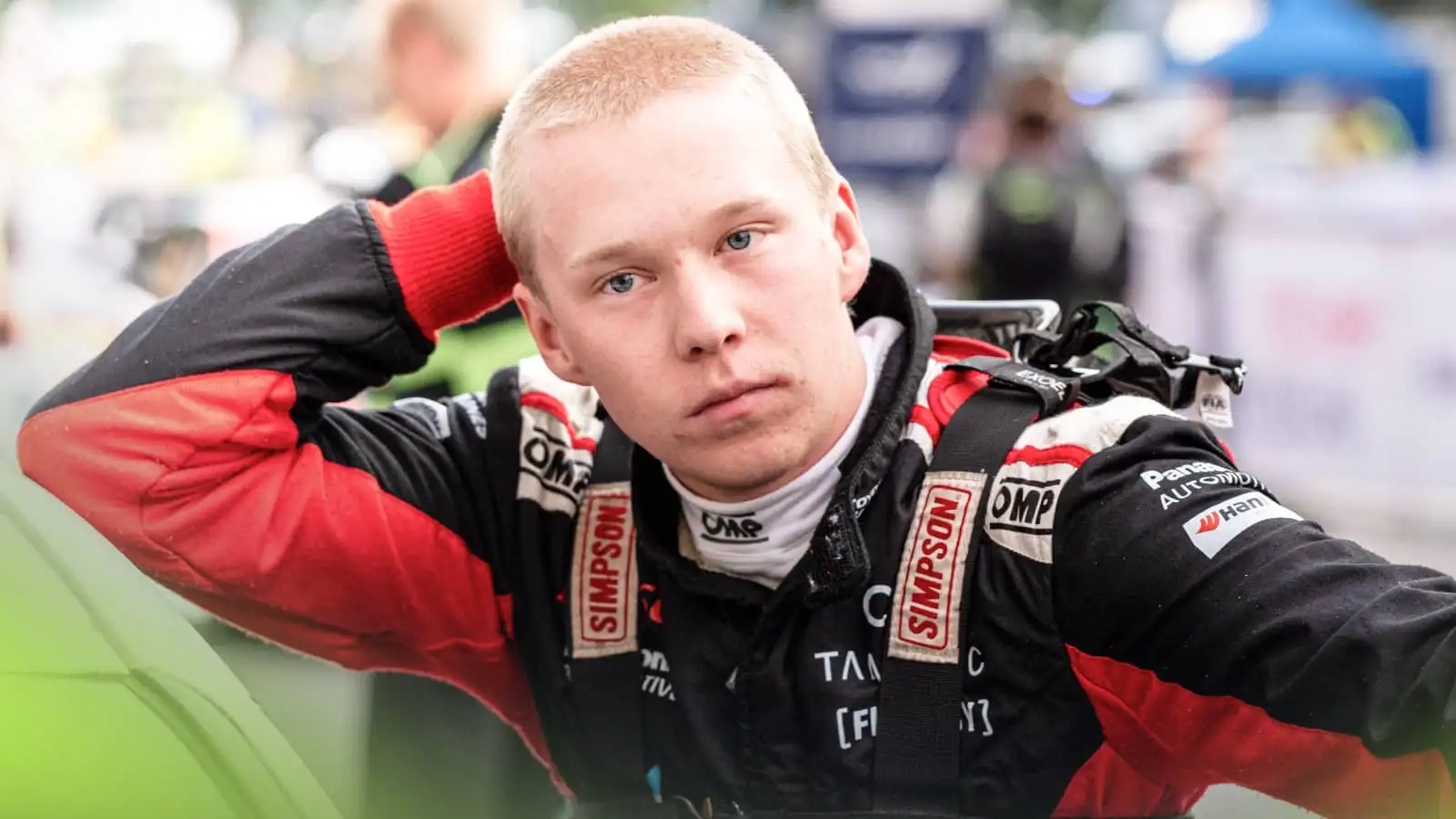
The world of motorsport is no stranger to seismic shifts and unexpected career moves, but few have generated as much intrigue as the recent announcement from two-time World Rally Champion Kalle Rovanperä. In a decision that has sent shockwaves from the forests of Finland to the paddocks of Monaco, the 25-year-old phenom has decided to step away from the pinnacle of rallying to chase a new dream: Formula 1.
This comprehensive guide explores the kalle rovanpera f1 move 2026, breaking down the financial implications, the step-by-step pathway through Japanese Super Formula, the physical challenges of switching disciplines, and what this means for both Toyota and the future of the WRC.
| Key Aspect | Details |
|---|---|
| Current Role | Two-time World Rally Champion (Toyota Gazoo Racing) |
| 2026 Focus | Super Formula Championship (Japan) |
| Future Goal | Formula 2 (2027) & Formula 1 |
| Primary Backer | Red Bull & Toyota |
| Financial Status | Significant base salary reduction, supplemented by sponsors |
Why is Kalle Rovanperä Leaving the WRC?
To understand the kalle rovanpera f1 move 2026, we must first look at the motivation behind it. Rovanperä has already achieved what most drivers only dream of. He became the youngest world rally champion in history at just 22 years old and has dominated the WRC stages with a driving style often compared to a young Max Verstappen.
However, the Finn has often stated that he does not want to be a “lifer” in rallying. The thrill of tarmac, the precision of apexes, and the wheel-to-wheel combat of circuit racing have always held an allure for him. After testing a Formula 1 car at the Red Bull Ring in 2024, the ambition crystalized.
“I know that it’s jumping straight into the deep end, coming from rallying, but I’m really looking forward to it.” — Kalle Rovanperä on his circuit racing debut
In October 2025, Rovanperä confirmed he would leave the WRC full-time, paving the way for his successor, Oliver Solberg, to take the factory seat at Toyota. This move represents a personal bet: to prove that a rally-bred driver can adapt to the high-downforce, high-G world of single-seaters.
The Roadmap: From Rally Car to F1 Podium
The kalle rovanpera f1 move 2026 is not a direct leap into a Grand Prix cockpit—that would be impossible given F1’s mandatory Super License points system. Instead, Toyota and Rovanperä have mapped out a structured, two-year plan designed to equip him with the necessary skills and credentials.
2026: Super Formula (The Learning Year)
Kalle will compete full-time in the Japanese Super Formula championship. Often cited as one of the fastest racing series outside of F1, Super Formula cars generate downforce levels close to Formula 2. For Rovanperä, this is the ideal classroom.
-
Why Japan? Toyota has deep roots in Super Formula. It allows them to control his program, give him extensive track time, and shield him from the immense media pressure of the European F2 paddock.
-
The Competition: He will face drivers like Tomoki Nojiri and Ritomo Miyata, who are masters of these specific high-speed machines.
2027: Formula 2 (The Validation Year)
Provided he adapts well to Super Formula, Rovanperä will move to Formula 2 in 2027. This is the final traditional stepping stone to F1. Here, he will race on the exact same circuits (Monaco, Silverstone, Spa) that host the Grand Prix weekends, proving his racecraft against the best rising stars in the world.
2028 & Beyond: The F1 Target
Only after completing these stages will Toyota and Red Bull evaluate whether Rovanperä is ready for an F1 seat. Given his age (28 by 2028), he would be a mature rookie, bringing a decade of elite professional driving experience that most F2 graduates lack.
The Financial Reality: Taking a “Huge Pay Cut” for Glory
One of the most discussed aspects of the kalle rovanpera f1 move 2026 is the financial sacrifice involved. According to reports from Finnish publication Ilta-Sanomat, Rovanperä currently earns an estimated €6 million annually from Toyota for his WRC duties, making him one of the highest-paid rally drivers in history.
However, chasing the F1 dream comes at a price. His manager, Timo Jouhki, confirmed that Kalle’s base salary from Toyota will drop significantly in 2026, describing the compensation as “merely formal” compared to his previous earnings.
How is he funding this move?
While the base salary is lower, the total package is supplemented by major sponsorship deals.
-
Red Bull: The energy drink giant remains his most prominent personal backer.
-
Toyota Expenses: While the salary is small, Toyota pays for all driving-related expenses—including testing, logistics, and engineering support.
-
Other Sponsors: Rovanperä retains outside sponsorship income, which keeps his overall compensation healthy even if the team retainer is low.
Expert Tip: This model mirrors how many junior drivers operate. It is a “bet on yourself” contract where the driver accepts lower security in exchange for the chance to access equipment that could unlock a multi-million dollar F1 salary later.
Physical and Technical Hurdles: The “Deep End”
Moving from a WRC car to a single-seater is not just about learning new tracks; it requires the body to operate in a completely different way. Jouhki has warned fans to be realistic about the adaptation period.
1. G-Force Tolerance
Rally cars slide. F1 and Super Formula cars stick. Circuit racing involves sustained lateral G-forces (up to 5G in corners) and brutal braking forces (up to 6G). Rally drivers experience high forces, but usually in short, violent spikes over bumps. Single-seaters demand constant muscle tension to keep the head upright and the neck stable through long, sweeping corners.
2. Physical Conditioning
Kalle has already hired a dedicated F1 trainer and has been preparing for six months. The focus is on:
-
Neck strength: To resist centrifugal force.
-
Arm endurance: F2 and F1 cars have heavy power steering, but the vibrations and downforce make them physically exhausting over a 45-minute sprint race.
3. Racecraft vs. Stagecraft
Rallying is a time trial against the clock. Circuit racing is a direct fight against 19 other drivers. Rovanperä must learn how to manage tire degradation, defend positions, and execute overtakes—skills he rarely needed on open rally stages.
How Toyota Benefits (Regardless of the Result)
For Toyota Gazoo Racing, supporting the kalle rovanpera f1 move 2026 is a strategic masterstroke, even if Rovanperä never secures an F1 seat.
-
Brand Prestige: Having “Toyota” associated with the F1 grid again (even just as a sponsor via a driver) is valuable global marketing.
-
Driver Development: The intense engineering feedback required for Super Formula will improve Toyota’s internal engineering capabilities for their road cars and future racing projects.
-
Keeping Him in the Family: By facilitating this move, Toyota ensures that Rovanperä does not jump to a rival brand (like Porsche or Ferrari) for his circuit career. He remains loyal to the Japanese manufacturer.
In the WRC, Toyota has already moved on, signing WRC2 champion Oliver Solberg as Rovanperä’s direct replacement for the 2026 season. This ensures no gap in their rally lineup while their star driver attempts his circuit experiment.
Actionable Takeaways for Fans
If you are following the kalle rovanpera f1 move 2026, here is how you can track his progress and what to watch for:
-
Watch Super Formula: Unlike F1, Super Formula races are often uploaded to YouTube with English commentary. Look for his debut at Suzuka or Fuji Speedway—these tracks are the ultimate test of courage.
-
Follow the Gym Content: Pay attention to his physical transformation. If he starts posting neck training videos, it signals he is adapting to the physical load.
-
Manage Expectations: Do not expect immediate wins. If Rovanpera finishes in the top 10 of the Super Formula standings in his rookie year, that is a massive success.
-
Monitor Red Bull’s Moves: Red Bull has two F1 teams (RB and Red Bull Racing). If Rovanpera performs well, he could be an option to replace an underperforming driver at Racing Bulls (formerly AlphaTauri) as early as 2028.
Frequently Asked Questions (FAQ)
Will Kalle Rovanperä definitely be in F1 in 2026?
No. The kalle rovanpera f1 move 2026 refers to his start of the journey. In 2026, he will be in Super Formula, not F1. F1 is the target for 2028 or later.
Is he leaving rallying for good?
Officially, he is stepping back from a full-time WRC schedule. There is speculation he may still do select rally events (like his home rally in Finland) as a guest driver, but his priority is circuits.
Who is paying for this?
Toyota is covering all operational costs, while Red Bull and personal sponsors are covering his salary.
Pros vs. Cons of the Switch
| Advantages (Pros) | Disadvantages (Cons) |
|---|---|
| Potentially greater legacy if he becomes the first rally champion to win in F1. | Huge immediate pay cut (approx €6m to a base of much less). |
| Access to Red Bull’s F1 pipeline and resources. | Risk of failure in a discipline he has “very limited” experience in. |
| New challenges that re-ignite his passion for driving. | Physical pain; adaptation to G-forces is notoriously brutal. |
| Global exposure far exceeding the WRC audience. | Time away from winning; he goes from #1 to a rookie. |
Conclusion
The kalle rovanpera f1 move 2026 is one of the most daring gambles in modern motorsport. It is a narrative of passion over profit, where a 25-year-old champion has traded a guaranteed multi-million euro salary for the uncertain, grueling ladder of single-seater racing.
For fans, this is a win-win scenario. If Rovanperä succeeds, we get to witness one of the most talented natural drivers of his generation battle on the F1 grid. If he fails, he will return to rallying with a new set of engineering skills that will make him even faster. However, the stakes are high, requiring immense physical sacrifice and financial risk.
The journey will not be quick. It requires patience through the 2026 Super Formula season and the 2027 F2 campaign. But if Kalle Rovanperä proves that a rally driver can conquer the downforce and precision of F1, he will cement his name among the true greats of motorsport history.
Key Takeaway: Keep your eyes on the Japanese Super Formula results in late 2026. That will be the first true indicator of whether the dream is alive or if the deep end is too deep.