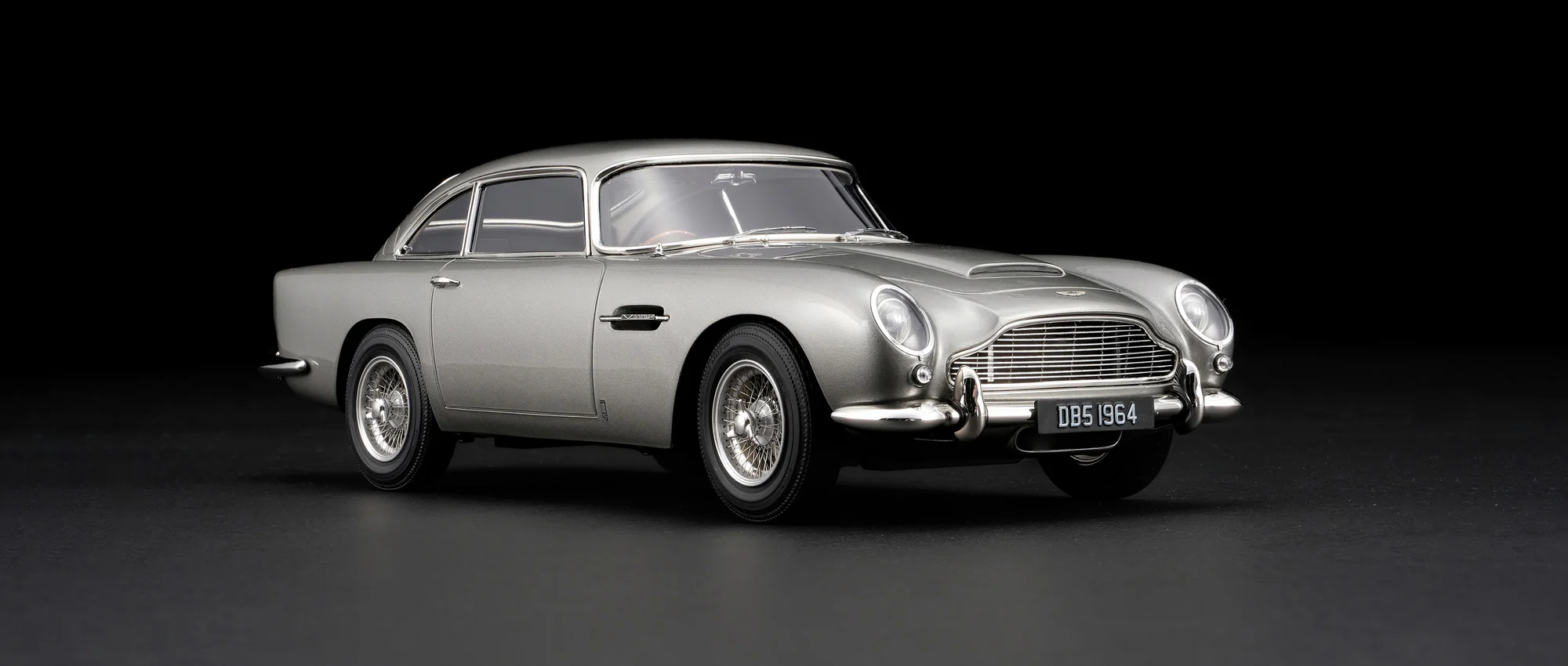
There are few moments in the automotive world quite like the first time you see an Aston Martin. It isn’t merely the sight of a car; it is the recognition of a sculpture in motion. For over a century, the name Aston Martin has served as a synonym for a very specific kind of British magic—one where high-octane performance is dressed in a perfectly tailored tweed suit.
To discuss the legacy of Aston Martin is to walk a fine line between the boardroom and the racetrack. This is a brand that has survived bankruptcy, war, and seismic technological shifts yet has emerged not as a relic, but as the benchmark for “Super GT” luxury. From the silver screen heroics of James Bond to the raw asphalt-tearing power of the modern Vanquish, this journey explores how a brand born in a small London workshop became the undisputed king of luxury and speed.
The Birth of the Wings: A Legacy of Perseverance
Every legend has a genesis moment, and for Aston Martin, it started with a hill climb. In 1913, Lionel Martin and Robert Bamford founded “Bamford & Martin” in London. The “Aston” part of the name came shortly after, derived from Lionel Martin’s successful runs up Aston Clinton Hill in Buckinghamshire. It was a victory that signified the brand’s core DNA from day one: precision engineering applied to the pursuit of speed.
However, unlike many of its contemporaries that grew fat on volume sales, Aston Martin took a more tumultuous path.
The David Brown Era: The Birth of the DB
The modern identity of the brand truly crystallized in 1947 when industrialist David Brown took the helm. Brown purchased the company and immediately set about creating a line of cars that would bear his initials: DB. The DB2 launched in 1950, but it was the arrival of the DB4, and subsequently the DB5 in 1963, that changed everything.
The DB5 wasn’t just a car; it was an icon of the “Jet Age.” With its Superleggera (super-light) body construction by Carrozzeria Touring of Italy, it was faster, lighter, and more beautiful than anything that had come before.
Expert Insight: The David Brown era is widely considered the “Golden Era” because he understood that racing improved the breed. Under his watch, Aston Martin won the World Sportscar Championship and the 24 Hours of Le Mans in 1959 with the DBR1 .
Aston Martin and 007: The Accidental Superstar
It is impossible to write about the Aston Martin legacy without addressing the elephant in the room—or rather, the silver birch DB5 in the room. The relationship with James Bond is the most successful product placement in cinematic history.
When the DB5 appeared in Goldfinger (1964), equipped with ejector seats and machine guns, it ceased to be a simple grand tourer. It became a fantasy. This association elevated the brand beyond the reach of Ferrari or Lamborghini for a specific type of buyer.
-
The Cultural Impact: The car became a character. Unlike the disposable gadgets Bond uses, the DB5 represents wit, sophistication, and British resilience.
-
Modern Resurrection: The partnership continues today, with the DB10 built exclusively for Spectre and the modern DB12 continuing the association.
For collectors, a “Bond connection” adds millions to the value. In 2019, a DB5 stunt car used in No Time to Die sold for nearly $3.6 million, proving that the silver screen magic remains potent.
The Bloodline: Breaking Down the Icons
To understand the engineering prowess of Aston Martin, one must look at the specific models that redefined the industry. The brand has successfully navigated three distinct eras of performance.
| Generation | Iconic Model | Engine & Power | Legacy Defining Feature |
|---|---|---|---|
| The Golden Age | DB5 (1963) | 4.0L Inline-6, 282 bhp | “Most Beautiful Car in the World”; James Bond debut |
| The V12 Renaissance | V12 Vanquish (2001) | 6.0L V12, 460 bhp | “The 007 Car”; Bond’s invisible car in Die Another Day; F1 paddle-shift |
| The Modern Apex | Vanquish (2024) | 5.2L Twin-Turbo V12, 835 bhp | Fastest series production car (214mph); Ultra-exclusive (<1,000 units/year) |
The Modern Masterpieces
While the heritage is vital, the current lineup is arguably the strongest in the brand’s history. The DB12, launched recently, has been dubbed the “Super Tourer”—a car that bridges the gap between a luxury GT and a supercar. It features a hand-built 4.0L V8 Twin-Turbo producing PS, challenging the notion that luxury must be slow.
Furthermore, the introduction of the DBX707 marked the brand’s successful entry into the SUV market. In a move of pure practicality (and profit), Aston Martin created the most powerful luxury SUV on the market, ensuring the brand’s survival in the age of the crossover.
The Art of Ownership: Craftsmanship vs. Technology
Owning an Aston Martin is a different experience from owning a German rival. Where a Porsche or Mercedes-AMG focuses on cold, hard data (lap times, torque figures, downforce), Aston Martin focuses on tactility.
The Interior Experience
Walk into a new DB12, and you are greeted by materials that engage the senses in a way few competitors can match. While other manufacturers have moved to massive, distracting touchscreens, Aston Martin has focused on “analogue tactility” . The leather is Bridge of Weir hide, the metal is solid, and the signature feel of the gear selector—the “Princess Switch”—is an event in itself.
Maintenance Considerations
However, beauty requires upkeep. Prospective buyers should be aware of the practicalities of owning a high-performance British machine. As noted in consumer reviews, the primary drawback for owners is the maintenance cost.
Pros of Ownership:
-
Exclusivity: You rarely see another one at a stoplight.
-
Resale Value: Limited production runs (like the new Vanquish) ensure values hold better than mass-produced luxury cars.
-
Community: Access to exclusive events (often called “Club Aston”) and a network of enthusiasts.
Cons of Ownership:
-
Running Costs: Specialized tires, high-performance brakes, and labor rates at authorized dealers are premium.
-
Technology Refresh Rate: While improved, some owners feel the in-car tech lags slightly behind newer electric competitors.
Tip from the Experts: Service history is everything. A used Aston Martin with full dealer service history (particularly from a certified pre-owned “Timeless” program) is worth significantly more than one with a questionable past .
The Race to the Future: Electrification and Innovation
Despite the obsession with the roaring V12, Aston Martin is not living in the past. The company has set ambitious targets to electrify its lineup. While they have pushed back some EV targets to focus on hybrid technology, the future is coming fast.
The Valhalla is the bridge to this future. This mid-engine hybrid supercar utilizes technology derived from the insane Valkyrie hypercar (developed with Red Bull Racing’s Adrian Newey).
-
The Strategy: Unlike other brands that are going fully electric, Aston Martin is focusing on “Ultra-Luxury Performance.” The current CEO, Adrian Hallmark, has suggested that the brand will retain internal combustion engines (synthesized or hybrid) for as long as possible because the “emotion” of the sound is key to their identity.
An Actionable Buyer’s Guide
Whether you are a collector or an enthusiast dreaming of your first British sports car, understanding the landscape is key. Here is a quick guide to navigating the Aston Martin lineup:
-
For the First-Time Buyer: Look at the Vantage. It is the “entry point” but offers explosive performance and the full design language of the brand without the DB price tag.
-
For the Grand Tourer: The DB12 is currently the sweet spot. It offers Super GT performance (0-60 in 3.5 s) with genuine long-distance comfort for two adults.
-
For the Family: The DBX707 is the only logical choice. It combines 697 horsepower with enough room for golf bags and children.
-
Investment Buying: Focus on limited-run, naturally aspirated V12 models (like the final-edition DBS or the new Vanquish), as these are likely to become blue-chip collectibles as electrification looms.
Conclusion: The Eternal Contradiction
The legacy of Aston Martin is one of beautiful contradictions. It is a brand perpetually on the brink of financial collapse, yet producing some of the most expensive and desirable objects on earth. It is a brand that honors hand-beaten aluminum bodywork while coding the software for hyper-intelligent traction control.
From the DB5 that stole our hearts in black and white to the Vanquish that shatters the 200mph barrier today, Aston Martin has achieved something that few brands can claim: it has remained true to its soul. It isn’t about being the fastest on the spec sheet; it’s about how the car makes you feel.
For the discerning buyer, choosing an Aston Martin is a decision to prioritize emotion over raw data. It is an acknowledgment that speed is thrilling, but doing so with style is timeless. Whether you are managing a collection of vintage greats or looking to finance your first Vantage, the key is to prioritize authenticity and care—just as the craftsmen in Gaydon have done for over a century.