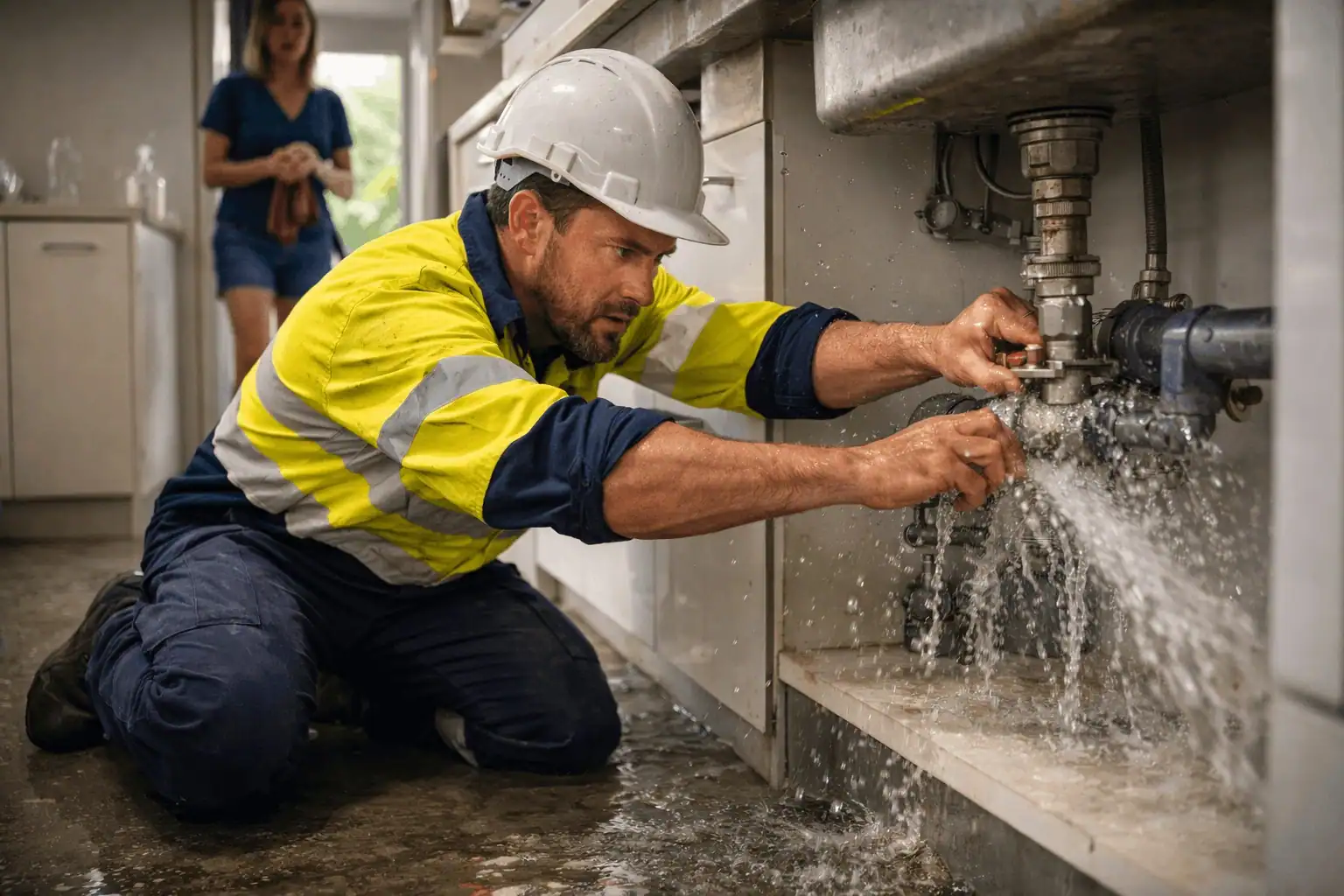
A burst pipe. A gushing faucet. Water is spreading across your kitchen floor at midnight. These are the moments that test every homeowner’s composure. While calling a licensed plumber should always be your first step during a serious water emergency, help doesn’t always arrive instantly—and every minute water runs unchecked means more damage, higher repair bills, and greater risk to your home’s structure. Knowing what to do in those critical minutes before professional help arrives can make all the difference. This guide walks you through the essential steps for emergency leak repair, helping you protect your home, your belongings, and your wallet while you wait for the experts.
Stay Calm and Assess the Situation
The first rule of any plumbing emergency is to resist the urge to panic. A clear head allows you to make smart decisions that prevent a manageable situation from turning into a catastrophe. Before you touch anything, take ten seconds to assess the severity of the leak.
Ask yourself: Is water spraying forcefully or dripping slowly? Is it affecting electrical outlets, panels, or appliances? Is there a risk of flooding spreading to other rooms? Can you identify where the water is coming from?
The answers to these questions will guide your immediate actions. A small drip under the sink and a burst pipe behind the wall require very different responses. Once you have a basic picture of what you’re dealing with, you can take targeted steps to minimize damage.
Shut Off the Water Supply Immediately
This is the single most important step in any emergency leak repair situation. The moment you suspect a serious leak, locate and turn off the water supply. This stops the flow of water and gives you time to assess the damage without the situation worsening.
For localized leaks — such as a leaking toilet, faucet, or appliance — look for the shutoff valve directly behind or beneath the fixture. Most toilets have a valve on the wall behind them; sinks typically have valves under the cabinet. Turn the valve clockwise (righty-tighty) until it stops.
For widespread or unidentified leaks, shut off your home’s main water supply valve. This is usually located near the water meter, in the basement, crawl space, garage, or outside near the foundation. Every adult in your household should know where this valve is before an emergency occurs.
Once the water is off, open a faucet on the lowest level of your home to drain remaining pressure from the pipes. This prevents residual water from continuing to flow through the damaged section.
Turn Off the Water Heater
After shutting off the main water supply, turn off your water heater. This is a step many homeowners forget, and skipping it can cause serious damage. When water is no longer flowing through the system, the heating element in an electric water heater can burn out if it continues operating on an empty or low tank. For gas water heaters, the risk is overheating.
Switch the heater to its “pilot” setting if it’s gas-powered, or cut power to it at the breaker panel if it’s electric. This simple precaution protects an appliance that can cost hundreds or even thousands of dollars to replace.
Address Electrical Hazards First
Water and electricity are a dangerous combination. Before you begin any emergency leak repair effort, check whether the water has reached or is approaching electrical outlets, light switches, circuit breaker panels, or any appliances that are plugged in.
If water is near any electrical source, do not enter the affected area until power is cut to that zone. Go to your circuit breaker panel and switch off the breakers for the affected rooms. If the breaker panel itself is in a flooded area, do not approach it — call your electricity provider and emergency services immediately.
Never use electrical appliances, including wet/dry vacuums, in a wet area until the power has been confirmed off. This is non-negotiable. Water-related electrical accidents cause serious injuries and deaths every year, and no amount of leak repair is worth risking your life.
Contain the Leak With Temporary Fixes
Once water flow is stopped and electrical hazards are addressed, you can attempt some basic emergency leak repair measures to contain the damage. These are temporary solutions — not permanent fixes — but they buy you time until the plumber arrives.
For pinhole leaks or small cracks in pipes, wrap the damaged section tightly with waterproof plumber’s tape (also called Teflon tape or silicone repair tape). Wrap it several times around the affected area, overlapping as you go. This won’t hold forever, but it can significantly slow or stop a drip for several hours.
For larger pipe damage, a pipe repair clamp from your local hardware store can provide a stronger temporary seal. These clamps wrap around the pipe and tighten with screws, pressing a rubber gasket against the leak point. Many homeowners keep one or two of these in their emergency kit.
For a leaking joint or fitting, plumber’s epoxy putty can be molded around the joint and hardened to create a temporary watertight seal. Make sure the pipe surface is dry and clean before application — epoxy adheres poorly to wet surfaces.
For leaking under sinks or around fixtures, place a bucket or large pot under the source to catch dripping water. Line the bottom of the cabinet with towels to absorb overflow.
Remember: these are stopgap measures. They are not substitutes for professional leak repair.
Remove Standing Water and Protect Your Belongings
While you wait for the plumber, begin damage control in the affected areas. Standing water causes rapid structural damage — it soaks into floors, wicks up walls, warps wood, and encourages mold growth that can begin within 24 to 48 hours.
Use mops, towels, and sponges to soak up as much water as possible. A wet/dry vacuum (once it’s safe to use electrically) is extremely effective at removing standing water quickly. Move furniture, rugs, electronics, and valuables out of the affected area to prevent further damage.
If water has soaked into drywall, use a utility knife to cut out sections of saturated wall to allow the interior to dry. This seems drastic, but leaving wet drywall sealed inside a wall is a recipe for black mold. Similarly, if water has gotten under the flooring, it may need to be pulled up—especially with laminate or hardwood, which buckle and warps when wet.
Open windows and doors if the weather permits, and set up fans to begin the drying process. The faster you remove moisture from the environment, the lower your risk of mold, rot, and long-term structural damage.
Document Everything for Your Insurance Claim
Before you clean up more than necessary, document the damage thoroughly. Take photos and videos of every affected area — the source of the leak, damaged walls, flooring, furniture, and personal property. Capture close-up shots of the pipe or fixture that failed, and photograph the water stains, pooling, and any visible mold or discoloration.
Write down the time you discovered the leak, what steps you took, and when you called the plumber. Keep all receipts for emergency supplies you purchase (repair tape, epoxy, buckets, fans, and so on), as these may be reimbursable under your homeowner’s insurance policy.
Contact your insurance provider as soon as reasonably possible, ideally the same day. Many policies cover sudden and accidental water damage, but they may not cover damage that resulted from neglect or failure to act quickly. Demonstrating that you took prompt action for emergency leak repair strengthens your claim considerably.
When to Call Emergency Services Instead of a Plumber
Most residential leaks, even serious ones, are handled by licensed plumbers. However, some situations require emergency services like firefighters or utility companies.
Call 911 or your utility provider if the main water line outside your home has burst and is flooding public areas. Contact your gas company immediately if you smell gas alongside a water leak — this could indicate a pipe failure near a gas line, which is extremely dangerous. If you suspect sewage is involved in the leak—indicated by foul odors, dark water, or waste material—exercise extreme caution and call a plumber who specializes in emergency sewage situations, as exposure to raw sewage presents serious health risks.
In these scenarios, emergency leak repair is secondary to personal safety. Evacuate the area, keep others away, and let the professionals handle it.
Build an Emergency Plumbing Kit Before Disaster Strikes
The best time to prepare for a plumbing emergency is before one happens. A simple emergency kit kept in a cabinet or utility closet can make emergency leak repair significantly easier and faster.
Your kit should include waterproof silicone repair tape; a pipe repair clamp (sized for your home’s most common pipe diameter); plumber’s epoxy putty; adjustable wrenches in two sizes; a flashlight with fresh batteries; a wet/dry vacuum; a written list of your plumber’s emergency contact number, the location of your main water shutoff valve, and the location of your circuit breaker panel.
Knowing these locations in advance — and making sure every family member knows them too — turns a chaotic emergency into a manageable situation.
FAQ: Emergency Leak Repair
Q: How quickly can a water leak cause serious damage? A: Significant structural damage can begin within minutes of a major leak. Wood and drywall begin absorbing water almost immediately, and mold can start developing within 24 to 48 hours in a moist environment. This is why fast action during emergency leak repair is so critical.
Q: What if I can’t find my main water shutoff valve? A: Check near the water meter (often outside or in the basement), near the water heater, in the crawl space, or in the garage. If you genuinely cannot locate it, your water utility company can send someone to shut off the supply at the street. Note the location once you find it and share it with everyone in your household.
Q: Is plumber’s tape the same as duct tape for leak repair? A: No. Duct tape is not suitable for leak repair — it is not waterproof enough and will fail quickly when wet. Use silicone repair tape or self-fusing tape designed specifically for plumbing. These products create a watertight seal without adhesive, bonding to themselves when stretched.
Q: Can I use expanding foam to stop a leak? A: Expanding foam (like spray insulation) is not designed for water leak repair and should not be used for this purpose. It does not form a watertight seal and can make it more difficult for a plumber to access the pipe when they arrive.
Q: Should I try to fix the pipe myself instead of calling a plumber? A: Emergency leak repair measures — tape, clamps, epoxy — are appropriate temporary fixes to limit damage. However, permanent repairs to burst pipes, failed joints, or damaged supply lines should always be done by a licensed plumber. DIY permanent repairs can violate building codes, void insurance coverage, and lead to repeat failures if done incorrectly.
Q: How do I know if my leak is covered by homeowner’s insurance? A: Most homeowners’ insurance policies cover sudden and accidental water damage, such as a burst pipe. They typically do not cover slow leaks that were left unaddressed, flooding from outside, or sewage backups (unless you have a rider for this). Document damage immediately, act quickly, and contact your insurer as soon as possible.
Q: What’s the difference between a plumber and a water damage restoration company? A: A plumber fixes the source of the leak — the pipe, fitting, or fixture. A water damage restoration company handles what comes after: drying out the structure, removing damaged materials, and preventing mold. For a serious leak, you may need both. Call the plumber first to stop the water, then contact a restoration company for cleanup and repairs.
Q: How can I prevent plumbing emergencies in the future? A: Schedule annual plumbing inspections, insulate pipes in cold climates to prevent freezing, replace old or corroded supply lines, know your home’s water pressure (high pressure over 80 psi can stress pipes), and never ignore a slow drip—it’s often a warning sign of a bigger problem developing.
Water emergencies are stressful, but informed action in the first few minutes can dramatically reduce the long-term impact. Know your shutoffs, keep a basic repair kit on hand, and never hesitate to call a licensed professional for anything beyond a temporary fix. When it comes to emergency leak repair, speed and safety go hand in hand.