Modern driving is increasingly defined by technology designed to make our journeys safer, more comfortable, and less stressful. At the forefront of this movement is Mitsubishi’s suite of driver-assistance systems, known collectively as MI-PILOT. While often associated with adaptive cruise control and lane-keeping, a crucial and frequently discussed aspect is its role in “change lanes” scenarios. This article provides a comprehensive explanation of how MI-PILOT assists with lane changes, detailing its core features, benefits, safety mechanisms, and practical limitations.
Understanding MI-PILOT: More Than Just Cruise Control
MI-PILOT is Mitsubishi’s advanced driver-assistance system (ADAS), designed to support the driver on highways and motorways. It is not an autonomous driving system, but a sophisticated suite of technologies that work together to reduce driver fatigue and enhance safety. The system primarily combines Adaptive Cruise Control (ACC) with Stop & Go functionality and Lane Keep Assist (LKA) to manage speed, braking, and steering input. By integrating these functions, MI-PILOT can help maintain a set speed, manage the distance to the vehicle ahead, and assist in keeping the vehicle centred within its lane.
The system utilizes a front camera and millimeter-wave radar to detect lane markers, road signs, and other vehicles. This sensor fusion allows it to interpret the driving environment and provide appropriate support. While MI-PILOT is a unified system, it consists of several sub-systems that directly relate to lane changes:
-
Lane Keep Assist (LKA): This feature actively helps keep the vehicle in the centre of its lane by providing gentle steering assistance.
-
Lane Departure Prevention (LDP): This acts as a more active safety net, intervening if the vehicle begins to drift out of its lane without a turn signal.
-
Blind Spot Warning (BSW) with Lane Change Assist: This uses radar to monitor the vehicle’s blind spots and provides warnings if a lane change could be dangerous.
The “Change Lanes” Feature: How It Works
The “change lanes” capability of MI-PILOT is not a single autonomous function but a combination of several systems designed to make lane changes safer and, in some situations, smoother. There are two primary ways MI-PILOT interacts with a lane change scenario:
1. Assisted Lane Changes: The Safety Net (LDP and BSW)
The most fundamental “change lanes” support comes from the system’s safety features. When a driver attempts to change lanes without using their turn signal, the system interprets this as an unintentional lane departure. The Lane Departure Prevention (LDP) system will intervene. It may first provide a warning through a vibrating steering wheel and a flashing indicator on the driver’s display. If the vehicle continues to move out of the lane, the system can apply braking to one side of the vehicle to help steer it back into the original lane. This is a critical safety feature designed to prevent unintentional drifting.
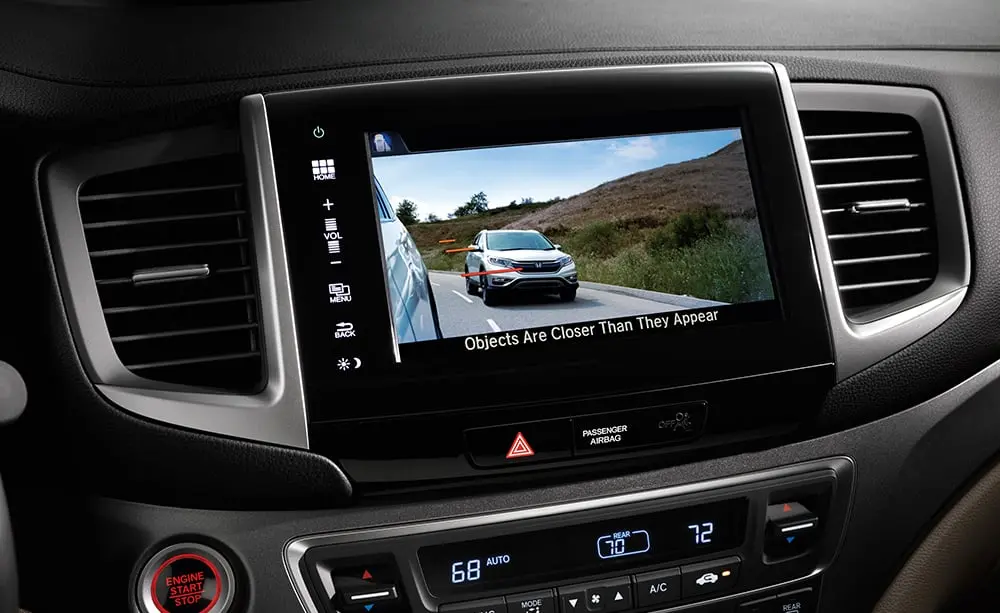
Simultaneously, the Blind Spot Warning (BSW) with Lane Change Assist is actively monitoring the adjacent lanes. If the driver activates their turn signal to change lanes and a vehicle is detected in the blind spot, the system will provide audible and visual alerts, typically through a flashing indicator on the door mirror. This prevents potentially hazardous collisions with unseen vehicles.
2. Smoother Overtaking: MI-PILOT’s Active Assist
Beyond safety interventions, MI-PILOT can actively assist in the process of making a lane change for overtaking. In a notable update to the system, performance was enhanced to improve the overtaking experience. When a driver activates their turn signal to overtake a slower vehicle, the system is designed to facilitate a smoother maneuver. It will slightly accelerate within the set speed limit, closing the gap to the vehicle ahead. This helps the driver to complete the overtake more efficiently and with reduced need for manual acceleration input. Once the driver has changed lanes and the turn signal is deactivated, the system resumes its standard cruise control and lane-keeping functions.
Key Features and System Components
MI-PILOT’s assistance during lane changes and general driving comprises several key technologies. The table below summarizes these components, referencing Japanese market naming conventions where applicable for clarity :
| Component | Description | Relation to Lane Changes |
|---|---|---|
| MI-PILOT Assist | Integrated suite of ADAS features combining ACC and LKA for highway driving. | Provides the overall framework for assisted driving. |
| Adaptive Cruise Control (ACC) | Maintains a set speed and distance to the vehicle ahead, with Stop & Go functionality for traffic jams. | Supports smooth speed adjustments during lane changes, especially when overtaking |
| Lane Keep Assist (LKA) | Actively provides steering support to keep the vehicle centred in its lane. | Maintains lane position during normal driving and provides a stable base for changing lanes. |
| Lane Departure Prevention (LDP) | Acts as an active safety net to prevent unintentional lane departure by applying braking. | A primary safety feature that prevents unintended lane changes without signals. |
| Blind Spot Warning (BSW) | Monitors blind spots and warns the driver of vehicles in adjacent lanes. | A critical safety aid for safe lane changes, alerting the driver to potential hazards. |
Benefits of MI-PILOT in Lane Changes
The integration of these features provides several tangible benefits for the driver:
-
Reduced Driver Fatigue: By managing speed, steering and providing safety nets, MI-PILOT reduces the mental and physical workload, making long highway journeys less tiring. This is especially true during monotonous driving or in stop-and-go traffic, allowing the driver to relax slightly more.
-
Enhanced Safety: The system’s safety nets, such as LDP and BSW with Lane Change Assist, are always active. They act as a second pair of eyes, alerting the driver to dangers they might miss due to blind spots or inattention. This significantly lowers the risk of side-swipe collisions.
-
Smoother Overtaking: The system’s ability to provide a slight acceleration boost during overtaking makes the maneuver more fluid and efficient, reducing the time spent in potentially dangerous adjacent lanes.
-
Increased Driver Confidence: For drivers who may feel anxious about highway driving, especially in heavy traffic or at high speeds, MI-PILOT’s assistance can provide a significant boost in confidence, making driving a more pleasant experience.
Safety Considerations and Limitations
While MI-PILOT is a sophisticated system, it is crucial to understand its limitations. The driver remains fully responsible for the vehicle’s safe operation at all times. The system’s capabilities have boundaries that must be respected:
-
System Activation: The LDP system, a key component of lane-change safety, will not operate at speeds below approximately 37 MPH (60 km/h) or if it cannot detect lane markers. This means active lane-change prevention is not available at low speeds or on poorly marked roads.
-
Weather and Road Conditions: The system’s performance is significantly affected by weather and road conditions. It may not function properly during bad weather (rain, fog, snow) or on slippery roads (ice, snow).
-
Turn Signal Usage: The LDP system will activate and try to prevent a lane change if you change lanes without using your turn signal. This is a deliberate safety feature but can be startling if you forget to signal.
-
Construction Zones and Unclear Markings: The system can be confused by temporary lanes, faded lane markers, or construction zones. In these situations, it may not activate or may intervene in an unexpected way.
-
Driver Responsibility: The system is designed to assist, not replace, the driver. Warnings like “Do not operate the vehicle in accordance with these system limitations could result in serious injury or death” highlight the critical need for the driver to stay alert, keep their hands on the wheel, and be ready to take full control at any moment.
Frequently Asked Questions (FAQ)
1. What exactly is MI-PILOT?
MI-PILOT is Mitsubishi’s advanced driver-assistance system (ADAS) that combines Adaptive Cruise Control (ACC) with Lane Keep Assist (LKA) to support the driver on highways and motorways. It helps to manage speed, distance from the vehicle ahead, and lane positioning.
2. Does MI-PILOT automatically change lanes for me?
No, MI-PILOT does not perform fully autonomous lane changes. While it can assist with the process (like providing a slight acceleration boost during overtaking), the driver must initiate the lane change by using the turn signal and steering the vehicle. The system’s primary role is to ensure this action is safe by providing warnings and intervening only to prevent collisions.
3. What happens if I change lanes without signaling?
If you attempt to change lanes without signaling, the Lane Departure Prevention (LDP) system will interpret it as an unintentional drift. It will first give you a warning (vibrating steering wheel, flashing light) and may then apply braking to one side of the vehicle to help steer you back into your original lane.
4. How does MI-PILOT prevent me from hitting a car in my blind spot?
MI-PILOT includes a Blind Spot Warning (BSW) system with lane change assist. Radar sensors monitor your blind spots. If you activate your turn signal to change lanes while another vehicle is in your blind spot, the system will provide audible and visual alerts to warn you of the danger.
5. Does MI-PILOT work in bad weather?
The system’s performance can be limited in bad weather. Heavy rain, fog, or snow can obscure the camera’s view and interfere with radar signals, reducing the effectiveness of features like lane detection and following distance control.
6. At what speed does MI-PILOT’s Lane Departure Prevention work?
The Lane Departure Prevention (LDP) system will not operate at speeds below approximately 37 MPH (60 km/h). This means the active intervention to prevent lane departure is not available at lower city speeds.
7. Is MI-PILOT an autonomous driving system?
No, MI-PILOT is a driver-assistance system, not an autonomous driving system. The driver is always responsible for the safe operation of the vehicle and must remain attentive. The system is designed to assist and reduce driver workload, not to replace the driver