The smell of fresh pencils, the echo of polished shoes on linoleum, and the nervous flutter in the stomach of a child holding a parent’s hand—these are the universal sensations of the first day of school. However, the prima zi de școală 2021 was unlike any other in modern Romanian history. It was not merely a return to routine; it was a return to reality after a long period of isolation, uncertainty, and unprecedented disruption.
For students, parents, and teachers across Romania, September 13, 2021, marked a significant milestone. After months of stop-start schedules, online learning, and social distancing, the doors of schools swung open once more. Yet, this day was a complex tapestry woven with threads of emotional relief, high expectations for catching up academically, and a cautious excitement tempered by the lingering shadow of a pandemic.
The Road Back to Classroom: Context of the 2021 School Year
To understand the weight of that September morning, one must look at the year that preceded it. The 2020-2021 academic year was chaotic. Schools had initially closed in March 2020, and while there were brief, tentative reopenings in the autumn of 2020, the system largely relied on online education. However, by the spring of 2021, a shift began.
In February 2021, Romania saw a return to in-person schooling for the second semester. At that time, over two-thirds of the country’s 2.9 million students returned to physical desks, albeit with strict rules. Masks were mandatory indoors, classrooms were capped at 30 students, and constant消毒 was the norm. Yet, as spring turned to summer, the pandemic was far from over. By autumn, the country faced a severe fourth wave driven by the Delta variant and low vaccination rates among the general population.
Despite these daunting statistics, the government pushed forward with the plan for physical reopening on September 13, 2021. The reason was simple: necessity. The “staggering” loss of learning and the social isolation of children had become a crisis that outweighed the fears of virus transmission in the eyes of many officials.
Emotions: The Rollercoaster of Return
For most students, the prima zi de școală 2021 was an emotional release. Psychologists had warned for months about the impact of isolation on young minds. Anxiety, depression, and screen addiction had skyrocketed.
-
For the Little Ones (Grades 1-4): The emotion was primarily joy and confusion. Many first and second-graders had spent more than half their school lives staring at a tablet. Walking into a physical classroom was a sensory overload. “I didn’t know the desks were so big,” one child reportedly told a teacher in Bucharest. Parents, standing at the gates, felt a profound sense of relief mixed with separation anxiety, finally trusting the school community to help their children socialize again.
-
For Teenagers (Grades 9-12): The emotion leaned heavily toward solidarity and stress. They were excited to see friends in real life—to share coffee breaks and walk the halls without a laggy internet connection. However, the pressure of the upcoming exams (Baccalaureate) weighed heavily. Two years of disrupted learning meant massive gaps in their knowledge.
-
For Teachers: The overwhelming emotion was empathy. Educators returned not just to teach math or literature, but to triage trauma. Many teachers reported students crying in the first week because they were overwhelmed by the noise of the cafeteria or struggled to sit still for 50 minutes without a screen in front of them.
Expectations: Bridging the Learning Gap
The prima zi de școală 2021 came with a massive asterisk regarding academic standards. The expectations placed on the education system were immense. Sociologists and Eurostat data highlighted a grim reality: before the pandemic, nearly 40% of Romanian students were already at risk of social exclusion or poverty. The digital divide had widened that gap significantly, as hundreds of thousands of students lacked computers or a stable internet for online classes.
As schools reopened, the expectation was recovery, not perfection.
The “Curriculum Compression”
The Ministry of Education faced a dilemma: how to fit two years of missed material into one year. The expectation was that teachers would prioritize core competencies. Schools implemented “differentiated instruction”—a fancy term for tailoring lessons to where students actually were, rather than where the textbook said they should be.
Safety vs. Normalcy
There was also an expectation that schools could remain open. Unlike in 2020, when a single case shut down a school, the 2021 policy shifted. The goal was to keep the school open even if classes moved online. If a class had a confirmed case, that specific group would quarantine, but the rest of the school would continue. This required a massive organizational effort from principals, who had to manage hybrid schedules to keep the building from becoming a super-spreader location.
Excitement: The Small Joys of Normal Life
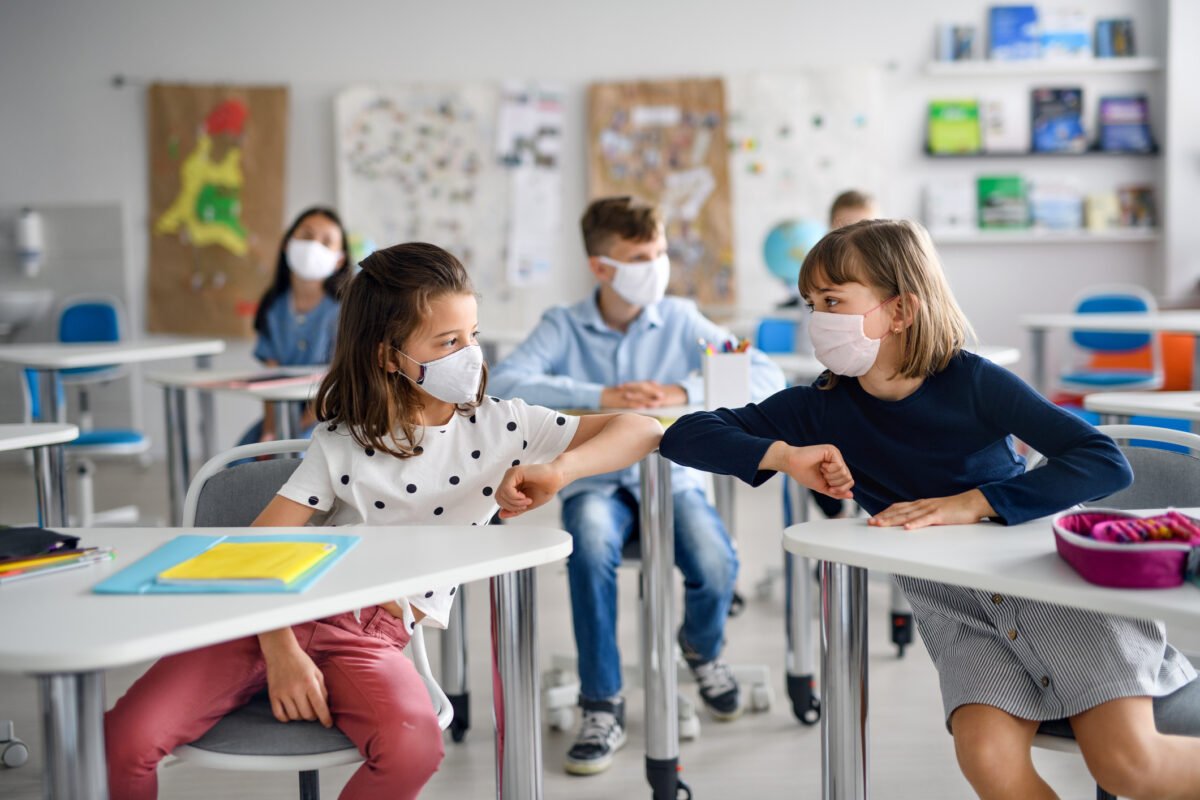
Despite the masks, the sanitizer stations at every door, and the plexiglass dividers in the staff rooms, there was genuine excitement in the air. It was the excitement of reclaiming a piece of a normal childhood.
For the prima zi de școală 2021, children woke up early voluntarily. They dug out their backpacks, tried on uniforms that were suddenly too small, and argued over which notebook had the coolest cover.
The Social Factor
The excitement was almost entirely social. Teenagers were excited to pass notes in class without Zoom crashing. Younger children were excited for the “recess race”—running around the courtyard without the lag of a video game. Parents were excited for the structure; the chaos of working from home while managing a child’s Chromebook had brought many families to a breaking point.
A Notable Absence
However, the excitement was not universal. The 2021 reopening saw a higher-than-usual rate of absenteeism among vulnerable populations. For families in rural areas or those living in poverty, the cost of sending a child back to school (supplies, transportation, masks) was a barrier. Additionally, some parents opted for homeschooling or online-only options if they had immunocompromised family members. The “normal” first day back was only normal for the lucky ones.
The Challenges of a Pandemic School Year
While the first day was hopeful, the reality of October and November 2021 proved volatile. Romania hit a horrific peak in October 2021. Daily infection rates soared to record levels, and hospitals were overwhelmed. This directly impacted the schools.
Just weeks after the happy return, the system was strained. By late October, President Klaus Iohannis announced a two-week holiday for all students to break the chain of transmission. The situation was so severe that by October 20, 2021, over 16,000 students and nearly 5,600 staff members had active COVID cases.
Thus, the excitement of September quickly transformed into the expectation of disruption. The novelty of the first day wore off as the reality of a “traffic light” system set in (Green/Yellow/Red scenarios determining if students stayed home).
The Unspoken Heroes: Support Staff and Parents
An article about the prima zi de școală 2021 would be incomplete without praising the cleaners, the secretaries, and the parents.
-
The Cleaners: They arrived at 5 AM to disinfect every surface, handle, and railing.
-
The Parents: They became contact-tracers, nurses, and IT support. The first day was a logistical puzzle: packing extra masks, a water bottle (fountains were closed), and a healthy lunch (cafeterias had limited service).
-
The Principals: They navigated a minefield of changing government orders. The fall of 2021 saw a confusing array of rules regarding vaccination percentages for staff. Initially, schools struggled to open physically if less than 60% of staff were vaccinated, though this was later relaxed.
Conclusion: A Step Toward the Future
Looking back, the prima zi de școală 2021 was not about academics. It was about resilience. The photo albums from that day show smiling children with masks under their chins, standing at a distance, waving at friends.
It was a day when Romania collectively decided that the cost of keeping schools closed was higher than the risk of opening them. It was imperfect. It was scary. But it was hopeful.
As the 2021-2022 school year progressed, students continued to oscillate between home and the classroom. However, that specific morning in September symbolized a turning point. It was the moment the country began to learn to live with the virus, prioritizing the mental health and future of its children above the sterile safety of isolation.
The 2021 first day of school will be remembered not for the lessons taught, but for the hugs given (as safely as possible), the laughter echoing in the hallways, and the quiet determination of a generation unwilling to let a pandemic steal their education.
Frequently Asked Questions (FAQ)
Q1: Why was the “prima zi de școală 2021” considered historic?
A: It was historic because it marked a mass return to physical classrooms after nearly two years of severe disruption. While there had been reopenings in February 2021, the September 2021 start was the first attempt to keep schools open as a “default” setting despite the presence of the Delta variant, aiming to end the cycle of stop-start online learning.
Q2: Were masks mandatory on the first day of school in 2021?
A: Yes, according to regulations set by the Ministry of Education and the Ministry of Health, masks were mandatory for all students (except preschoolers and those with medical exemptions) and staff in all indoor school settings. This rule remained in place for most of the autumn.
Q3: Did all students return to school in September 2021?
A: Not all. The reopening followed “scenario-based” rules depending on the local COVID-19 infection rate. In areas with high infection rates (Red Scenario), only younger children (preschool and primary grades, 1-4) returned physically, while middle and high schoolers continued online. In Green/Yellow zones, most grades returned.
Q4: What happens if a student tests positive for COVID right after the first day?
A: In 2021, the rule was generally “class-based quarantine.” If a student tested positive, the specific class moved to online learning for a set period (usually 14 days), while the rest of the school tried to remain open with enhanced sanitization measures.
Q5: How did Romania’s situation compare to other European countries regarding school reopenings?
A: Romania was among the European countries with the longest cumulative school closures. By the time of the 2021 reopening, many Western European nations (like France and Germany) had kept schools open with strict protocols. Romania’s challenge was compounded by a relatively low adult vaccination rate compared to the EU average, which placed greater strain on the hospital system and threatened the stability of the school calendar.