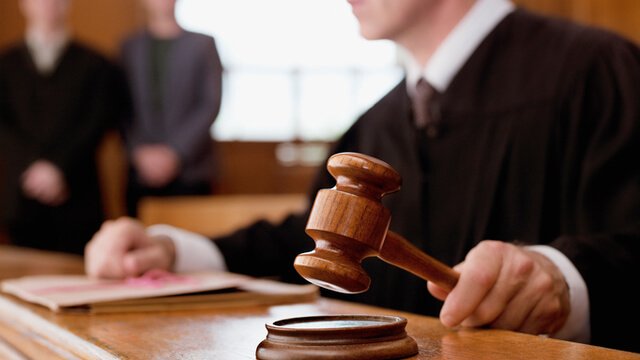
In the grand theater of justice, where the rule of law performs its nightly act against the darkness of chaos, many players take the stage. There are the prosecutors, sharp and relentless; the defense attorneys, cunning and protective; the clerks, meticulous and silent; and the accused, trembling in the balance. Yet, one figure commands the center spotlight not through volume, but through authority. That figure is the judecator.
While the term “judge” is universally recognized, the word judecator (rooted in Latin iudicare – “to judge” and iudex – “one who declares the law”) carries a specific, often more formal or archaic weight. In many civil law jurisdictions (such as Romania, from where the term judecător is directly borrowed), it emphasizes the active, declarative role of the magistrate: one who does not merely referee, but who declares what the law is in a given controversy.
This article dissects the multifaceted role of the judecator, moving beyond the television gavel to explore the real-world duties, ethical battlegrounds, and systemic importance of this indispensable legal officer.
Part I: Defining the Judecator – More Than a Robe and a Gavel
To understand the judecator, one must first strip away Hollywood mythology. A judecator is not a psychic who discovers absolute truth, nor a monarch who imposes personal will. Legally, a judecator is a public officer authorized to hear and decide cases in a court of law. However, the civil law tradition (prevalent in Europe, Latin America, and parts of Asia and Africa) defines the judecator differently from the common law judge (e.g., in the US or UK).
In common law, the judge is often a passive umpire, ensuring the two opposing parties play fair while a jury decides facts. In the civil law system—where the term judecator is most at home—the judecator takes an inquisitorial or investigative role. Here, the judecator is an active truth-seeker. They question witnesses, order expert reports, and actively manage the evidence. They are not an umpire watching a baseball game; they are a detective-scholar dissecting a historical event.
Key Distinctions:
-
Judecator vs. Arbitrator: An arbitrator is chosen by the parties; a judecator is appointed by the state.
-
Judecator vs. Mediator: A mediator facilitates a compromise; a judecator imposes a binding decision.
-
Judecator vs. Prosecutor: The prosecutor accuses; the judecator weighs the accusation against the defense.
The title demands a unique blend of intellect, detachment, empathy, and courage. As one Romanian legal maxim states: “Judecătorul nu este stăpânul legii, ci slujitorul ei” (The judecator is not the master of the law, but its servant).
Part II: The Core Duties of a Judecator
The daily reality of a judecator is a relentless cycle of procedural rigor. The duties can be categorized into pre-trial, trial, and post-trial phases.
1. The Gatekeeping Duty (Jurisdiction and Admissibility)
Before a judecator ever hears an argument, they must answer a threshold question: Do I have the power to hear this case? This involves:
-
Subject-matter jurisdiction: Is this a criminal, civil, family, or labor issue for this specific court?
-
Personal jurisdiction: Does the court have authority over the defendant (e.g., does the defendant live here or commit the act here)?
-
Timeliness: Was the case filed within the statute of limitations?
A judecator spends a surprising amount of time dismissing cases not on their merits, but on procedural technicalities. This gatekeeping duty is the immune system of the legal body, filtering out claims that would waste judicial resources.
2. The Evidentiary Duty (The Truth-Seeking Function)
This is the heart of the judecator’s labor. In civil law systems, the judecator actively manages evidence collection. Duties include:
-
Ordering discovery: Compelling a reluctant party to produce documents.
-
Appointing experts: When a medical or engineering question arises, the judecator selects a neutral expert, not one hired by a party.
-
Examining witnesses: The judecator asks the first and often the most penetrating questions, not the lawyers.
-
Assessing credibility: This is the most human duty. The judecator watches for the nervous twitch, the inconsistent alibi, the tear that comes too easily. They must decide: Is this witness lying, mistaken, or truthful?
3. The Interpretive Duty (Statutory Construction)
No law is perfectly clear. Every statute contains ambiguities, gaps, or conflicts. The judecator is a master linguist and logician. When the law says “reasonable time” or “good faith,” the judecator must pour concrete meaning into those abstract vessels. They employ tools like:
-
Textualism: The plain meaning of the words.
-
Legislative history: What did the lawmakers intend?
-
Precedent (in civil law, jurisprudenta constanta): How have other judecators ruled on similar facts?
The judecator’s interpretation becomes law for the parties in that case. In high courts, a single interpretation can reshape national policy.
4. The Adjudicative Duty (Rendering Judgment)
After hearing evidence and arguments, the judecator must produce a written opinion or judgment. This document is a masterpiece of justification. It must contain:
-
The facts: A clear narrative of what the judecator believes happened.
-
The law: The relevant statutes and precedents.
-
The application: A logical bridge connecting the facts to the law.
-
The ruling: “Guilty” or “Not Guilty”; “For the Plaintiff” or “For the Defendant”; “Custody to Mother” or “Custody to Father.”
A judgment without reasoning is tyranny. The judecator’s written opinion allows for appeal. It is the currency of judicial accountability.
5. The Sentencing or Remedial Duty
In criminal cases, the judecator determines the punishment. This is not a mere math problem (X crime = Y years). It requires a nuanced assessment of:
-
Retribution: The need for society to express condemnation.
-
Deterrence: Will a harsh sentence stop the defendant and others?
-
Rehabilitation: Can the defendant be reformed?
-
Incapacitation: Does the public need protection from this individual?
In civil cases, the judecator calculates damages. This might involve valuing a broken leg, a shattered reputation, or a breached contract. Here, the judecator acts as a forensic economist and philosopher, asking: What sum of money makes the victim whole again?
Part III: The Unseen Ethical Battleground
The importance of the judecator is not merely functional; it is moral. Society grants judges immense power—the power to strip liberty, end marriages, seize property, even authorize death. With that power comes a crushing ethical burden.
Impartiality as a Discipline
Impartiality is not a feeling; it is a discipline. A judecator may privately loathe a defendant’s crime or sympathize with a plaintiff’s loss. But they must bracket those emotions. This requires constant self-monitoring. Rules of recusal mandate that a judecator step aside if they have a financial interest in the case, a prior relationship with a party, or even a strong personal bias.
A judecator’s worst enemy is not an angry litigant; it is the unconscious bias—racial, gender, socioeconomic, or confirmation bias (seeking evidence that confirms initial impression). Top judecators engage in reflective practice, questioning their own assumptions before signing any order.
The Duty to Decide (Non-Denial of Justice)
In many jurisdictions, a judecator commits a distinct legal wrong if they refuse to decide a case on the grounds that the law is “silent, obscure, or insufficient.” This principle, found in Article 4 of the French Civil Code and its derivatives, forces the judecator to become a creator. Where no statute exists, the judecator must decide ex aequo et bono—according to what is fair and good. To refuse to decide is to betray the social contract.
Integrity and the Appearance of Impropriety
The judecator must not only be honest; they must appear honest. This means no ex parte communications (talking to one side without the other), no social media posts about pending cases, and no financial entanglements with lawyers who appear in their court. A single dinner with a prosecutor can taint a year of rulings. As the saying goes: “Justice must not only be done, but must be seen to be done.”
Part IV: The Systemic Importance of the Judecator
Why is the judecator not replaceable by an algorithm or a bureaucratic committee? Because the law’s application is irreducibly human.
1. The Bulwark Against Tyranny
In authoritarian systems, the judecator is the first institution to be corrupted. Conversely, in a constitutional democracy, an independent judecator is the last line of defense. When the executive branch overreaches—illegal surveillance, unlawful detention, discriminatory enforcement—the citizen files a petition. The judecator reviews the government’s action. If the judecator rules against the state, the police must obey. No general, no president, no prime minister is above the judecator’s order. This is the rule of law.
2. The Stabilizer of Social Expectations
Businesses make investments based on predictability. They need to know: If X happens, will the judecator enforce the contract? When judecators apply law consistently, they create a stable environment for commerce, marriage, and personal planning. A single erratic judecator can destabilize a local economy. A consistent bench builds a nation.
3. The Voice of the Voiceless
The most powerless individuals—prisoners, undocumented immigrants, institutionalized mentally ill persons—have no lobbyists and no political power. Their only hope is the judecator’s docket. A judecator who takes the time to read a handwritten complaint from a jail cell, who listens to the asylum seeker’s fear of torture, who reviews the conditions of a state institution—that judecator is a silent guardian of human dignity.
4. The Evolutionary Engine of Law
Legislatures are slow, political, and often gridlocked. Judecators, through their case-by-case decisions, evolve the law organically. Over decades, a line of judecator rulings on privacy, technology, or medical ethics can reshape society before the legislature ever votes. The common law is judge-made. In civil law, while the legislature is supreme, the judecator’s jurisprudence fills every gap.
Part V: Challenges Facing the Modern Judecator
No portrait of the judecator is complete without acknowledging the crisis points.
-
Caseload Overload: In many cities, a single judecator faces 300–500 pending cases. This leads to rushed decisions, “revolving door” justice, and judicial burnout. The duty to deliberate is crushed by the duty to produce.
-
Political Pressure: In transitional democracies, judecators face threats of impeachment, salary freezes, or physical violence if they rule against powerful interests. Judicial independence is a fragile flower.
-
Technological Disruption: AI tools can now predict recidivism or calculate damages. The judecator must learn to use these tools without being enslaved by them. An algorithm cannot assess a mother’s sincere remorse or a witness’s nervous tic.
-
Public Scorn: Populist movements often attack judecators as an “unelected elite,” frustrating the “will of the people.” The judecator must develop a thick skin, understanding that unpopular decisions are often the most just.
Conclusion: The Weight of the Robe
To be a judecator is to carry an impossible burden: to be human yet aspire to perfect objectivity; to wield power yet remain a servant; to enforce laws written by politicians yet remain apolitical. The judecator—the one who declares the law—does not create justice ex nihilo. They find it, painstakingly, in the rubble of conflicting stories, ambiguous statutes, and flawed human beings.
The next time you hear a gavel strike the bench, remember: that sound is civilization’s heartbeat. It is the sound of a judecator, alone in the silence of their chambers, choosing the right over the easy, the just over the popular. In that choice lies the difference between a society of laws and a society of wolves.
Frequently Asked Questions (FAQ) About the Judecator
Q1: Is a “judecator” the same as a “judge”?
A: In essence, yes. The word judecator is the specific term for “judge” in several Romance languages (most notably Romanian). In English legal literature, it is often used to emphasize the active, inquisitorial role of judges in civil law jurisdictions, as opposed to the passive “umpire” role of judges in common law systems like the US or UK.
Q2: What is the single most important quality of a judecator?
A: Impartiality. A judecator can be brilliant but biased, and they will cause injustice. Or they can be average in intellect but scrupulously fair, and they will serve justice. Without impartiality, every other duty—legal analysis, evidence handling—becomes a weapon for the powerful.
Q3: Can a judecator be sued for making a wrong decision?
A: Generally, no. Judecators enjoy absolute judicial immunity for actions taken within their official duties. This protects them from intimidation by disappointed litigants. However, if a judecator acts in the “clear absence of all jurisdiction” (e.g., sentencing someone for a nonexistent crime) or engages in criminal bribery, immunity disappears.
Q4: Do judecators always have to follow previous court decisions (precedent)?
A: It depends on the legal system. In common law systems (US, UK), stare decisis (let the decision stand) is binding. In civil law systems (where “judecator” is common), previous decisions are persuasive but not technically binding, except for rulings from the highest courts (e.g., a Supreme Court or Constitutional Court) which create binding precedent to ensure uniformity.
Q5: What is the difference between a judecator and a jury?
A: A jury (common law) is a group of lay citizens who decide the facts (guilty/not guilty). The judge then decides the law and the sentence. In a civil law system with a judecator, there is often no jury. The professional judecator decides both the facts AND the law. Some civil law countries use mixed courts (lay assessors sitting with professional judges), but the judecator dominates.
Q6: How does one become a judecator?
A: The path is rigorous, typically requiring:
-
A law degree (4+ years).
-
Passing a highly competitive national judicial exam (often with <5% acceptance rate).
-
Completing a judicial training academy (1-2 years of practical apprenticeship).
-
An initial appointment as a junior judecator or auditor.
-
Years of experience, with promotions to higher courts based on merit examinations and seniority. In most civil law countries, you do not “elect” judecators; they are career civil servants selected by merit.
Q7: Can a judecator refuse to apply a law they believe is immoral?
A: This is a profound question. In most legal systems, a lower-court judecator must apply valid statutes, even if personally distasteful. However, a constitutional court judecator can strike down a law as unconstitutional. Some legal philosophers (e.g., Gustav Radbruch) argue that a judecator must refuse to apply “extremely unjust” laws (e.g., Nazi-era racist edicts). In practice, most judecators apply the law as written and leave moral challenges to the legislature or constitutional courts.
Q8: What happens if a judecator makes a procedural mistake?
A: The losing party can appeal. A higher court (e.g., Court of Appeal or Court of Cassation) reviews the lower judecator’s work. If the higher court finds a fatal procedural error (e.g., the judecator admitted illegal evidence or denied a party the right to speak), they will “vacate” the judgment and send the case back for a new trial with a different judecator. The original judecator suffers no personal penalty unless the error reflects gross incompetence or bad faith.
Q9: Do judecators only work in criminal courts?
A: No. Judecators preside over civil (contracts, torts, property), family (divorce, custody, adoption), administrative (challenges to government agency actions), labor (employment disputes), commercial (bankruptcy, corporate disputes), and constitutional (review of laws) courts.
Q10: Why is the independence of the judecator so important?
A: Without independence, a judecator becomes a puppet. If a politician or wealthy corporation can fire the judecator, reduce their salary, or transfer them to a remote village for an unfavorable ruling, then justice is a farce. Independence ensures that the judecator can rule against the powerful without fear. It is the structural guarantee that the law, not the powerful individual, rules.