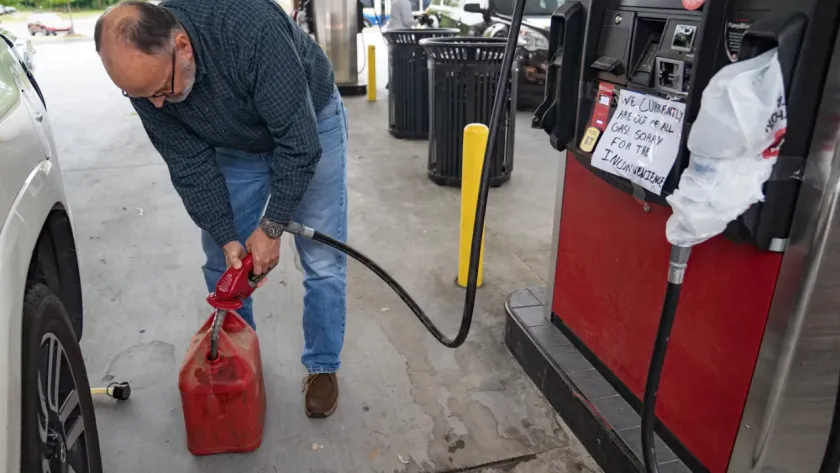
When you pull up to a gas pump, you’re focused on price per gallon, not pounds per gallon. But for mechanics, engineers, racers, and even long-haul truckers, the weight of fuel is a critical figure. Understanding how much a gallon of gas weighs affects everything from vehicle payload calculations to fuel efficiency and storage safety.
So, how much does a gallon of gas weigh? The simple answer is: A gallon of gasoline weighs approximately 6.073 to 6.3 pounds (2.75 to 2.86 kg) at room temperature (60°F or 15.6°C). However, this number fluctuates based on several factors, which we’ll dissect in detail.
The Short Answer: Average Weight per Gallon
Before diving into complex thermodynamics, let’s establish the baseline numbers.
| Gasoline Type | Average Weight per Gallon (lbs) | Average Weight per Gallon (kg) |
|---|---|---|
| Regular (87 octane) | 6.073 – 6.2 | 2.75 – 2.81 |
| Mid-Grade (89-90 octane) | 6.1 – 6.2 | 2.77 – 2.81 |
| Premium (91-93 octane) | 6.0 – 6.1 | 2.72 – 2.77 |
| Race Gas (high octane) | 5.9 – 6.0 | 2.68 – 2.72 |
For most practical purposes, 6.3 pounds per gallon is the figure used by the American Petroleum Institute (API) for standard calculations. But why isn’t it a round number like 7 or 8 pounds? Because gasoline is less dense than water, which weighs 8.34 pounds per gallon.
The Science: Density, Mass, and Volume
To truly understand fuel weight, we need to revisit basic physics. Weight is the force exerted by gravity on an object’s mass. For liquids, weight per gallon is determined by density—how tightly packed the molecules are.
Density Formula
Weight per gallon = Density of liquid (lb/gal) × Volume (gal)
Gasoline is a complex mixture of hydrocarbons (primarily alkanes, cycloalkanes, and aromatics like benzene, toluene, and xylene). These molecules have different molecular weights and packing efficiencies.
-
Light hydrocarbons (e.g., butane, pentane) lower density.
-
Heavier aromatics (e.g., toluene) increase density.
A gallon of gas contains roughly 125,000 BTUs of energy, but its weight reflects only its mass, not its energy content.
Key Factor #1: Temperature – The Biggest Variable
If you weigh a gallon of gas on a cold winter morning and again on a hot summer afternoon, you’ll get two different results—even from the same pump. Why? Thermal expansion.
When the temperature increases, liquid molecules move faster and spread apart, reducing density. When the temperature drops, molecules slow down and pack together, increasing density.
Real-World Example
-
At 30°F (-1°C): A gallon of gas weighs ~6.4 lbs.
-
At 60°F (15.6°C): A gallon of gas weighs ~6.2 lbs (reference point).
-
At 100°F (37.8°C): A gallon of gas weighs ~5.9 lbs.
That’s nearly a 0.5-pound swing! The fuel industry uses a standard temperature of 60°F to calibrate pumps, but your gas tank experiences ambient temperatures.
Why Gas Stations Don’t Adjust for Temperature
Most retail gas pumps don’t correct for temperature. You pay for volume (gallons), not mass. In summer, you receive fewer molecules per gallon; in winter, you get more. This discrepancy costs consumers billions annually, though it’s rarely noticed because fuel prices change seasonally.
Key Factor #2: Octane Rating
Higher octane fuels don’t necessarily weigh less, but there is a trend. Octane rating measures a fuel’s resistance to knocking (pre-detonation). To achieve higher octane, refineries add more branched-chain alkanes and aromatics (like isooctane and toluene) and reduce straight-chain alkanes (like n-heptane).
-
Toluene (C7H8): density ~7.2 lb/gal
-
Isooctane (C8H18): density ~5.9 lb/gal
-
n-Heptane (C7H16): density ~6.0 lb/gal
The blend creates slight density variations. In practice:
-
87 octane tends to be denser (more heavy aromatics for cheap knock resistance).
-
93 octane can be slightly less dense (more branched light molecules).
However, the difference is rarely more than 0.1 to 0.2 lbs per gallon.
Key Factor #3: Additives and Ethanol Blends
Most pump gas in the U.S. contains 10% ethanol (E10). Ethanol (C2H5OH) is denser than pure gasoline: 6.59 lbs per gallon at 60°F. Therefore, blending ethanol increases overall weight.
Weight Comparison of Blends
| Fuel Blend | Ethanol % | Weight per Gallon (lbs) |
|---|---|---|
| Pure gasoline (E0) | 0% | 6.0 – 6.1 |
| E10 (standard) | 10% | 6.1 – 6.3 |
| E15 | 15% | 6.2 – 6.4 |
| E85 (flex fuel) | 51-83% | 6.4 – 6.7 |
E85, often used in flex-fuel vehicles, can weigh nearly 6.7 lbs per gallon in cold climates (higher ethanol content in winter for cold starts) and less in summer.
Weight of Other Common Fuels (Comparison Table)
How does gasoline compare to diesel, jet fuel, and water?
| Fuel | Weight per Gallon (lbs at 60°F) | Density (kg/L) |
|---|---|---|
| Gasoline (regular) | 6.073 – 6.3 | 0.71 – 0.77 |
| Diesel (No. 2) | 7.0 – 7.4 | 0.84 – 0.89 |
| Biodiesel (B100) | 7.3 – 7.6 | 0.88 – 0.91 |
| Jet A (kerosene) | 6.7 – 7.0 | 0.80 – 0.84 |
| Water (fresh) | 8.34 | 1.00 |
| Ethanol | 6.59 | 0.79 |
Notably, diesel weighs about 15-20% more than gasoline per gallon, which is why diesel engines feel heavier and produce more torque per displacement.
Why Does the Weight of Gas Matter? Practical Applications
Knowing fuel weight isn’t just trivia. It’s critical in several industries and hobbies.
1. Aviation (Weight and Balance)
Pilots perform weight and balance calculations before every flight. A Cessna 172 holds 56 gallons of avgas (100LL), which weighs ~6.0 lbs/gal = 336 lbs. That’s two adult passengers. A 0.5 lb/gal miscalculation could shift center of gravity dangerously.
2. Long-Haul Trucking (Gross Vehicle Weight)
A semi-truck’s legal maximum weight in the U.S. is 80,000 lbs. Two 150-gallon diesel tanks = 300 gallons × 7.3 lbs = 2,190 lbs. Switching to biodiesel (7.5 lbs/gal) adds 60 lbs, potentially pushing the rig overweight without cargo changes.
3. Motorsports (Performance Tuning)
Race teams weigh fuel to calculate fuel consumption per lap. A gallon of race gas at 5.95 lbs vs. pump gas at 6.2 lbs changes fuel mapping. Lighter fuel means less mass to accelerate, but also potentially less energy per stroke.
4. Marine and RV Storage
Boats and RVs often sit for months with full tanks. A 100-gallon boat fuel tank = ~620 lbs of gas. Over time, that weight stresses fiberglass hulls or trailer hitches. Knowing the exact weight helps in docking and towing calculations.
5. Emergency Fuel Storage
If you store 50 gallons for a generator, that’s ~310 lbs. Your shed floor or garage shelf must support that plus the container weight. Many garage collapses happen from underestimating liquid weight.
How to Accurately Weigh Fuel at Home
If you need a precise weight for a project, don’t rely on averages. Do this:
-
Get a precise scale (postal or kitchen scale, 0.1 oz resolution).
-
Weigh an empty container (approved gas can). Record tare weight.
-
Fill with exactly 1 gallon of gas (use a graduated container).
-
Weigh full container.
-
Subtract tare weight = net fuel weight.
Repeat at different temperatures for your own conversion chart.
Safety Warning
-
Do this outdoors, away from sparks, pilot lights, or electrical motors.
-
Use grounded containers. Gasoline vapors are explosive.
-
Never weigh gas indoors.
The Metric System: Gallons vs. Liters vs. Kilograms
Most of the world uses metric. Here’s the conversion:
-
1 US gallon = 3.78541 liters
-
Gasoline density at 60°F = ~0.745 kg/L
-
3.78541 L × 0.745 kg/L = 2.82 kg per US gallon
In the UK, an Imperial gallon (used in Britain, Canada pre-1970s) is larger: 1 Imp gal = 4.54609 L. Same density = ~3.39 kg per Imperial gallon (7.47 lbs). This causes confusion in classic car manuals and international shipping.
Always specify US gallon vs. Imperial gallon when discussing fuel weight across borders.
Environmental and Economic Impact of Fuel Weight
Fuel weight affects not just vehicles but global supply chains.
Shipping Costs
Oil tankers and pipelines transport fuel by volume but sell by weight in many international contracts (metric tons). A tanker carrying 1 million barrels of gasoline (42 million US gallons) experiences weight changes of tens of thousands of tons between loading in the Middle East (hot) and unloading in Europe (cool). Contractors must correct for temperature to avoid financial disputes.
Carbon Emissions
Lighter fuel (summer blend) often has higher volatility, evaporating more easily and contributing to ground-level ozone. Heavier fuel (winter blend) contains more energy per gallon but produces more CO2 per gallon when burned. Regulators balance weight, emissions, and performance seasonally.
Common Myths About Gasoline Weight
Myth 1: “A gallon of premium weighs more because it’s ‘stronger.’”
False. Premium typically weighs slightly less due to lighter hydrocarbon chains. It’s not “stronger”; it’s more knock-resistant.
Myth 2: “Temperature doesn’t affect weight because pumps are calibrated.”
False. Pumps measure volume, not mass. The liquid itself changes density with temperature.
Myth 3: “Gas weighs the same as water.”
False. Water is ~30% heavier per gallon.
Myth 4: “Diesel and gas weigh the same.”
False. Diesel is significantly denser.
Real-World Calculation Examples
Let’s apply this knowledge.
Example 1: Full Tank for a Ford F-150
-
Tank capacity: 26 gallons
-
Average gas weight: 6.2 lb/gal
-
Total fuel weight: 161.2 lbs (about the weight of a small adult)
If you switch from E10 (6.2 lb/gal) to E85 (6.6 lb/gal), fuel weight jumps to 171.6 lbs. That’s 10 lbs less payload capacity for cargo.
Example 2: Airport Fuel Truck
-
Fuel truck capacity: 6,000 gallons jet fuel
-
Jet A weight: 6.8 lb/gal
-
Total fuel: 40,800 lbs (20.4 tons)
-
Truck empty weight: ~30,000 lbs
-
Gross vehicle weight: 70,800 lbs – just under highway limits.
Example 3: Cross-Country Road Trip – Weight Change
Start in Phoenix at 110°F: 20 gallons × 5.95 lb/gal = 119 lbs
Drive to Montana at 30°F: Fuel cools, density increases. If you parked with half a tank, the weight of the remaining 10 gallons could rise from 59.5 lbs to 64 lbs overnight. Your tire pressure and handling change slightly.
FAQ: Frequently Asked Questions
Q1: How much does a gallon of gas weigh exactly at 60°F?
A: Exactly depends on blend, but the standard used by API is 6.3 pounds per US gallon for 87 octane E10. Pure gasoline (no ethanol) is about 6.05 lb.
Q2: Why does gas weigh different amounts in summer vs. winter?
A: Summer gas has lower volatility (fewer light ends) to prevent vapor lock. It’s slightly denser. Winter gas contains more butane (lighter) for easier cold starting, making it less dense. Temperature also expands/contracts the liquid.
Q3: How much does 5 gallons of gas weigh?
A: At 60°F: 5 × 6.3 = 31.5 lbs. In winter, as high as 32 lbs; in summer, as low as 29.5 lbs.
Q4: Does a gallon of gas weigh the same as a gallon of diesel?
A: No. Diesel weighs about 7.1 lbs per gallon on average, roughly 13% more than gasoline.
Q5: Can I use gas weight to calculate my car’s fuel efficiency more accurately?
A: Yes. By weighing your fuel, you can track mass flow rate, which is more precise than volume for scientific mileage tests. But for daily driving, volume (gallons used) is sufficient.
Q6: How much does an empty gas can weigh vs. a full?
A: A typical 5-gallon plastic gas can weighs 3-4 lbs empty. Full of gas (31.5 lbs) totals ~35 lbs. Many people injure their backs lifting full cans, underestimating the weight.
Q7: Does the weight of gas affect my car’s horsepower?
A: Indirectly. Less weight (lighter fuel or less fuel) reduces total vehicle mass, improving acceleration and braking. The fuel’s chemical energy per pound (energy density) also affects power, but that’s a separate topic.
Q8: How much does a gallon of race fuel weigh?
A: Oxygenated race fuels (like those used in NHRA) can weigh as little as 5.85 to 5.95 lbs/gal to reduce reciprocating mass in the fuel system. Non-oxygenated race gas is similar to premium pump gas (~6.1 lb/gal).
Q9: Is there a government standard for gasoline weight?
A: Yes. The National Institute of Standards and Technology (NIST) Handbook 130 specifies that gasoline density for tax and commerce purposes is measured at 60°F. However, no federal law forces retail pumps to temperature-correct.
Q10: How much does a gallon of gas weigh on the moon or in space?
A: Weight depends on gravity. Mass remains the same (~2.8 kg per gallon). On the moon (1/6 Earth gravity), a gallon of gas weighs ~1.05 lbs. In zero gravity, it’s weightless but still has mass (inertia).
Final Summary Table – Quick Reference
| Condition | Weight (lb/US gal) | Notes |
|---|---|---|
| 30°F winter blend | ~6.4 | More energy per gallon |
| 60°F standard | 6.073 – 6.3 | Industry reference |
| 100°F summer blend | ~5.9 | Less mass, higher vapor pressure |
| E85 (flex fuel) | 6.4 – 6.7 | Ethanol adds weight |
| Pure gasoline (E0) | 6.0 – 6.1 | Rare outside marine/racing |
| Imperial gallon (UK) | ~7.47 | Larger volume unit |
Conclusion
So, how much does a gallon of gas weigh? While the simple answer is about 6.3 pounds, the real answer depends on temperature, octane, ethanol content, and even the season you buy it. For everyday drivers, the variation won’t ruin your trip budget. But for pilots, truckers, racers, and engineers, those fractions of a pound per gallon add up to critical differences in safety, legality, and performance.
Next time you fill up, remember: you’re not just buying volume. You’re buying mass—and it’s constantly changing with the weather.