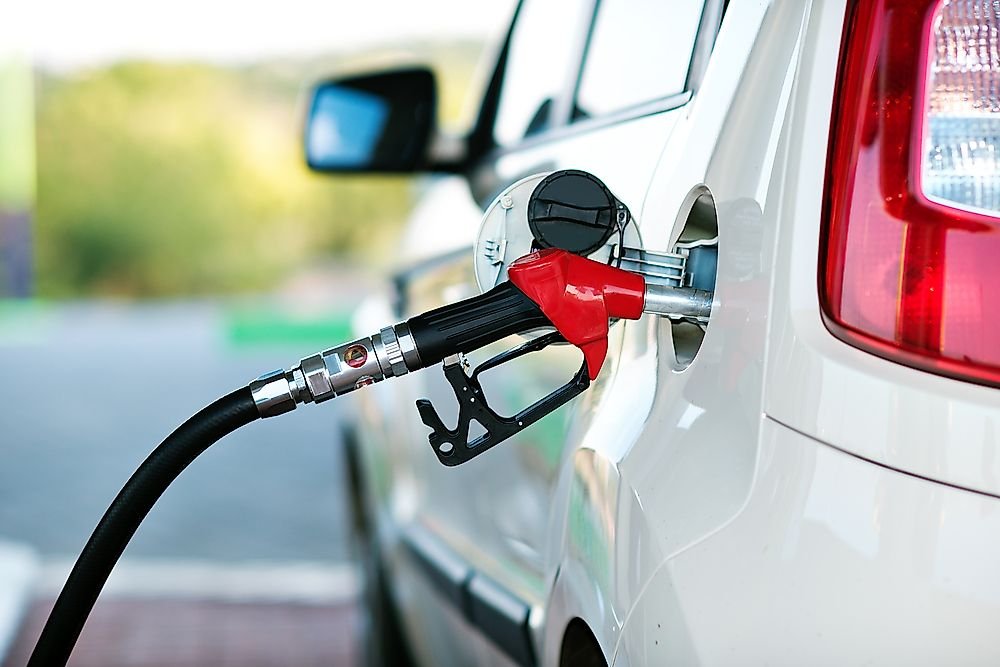
When you pull up to a gas station, you think in gallons. When you engineer a fuel tank, design a vehicle, or calculate aircraft payload, you think in pounds. Bridging these two units—volume and weight—is critical for efficiency, safety, and performance. Understanding the gasoline weight per gallon is far more than a trivia fact; it is a cornerstone of automotive engineering, fuel logistics, and environmental science.
This article explores the exact weight of gasoline per gallon, the chemical and physical factors that cause it to fluctuate, the mathematical formulas to calculate it, and practical insights for drivers, racers, and industry professionals.
The Short Answer: What Is the Average Weight of Gasoline Per Gallon?
Before diving into complex variables, here is the baseline figure:
-
Average weight of one US gallon of gasoline: ~6.073 pounds (at 60°F / 15.6°C)
-
Metric equivalent: ~2.75 kilograms per US gallon
-
Imperial gallon (UK): ~7.2 pounds per gallon (since an Imperial gallon is larger—1.2 US gallons)
For most practical purposes in the United States, engineers and mechanics round gasoline weight per gallon to 6 to 6.3 pounds, depending on blend and temperature.
However, using this average without adjustment can lead to significant errors in fuel calculations, race car tuning, or fuel storage design.
The Fundamental Formula: Calculating Gasoline Weight Per Gallon
You cannot memorize a single weight for gasoline because it changes. Instead, you need the formula:
Weight = Volume × Density
Where:
-
Weight = pounds (lbs) or kilograms (kg)
-
Volume = gallons (US or Imperial) or liters
-
Density = mass per unit volume (e.g., lbs/gallon or kg/L)
For gasoline, the density typically ranges from:
-
0.71 kg/L to 0.77 kg/L (metric)
-
5.92 to 6.42 lbs/US gallon
Step-by-Step Calculation Example:
Suppose you have 10 gallons of gasoline with a density of 0.74 kg/L at 70°F.
-
Convert gallons to liters: 10 US gal × 3.78541 = 37.854 L
-
Multiply by density: 37.854 L × 0.74 kg/L = 28.01 kg
-
Convert to pounds: 28.01 kg × 2.20462 = 61.73 lbs
Thus, 10 gallons weigh ~61.7 lbs in this scenario. Using the average 6.073 lbs/gal would give 60.73 lbs—a difference of 1 full pound.
Simplified Rule-of-Thumb Formula:
For quick mental math in the US:
-
Summer gasoline: 6.0–6.1 lbs/gal
-
Winter gasoline: 6.2–6.3 lbs/gal
-
Race fuel (oxygenated): 5.8–6.0 lbs/gal
Key Factors That Affect Gasoline Weight Per Gallon
The question “How much does a gallon of gas weigh?” has no single answer because of the following factors.
1. Temperature (The Most Significant Factor)
Gasoline expands when heated and contracts when cooled. This means:
-
Hot gasoline: Less dense → lighter per gallon
-
Cold gasoline: More dense → heavier per gallon
Real-world impact:
At 100°F, a gallon of gasoline weighs ~5.95 lbs.
At 0°F, the same gallon weighs ~6.25 lbs.
That’s a difference of 0.3 lbs per gallon—over 5% variation. For a 20-gallon tank, that’s 6 lbs of swing in weight.
This is why race teams cool fuel before qualifying (to pack more mass into the tank) and why fuel pumps are temperature-corrected in some jurisdictions.
2. Chemical Composition & Octane Rating
Gasoline is a blend of hydrocarbons (octane, heptane, toluene, ethanol, etc.). Heavier hydrocarbons increase density.
| Fuel Type | Approx. lbs/gal | Density (kg/L) |
|---|---|---|
| 87 Octane (Regular) | 6.07 | 0.727 |
| 91 Octane (Premium) | 6.10 | 0.732 |
| 93 Octane (Premium+) | 6.14 | 0.738 |
| E10 (10% ethanol) | 6.12 | 0.735 |
| E85 (85% ethanol) | 6.28 | 0.754 |
| Avgas 100LL | 5.99 | 0.720 |
| Race fuel (oxygenated) | 5.80 | 0.696 |
Why does premium sometimes weigh slightly more? Higher octane blends sometimes use heavier aromatic hydrocarbons (like toluene), adding density. However, this varies by refinery.
3. Ethanol Content
Ethanol is denser than pure gasoline (ethanol = ~6.59 lbs/gal pure). Therefore:
-
E10: Slightly heavier than pure gasoline
-
E85: Significantly heavier (~6.28 lbs/gal)
However, ethanol also has lower energy per pound, so mpg drops even if weight increases.
4. Seasonal Blends (Reid Vapor Pressure)
The EPA mandates different volatility for summer vs. winter:
-
Summer blend: Lower vapor pressure, slightly higher density → heavier per gallon
-
Winter blend: Higher vapor pressure (for cold starts), lower density → lighter per gallon
This is counterintuitive: winter gas is actually lighter per gallon than summer gas, despite cold temperatures making it denser. The chemical change for volatility overrides temperature to some extent.
5. Atmospheric Pressure (Minimal but Real)
At high altitudes, lower air pressure allows slight expansion of liquid, reducing density. The effect is tiny (<0.1%) and only relevant for extreme precision.
6. Additives
Detergents, anti-knock agents, and corrosion inhibitors add fractions of a percent to weight. For consumer gasoline, this is negligible.
Practical Insights: Why Gasoline Weight Per Gallon Matters
For Everyday Drivers
-
Fuel economy calculations: If you weigh your car, you’ll see a full tank vs. half-tank difference of 60–120 lbs. That affects tire pressure and mpg slightly.
-
Fuel gauges: They measure volume, not weight. On a hot day, your tank “shrinks” in mass even if the gauge reads full.
For Motorsports & Tuning
-
Corner balancing: Race cars are balanced with fuel load. Knowing the exact weight per gallon allows mechanics to set ride height and suspension preload.
-
Fuel mapping: Mass airflow sensors rely on fuel mass, not volume. Cold dense fuel requires different injector pulse width.
-
Pit strategy: In endurance racing, a 5% swing in fuel density changes pit stop windows.
For Aviation
-
Aircraft weight & balance: Pilots use pounds, not gallons. A Cessna 172 with 40 gallons of Avgas weighs ~240 lbs of fuel. Using summer vs. winter estimates could shift CG by inches.
-
Density altitude calculations: Fuel density affects vapor lock risk.
For Shipping & Storage
-
Tanker trucks: A full gasoline tanker (9,000 gallons) weighs 54,600–56,700 lbs just in fuel. A 0.2 lb/gal error means 1,800 lbs of miscalculation—illegal on highways.
-
Underground storage tanks: Temperature correction factors (CTF) are applied to reconcile inventory. A 10°F shift changes apparent volume by ~1.5%.
For Environmental Science
-
CO2 emissions: Burning 1 lb of gasoline produces ~3.2 lbs of CO2. Knowing fuel weight per gallon helps calculate emissions from gallons burned. At 6.07 lbs/gal, 1 gallon → 19.4 lbs CO2.
Historical Context: How We Standardized Gasoline Weight
Before 1970, gasoline varied wildly in density. In 1972, ASTM International established standard test methods (D4052) for density measurement. The petroleum industry now uses API gravity, a scale where:
API Gravity = (141.5 / specific gravity) – 131.5
-
Higher API gravity = lighter gasoline (more paraffinic)
-
Lower API gravity = heavier gasoline (more aromatic)
Conventional gasoline ranges from 55 to 65 degrees API. Water is 10 degrees API.
At 60°F, standard US gasoline has a specific gravity of ~0.737, giving the 6.073 lbs/gal figure.
Common Misconceptions About Gasoline Weight
“A gallon is a gallon—weight doesn’t change.”
False. Temperature and blend change weight significantly, up to 5–7% range.
“Diesel weighs the same as gasoline.”
False. Diesel is much heavier: ~7.1 lbs/gal (US), because diesel has longer hydrocarbon chains.
“Cold gas gives you more power.”
Partially true. Cold gas = denser = more fuel mass per injection cycle, but too cold causes poor vaporization. Modern engines compensate with temperature sensors.
“Premium gas is lighter than regular.”
Usually false. Premium is often slightly heavier due to aromatics, but regional variations exist.
Comparison Table: Gasoline vs. Other Fuels (lbs per US gallon)
| Fuel | Weight per Gallon | Energy Density (BTU/lb) |
|---|---|---|
| Gasoline (avg) | 6.07 | 20,500 |
| Ethanol | 6.59 | 12,700 |
| Diesel #2 | 7.10 | 18,500 |
| Jet A (kerosene) | 6.71 | 18,600 |
| Propane (liquid) | 4.23 | 21,600 |
| Water | 8.34 | N/A |
| Crude oil (light) | 7.00 | 19,000 |
Note: Lighter fuels (propane) have higher BTU per pound but lower per gallon.
How to Weigh Gasoline Accurately (Without a Lab)
If you need precise gasoline weight per gallon for a project:
-
Use a graduated cylinder (1000 mL) and a precision scale.
-
Fill with gasoline at current temperature, weigh, subtract container weight.
-
Convert g/mL to lbs/gal: multiply by 8.345 (since 1 g/mL = 8.345 lbs/gal).
-
Alternative: Use a hydrometer designed for hydrocarbons (reading specific gravity).
Example:
Measured density = 0.735 g/mL × 8.345 = 6.13 lbs/gal.
For non-critical uses, reference temperature-density tables from NIST or API.
Global Variations: US Gallon vs. Imperial Gallon
This is a frequent source of confusion:
-
US gallon: 128 fl oz = 231 in³ = 3.785 L
-
Imperial gallon (UK/Canada): 160 fl oz = 277.42 in³ = 4.546 L
Thus, an Imperial gallon of the same gasoline weighs ~20% more. If US gasoline is 6.07 lbs/gal, Imperial = 7.28 lbs/gal.
When reading international specs, always verify which gallon is used.
Future Trends: Will Gasoline Weight Change?
With the rise of renewable fuels and stricter emissions:
-
Higher ethanol blends (E15, E30) will increase weight per gallon (~6.2–6.3 lbs).
-
Synthetic gasoline (made from captured CO2) can be tuned to match existing density for drop-in compatibility.
-
Hydrogen and electric vehicles sidestep the issue entirely, but liquid fuels will persist for aviation and marine use.
Refineries are also blending lighter natural gas liquids (butane) in winter, reducing weight slightly.
Formula Recap: Cheat Sheet
| Desired Value | Formula |
|---|---|
| Weight (lbs) from volume (gal) | Gal × Density (lbs/gal) |
| Density from specific gravity | Specific gravity × 8.345 |
| API to specific gravity | 141.5 / (API + 131.5) |
| Temperature correction (approx) | Density change ~0.0004 per 1°F |
Frequently Asked Questions (FAQ)
Q1: How much does a gallon of gasoline weigh exactly?
A: There is no single “exact” weight. At standard temperature (60°F), pure gasoline averages 6.073 lbs/US gallon. In practice, expect 5.9–6.3 lbs depending on temperature, ethanol, and season.
Q2: Does a gallon of hot gasoline weigh less than a gallon of cold gasoline?
A: Yes. When gasoline heats up, it expands, so fewer molecules fit into one gallon. Thus, hot gasoline weighs less per gallon. Cold gasoline is denser and weighs more per gallon.
Q3: How much does 5 gallons of gas weigh?
A: About 30.4 lbs on average (5 × 6.073). Ranges from 29.6 lbs (hot summer blend) to 31.5 lbs (cold winter blend with ethanol).
Q4: How much does a full tank of gas weigh (15 gallons)?
A: 15 × 6.073 = 91.1 lbs average. At extremes: 88.5 lbs (hot) to 94.5 lbs (cold).
Q5: Which is heavier: gasoline or water?
A: Water is much heavier. Water weighs 8.34 lbs/gal vs. gasoline at ~6.07 lbs/gal. Gasoline floats on water.
Q6: Why do race teams chill fuel?
A: Cooling increases density, so they can put more fuel mass into the same tank volume. More fuel mass means more energy for qualifying laps.
Q7: How does ethanol change gasoline weight?
A: Ethanol is denser (6.59 lbs/gal pure), so E10 is ~1.1% heavier than pure gasoline, and E85 is ~3.5% heavier.
Q8: Do I need to adjust for gasoline weight in my car’s payload?
A: Only for heavy towing or vehicle weighing. For normal driving, fuel weight is part of the vehicle’s gross weight but rarely requires manual calculation.
Q9: What is the weight of 1 liter of gasoline?
A: Approximately 0.74 kg (1.63 lbs). A liter is 0.2642 US gallons, so weight = 0.2642 × 6.073 = 1.604 lbs.
Q10: How do gas stations account for temperature variation?
A: Most US gas stations do not temperature-compensate at the pump. You pay for volume, not mass. Some colder states (e.g., Minnesota) have considered requiring temperature compensation on retail pumps.
Q11: Does premium gasoline weigh more than regular?
A: Often yes, but by less than 1%. The difference is negligible for consumer purposes but measurable in laboratory conditions.
Q12: Can I compute gasoline weight from the pump receipt?
A: Not directly. You’d need to measure density at the pump temperature. But you can estimate: multiply gallons by 6.07, then add ~1% if using E10, subtract ~1% if summer and very hot.
Conclusion
Understanding gasoline weight per gallon moves you from a casual driver to an informed fuel user. The average is 6.073 lbs per US gallon at 60°F, but temperature, ethanol, octane, and seasonal blends create real-world swings of up to 5–7%. Whether you’re balancing a race car, calculating aircraft takeoff weight, or just curious why your car feels different on a hot day, the formula—Weight = Volume × Density—is your essential tool.