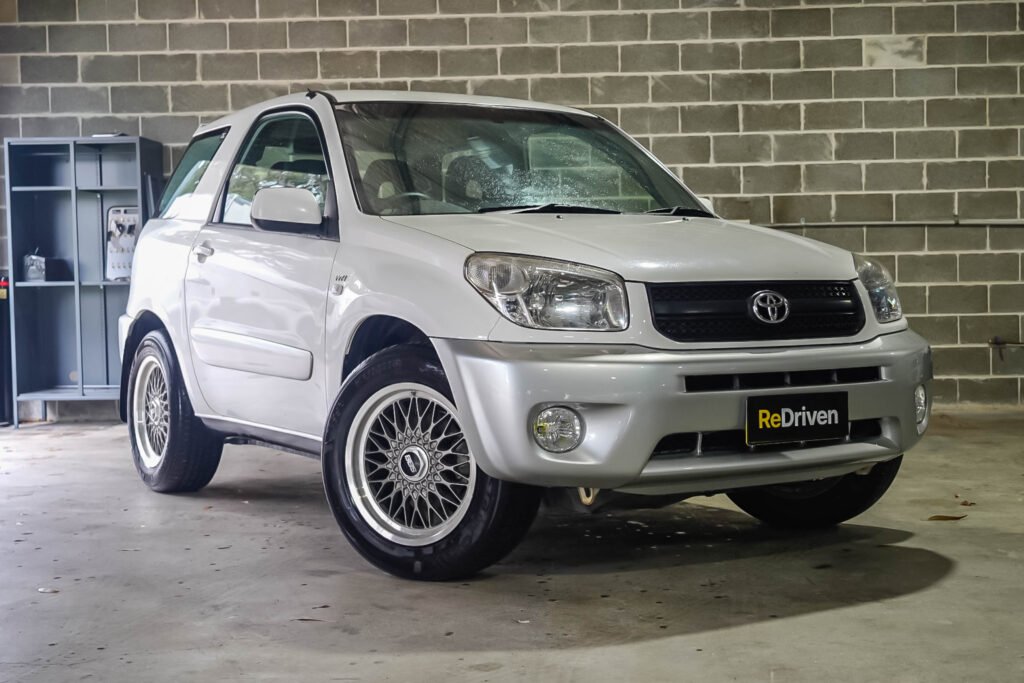
The Toyota RAV4 has earned a reputation as one of the most dependable compact SUVs on the market, with strong reliability ratings and high owner satisfaction. However, even the most reliable models have specific issues that vary by generation and powertrain. A thorough pre-purchase inspection can mean the difference between a vehicle that runs for years and one that drains your bank account with costly repairs. Here are the ten most important things to check before buying a used Toyota RAV4.
1. Engine Oil Condition and Consumption History
The engine is the heart of any vehicle, and with the RAV4, certain model years have well-documented oil-related issues that demand close attention.
Check the dipstick.
Pull the oil dipstick and examine the oil’s color and consistency. Amber to light brown oil indicates regular maintenance. Dark, gritty oil suggests infrequent changes. Milky or foamy oil is a serious red flag—it indicates coolant has entered the engine, typically signaling a catastrophic internal failure. If you see this, walk away immediately.
Excessive Oil Consumption (2006–2008 Models)
If you’re evaluating a 2006–2008 RAV4 with the 2.4L four-cylinder engine (2AZ-FE), pay special attention to oil consumption. These engines have a well-documented history of burning excessive oil between changes, which can accelerate piston wear and cause engine sludging over time. Cross-reference the dipstick reading with the seller’s claimed service history—a noticeably low oil level on a vehicle supposedly serviced recently is a red flag worth negotiating over.
Toyota switched to the revised 2.5L engine (2AR-FE) starting with the 2009 model year, which does not have this issue.
Coolant Bypass Valve (2019+ Models)
On newer RAV4s (fifth generation), the coolant bypass valve can fail, causing overheating and coolant leaks. In extreme cases, this can lead to engine damage. Check the coolant reservoir for clean fluid—murky, brownish coolant suggests contamination or inconsistent maintenance.
2. High-Voltage Cable Corrosion (Hybrid & Prime Models)
If you’re considering a used RAV4 Hybrid or Prime, this is arguably the most critical inspection point.
The “Cablegate” Issue
A corrosion problem affects the high-voltage cable connecting the battery pack to the rear motor generator on 2019–2022 AWD hybrid and Prime models. This issue has become so notorious that owners have dubbed it “Cablegate.” When left unaddressed, the hybrid system can shut down completely, and replacement out of warranty has cost owners upward of $5,000 to $10,000.
What to Check
-
Verify whether the vehicle has had the high-voltage cable inspected or replaced.
-
Check the underside of the vehicle for visible corrosion on the cable connector (though this may require a mechanic’s lift)
-
Run the VIN through NHTSA.gov to confirm whether Toyota’s Customer Support Program (22TE09) has been completed.
Warranty Coverage
Toyota extended coverage to 8 years or 100,000 miles on affected 2019–2022 RAV4 Hybrid AWD and RAV4 Prime vehicles. However, some dealers have denied claims under an “ingress of water” exclusion, so confirmation that the repair has been completed is vital.
3. Transmission Behavior and Shift Quality
The RAV4 has used three different transmissions over recent generations, each with its own reliability profile.
6-Speed Automatic (2013–2018 Gas Models)
This transmission has a strong reliability track record. Gear changes should feel composed and predictable throughout the RPM range. It’s one of the most dependable units in the compact SUV segment and can run past 200,000 miles with regular fluid changes.
8-Speed Automatic (2019+ Gas Models)
The 8-speed introduced with the fifth-generation RAV4 has generated consistent complaints, particularly in the 2019 model year, regarding lurching and hesitation when pulling away from stops. Toyota issued a Technical Service Bulletin with a transmission control module software update that resolves the issue for most owners
Important: A generic “software reset” is often only a short-term solution. Ask specifically: “Has the transmission control module been updated per Toyota’s TSB?” Then validate it on the test drive by paying close attention to smoothness from a stop
eCVT (Hybrid Models)
The Hybrid’s eCVT is fundamentally different—with no clutch packs, torque converters, or traditional gear sets to wear out. Power delivery should feel smooth and continuous at any speed. Any roughness or surging is worth a closer look.
4. Brake System and Regenerative Braking (Hybrid)
A shudder or pulsing sensation through the steering wheel when braking is a sign of warped rotors—a serviceable repair, but one that gives you a basis for price negotiation.
Hybrid-Specific Brake Feel
On hybrid models, the braking system works differently: regenerative braking captures energy during deceleration before the physical brake pads engage. This handoff should feel seamless. A grabby or inconsistent feel during light braking (especially at low speeds) can indicate the regenerative braking system needs recalibration or service.
Brake Booster Recall (2019 Models)
Some RAV4s built between April 26 and June 3, 2019, have a known issue where the brake booster pump may stop working, requiring increased braking effort. Check with a Toyota dealer to determine if the vehicle is affected and whether the pump has been replaced.
5. Undercarriage Rust and Suspension
The RAV4 is a unibody SUV, meaning its structural integrity depends on the body itself rather than a separate frame underneath. Rust is therefore more consequential than on a body-on-frame vehicle.
What to Inspect
Get underneath the vehicle and inspect the subframe, floor pans, and rear suspension arms. Some surface oxidation on a higher-mileage RAV4 is expected, but deep pitting, soft or flaking metal, or new undercoating applied over a limited area may indicate concealed deterioration rather than proper repair.
Rear Tie Rod Recall (2006–2011)
Check whether the rear tie rod recall has been resolved on 2006–2011 RAV4 models. NHTSA issued multiple campaigns covering a defect where improperly torqued rear suspension arm adjustment nuts could develop rust and thread damage, eventually causing arm failure and an abrupt alignment change while driving.
Front Suspension Arms (2019 Models)
Some RAV4s made between September 25 and October 25, 2019, have been found to have cracks in the lower front suspension arms. A Toyota dealer can check if the vehicle is affected
6. Paint Condition—Especially White Models
Certain RAV4s have a well-documented paint defect that can be expensive to repair.
Blizzard Pearl and Super White (2008–2017)
RAV4s painted in Blizzard Pearl or Super White (color codes 070 and 040) from 2008 to 2017 are prone to paint peeling on the hood, roof, and rear panels. Toyota’s warranty for this sun-damage defect has expired, leaving the buyer fully responsible for repair costs.
What to Look For
-
Peeling or flaking paint on horizontal surfaces
-
Clear coat wear and fading
-
Inconsistent panel gaps that may indicate prior collision repair
-
Rock chips along the front fascia
7. Interior Electronics and Infotainment
Newer RAV4s include more technology than earlier versions, and repair costs for software-dependent systems can be substantial.
Infotainment Screen
Navigate through the menus and test the backup camera. Response should be immediate, and the camera image should be sharp. A screen that lags, goes black intermittently, or shows a pixelated camera feed may need a software update—or something more involved.
Apple CarPlay and Android Auto (Early 2019 Models)
Early fifth-generation RAV4s did not include Apple CarPlay and Android Auto, although they can be retrofitted for a fee—approximately £150 as a stand-alone visit, or £50 as an add-on to a service. If these features matter to you, confirm whether the retrofit has been completed.
12V Battery Drain (2019–2021 Models)
A subset of fifth-generation RAV4s developed a parasitic drain issue tied to the Data Communication Module (DCM), which maintains a cellular connection even when the vehicle is parked. If the seller mentions unexplained dead batteries or needing jump-starts, ask specifically whether this was diagnosed and addressed.
Power Windows and Locks
Cycle every window and test every lock. A sticky or slow window is usually straightforward to fix, but a pattern of multiple switches not functioning correctly is a signal worth noting.
8. Test Drive Dynamics
The test drive surfaces problems that photos and service records can’t reveal. Focus on what the vehicle is communicating physically.
Cold Start Behavior
Ask the seller not to start the vehicle before you arrive. Cold-start behavior reveals much about engine health that a warmed-up engine masks. Listen for unusual noises, excessive smoke, or rough idling.
AWD System Engagement
If the vehicle has all-wheel drive, test it by finding a loose-surface section of road or making a tight turn at low speed while accelerating gently. The rear wheels should engage without humming, vibrating, or pulling. Resistance or noise from the rear drivetrain can indicate wear in the rear differential or coupling.
Steering Feel
On third-generation RAV4 models (2006–2012), pay attention to steering feel while parking or making tight low-speed turns. A knocking sensation in the steering column under these conditions is a documented issue with the intermediate steering shaft.
On higher-mileage 2006–2015 models, the intermediate steering shaft can develop a clunk or bind at low speeds. Lubrication or replacement is a relatively low-cost repair, but it’s confirmed during inspection.
9. Body Integrity and Water Leaks
RAV4s have several known water intrusion points that can lead to interior damage.
Roof Rail Fixing Points
The roof rail fixing points can leak rainwater into the cabin, staining the headliner. Faulty seals are often the culprit. Check the headliner for water stains or discoloration.
Door Drain Holes
Water can build up in the door panel when the door’s drain holes become clogged, so check that they are clear of debris.
Power Liftgate (2013–2018)
On fourth-generation RAV4s, cycle the power liftgate open and closed at least twice and listen carefully. A groaning sound, delayed response, or a gate that reverses unexpectedly points to a failing liftgate motor or struts—a known wear item on these model years.
Cargo Area
Check the cargo area floor for structural damage to the cargo tub or evidence of persistent moisture intrusion, which can affect the spare tire well and surrounding structure.
10. Maintenance Records and Service History
A RAV4 with a clean service record is a fundamentally different purchase than one without—even if the mileage looks similar on paper.
What to Look For
-
Oil changes at 5,000–10,000-mile intervals (full synthetic is ideal)
-
Transmission fluid service (inspect/service at 60,000 miles)
-
Brake fluid replacement every two years
-
Coolant replacement after 100,000 miles, then every 50,000 miles
Toyota’s Warranty Coverage
All RAV4s with less than 100,000 miles can be covered under Toyota’s warranty program, provided they have a full dealer service history. The 10-year/100,000-mile warranty introduced in 2021 applies to any UK-registered Toyota that meets the age and mileage requirements. Even cars with servicing history at independent garages can get a year’s warranty by having a main dealer service.
Red Flag
Walk away if there are no maintenance records on a high-mileage hybrid—deferred maintenance can turn minor issues into expensive ones.
Which RAV4 Model Years Are Best?
Based on reliability data and owner reports:
| Generation | Years | Reliability Verdict | Key Points |
|---|---|---|---|
| 3rd Gen | 2006–2008 | Avoid | 2.4L engine has well-documented excessive oil consumption; transmission and steering issues common |
| 3rd Gen (Facelift) | 2009–2012 | Good | The revised 2.5L engine resolves oil consumption issues; 2009 models saw reliability improvements |
| 4th Gen | 2013–2015 | Good | Steady reliability uptick: the 6-speed automatic is durable and well-proven |
| 4th Gen (Facelift) | 2016–2018 | Best | The 2.5L engine (2AR-FE) fully sorted; 6-speed automatic well-proven; hybrid option introduced; fewest reported issues |
| 5th Gen | 2019–2021 | Good (with caveats) | New 8-speed transmissions have shift quality issues (TSB available); “Cablegate” corrosion on hybrids; DCM battery drain issues; 2021+ models saw revised hybrid connector designs. |
Final Checklist Summary
Before making an offer, complete this final walkthrough:
| Area | What to Check |
|---|---|
| Walkaround | Paint condition (especially white), rust, panel gaps, tire wear |
| Under the Hood | Oil consumption signs, coolant condition, water pump leaks, hybrid inverter coolant |
| Exterior | Paint peeling on white models, rear tie rod recall (2006–2011), power liftgate function |
| Test Drive | 8-speed transmission behavior, AWD engagement, regenerative braking feel (hybrid), steering clunk |
| Interior & Electronics | Infotainment responsiveness, backup camera quality, 12V battery drain (2019–2021), power windows |
| Records | Complete service history with documented oil changes and major services |
| Walk Away If | No maintenance records on a high-mileage hybrid, milky oil, unresolved high-voltage cable corrosion |
A professional inspection by a trusted mechanic is always recommended before finalizing any purchase.
FAQ
Q: What is the most reliable year for a used Toyota RAV4?
A: The 2016–2018 model years are widely considered the most reliable. These fourth-generation RAV4s feature the fully sorted 2.5L 2AR-FE engine paired with a durable 6-speed automatic transmission, with the fewest reported issues across the lineup
Q: Are used Toyota RAV4 hybrids reliable?
A: Yes, the hybrid system itself is highly reliable, with the eCVT transmission eliminating most traditional failure points. However, 2019–2022 AWD hybrid models suffer from the “Cablegate” high-voltage cable corrosion issue, which can cost $5,000–$10,000 to repair if not covered under warranty. Always verify this repair has been completed.
Q: What is “cable gate” on the RAV4?
A: “Cablegate” refers to a corrosion problem affecting the high-voltage cable connecting the battery pack to the rear motor generator on 2019–2022 RAV4 Hybrid AWD and Prime models. Corrosion can cause the hybrid system to shut down completely, with replacement costs exceeding $5,000–$10,000. Toyota issued a Customer Support Program (22TE09) extending coverage to 8 years or 100,000 miles.
Q: Does the Toyota RAV4 have oil consumption problems?
A: Yes, but mainly on specific years. The 2006–2008 RAV4 with the 2.4L engine (2AZ-FE) has a well-documented history of excessive oil consumption. Toyota revised the engine starting in 2009, and later models do not have this issue.
Q: What should I check when test-driving a used RAV4?
A: Pay attention to transmission shift quality—especially on 2019+ gas models with the 8-speed, which can lurch or hesitate from a stop. Test the AWD engagement (if equipped) for noise or vibration. On hybrid models, feel for smooth regenerative braking without grabbing. Also listen for steering clunks on 2006–2015 models.
Q: Should I avoid certain Toyota RAV4 model years?
A: Yes. The 2006–2008 model years are best avoided due to the 2.4L engine’s oil consumption issues. 2010 models had difficulty with mid-cycle powertrain updates. For hybrids, be cautious with 2019–2022 AWD models unless the high-voltage cable corrosion issue has been confirmed as repaired
Q: How much does a used Toyota RAV4 cost?
A: In the UK market, around £15,000 can get a 2019 RAV4 hybrid with fewer than 80,000 miles. Higher trims cost more: £18,000–£20,000 for 2020–2021 models and £24,000–£28,000 for 2023–2024 models. In the US, prices vary widely by region, mileage, and condition.
Q: Is the RAV4’s infotainment system reliable?
A: Older fourth-generation models can have laggy or freezing touchscreens. Early fifth-generation models (2019) lacked Apple CarPlay and Android Auto, though they can be retrofitted for about £150. Some 2019–2021 models also experienced 12V battery drain issues due to the data communication module.
Q: What is the towing capacity of a used RAV4?
A: The four-wheel-drive, full-hybrid RAV4 can tow up to 1,650 kg (braked). The PHEV can tow 1,500 kg. Front-wheel-drive models are limited to just 800kg—best avoided if you need to tow a caravan or horse trailer.
Q: Should I get a pre-purchase inspection on a used RAV4?
A: Absolutely. A professional inspection by a trusted mechanic is always recommended before finalizing any purchase. The RAV4 is generally reliable, but model-year-specific issues (oil consumption, cable corrosion, transmission behavior) are best identified by a trained professional.